What Makes a Natural Wonder Truly 'Secret'
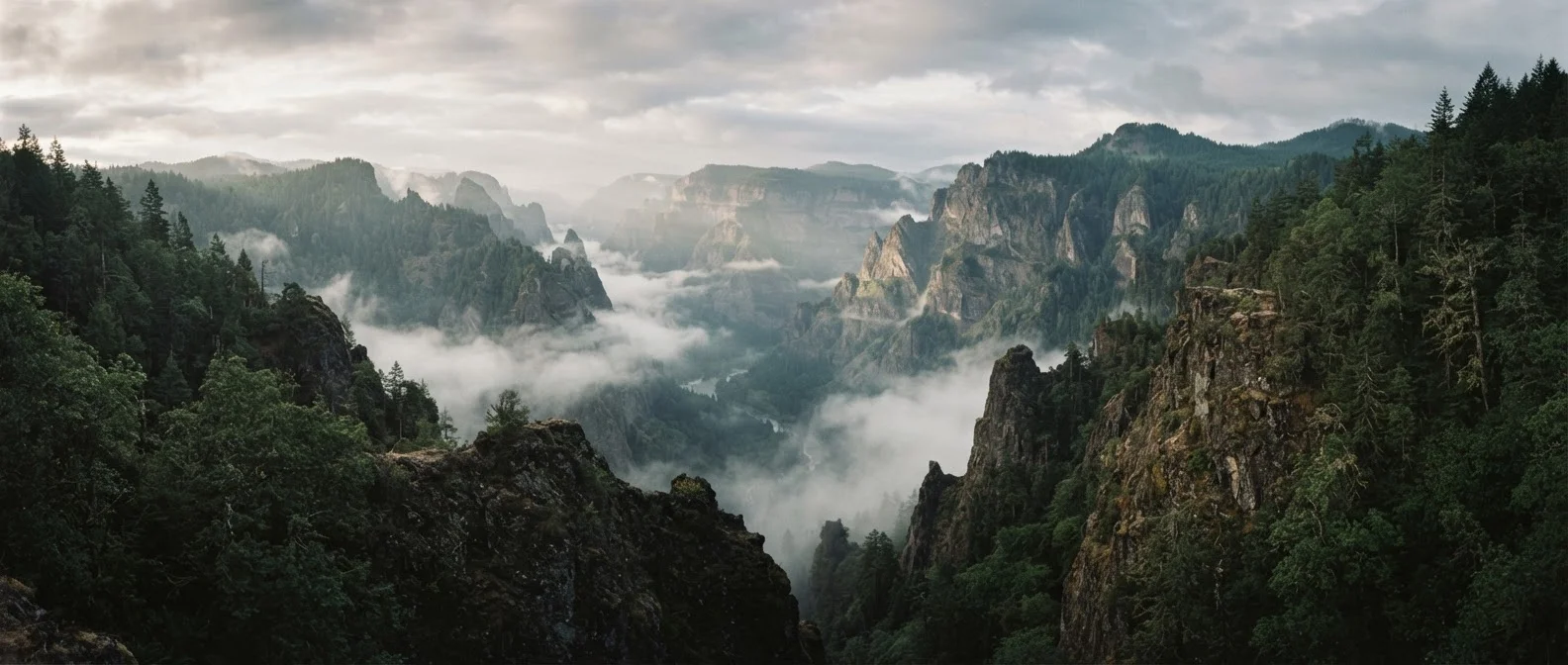
Photo credit: ExploreRoute.net | Travel Made Simple
In this article
Not all remote landscapes are equal. Understand the geography, access barriers, and cultural factors that keep some wild places genuinely unknown.
Key Takeaways
- Physical remoteness alone does not make a place secret — access barriers, language, and cultural stewardship all play a role.
- Many overlooked natural sites exist not because they are unknown locally, but because they are undocumented in English-language travel media.
- A site's 'secrecy' is often fragile — a single viral post can trigger visitor surges that fundamentally alter the landscape.
- Indigenous and local communities frequently hold longstanding relationships with these places that predate any traveler's discovery.
- Responsible engagement with secret sites means actively limiting your own footprint and questioning whether sharing them is appropriate.
The Anatomy of Obscurity
When most travelers picture a secret natural wonder, they imagine somewhere impossibly distant — a canyon carved by a river with no name on any map, or a coastal arch accessible only by a four-day kayak crossing. Physical distance is certainly part of the story. But the geography of obscurity is considerably more layered than sheer mileage from an airport.
Consider that some of the world's least-visited landscapes lie within a few hours of major cities, hidden not by distance but by a lack of English-language documentation, unmarked trailheads, or terrain that demands specific technical competence. A slot canyon requiring a rope descent, a subterranean lake accessible only through a flooded passage, a high-altitude plateau buried under seasonal snowpack for eight months of the year — these are places whose barriers are qualitative, not quantitative.
Wilderness areas that rarely appear on any map often owe their invisibility to a combination of cartographic neglect and the absence of formal protected status. Without a national park designation or UNESCO recognition, a site generates no tourism infrastructure, no ranger station, and no trail markers — and therefore no footprint in the travel media ecosystem that most visitors rely on.
~3%
Earth's land classified as wilderness with high intactness
Research published in the journal Nature (2016) estimated that roughly 23% of land remains wilderness, but a much smaller fraction retains the highest levels of ecological intactness free from human modification.
70%+
Protected areas accessible by existing road networks
Studies of global protected-area accessibility suggest the majority of formally designated parks sit within a relatively short drive of existing infrastructure, underscoring how few truly road-inaccessible wild places remain.
The Role of Culture and Stewardship
One of the most underappreciated forces keeping certain places obscure is active, intentional stewardship by Indigenous and local communities. Many landscapes that appear 'undiscovered' to outside travelers have been quietly tended, documented in oral tradition, and deliberately kept out of tourist circuits for generations. The secrecy, in these cases, is not accidental — it is a form of protection.
This distinction matters enormously for how travelers approach these spaces. As our complementary piece on why 'undiscovered' natural wonders are never truly undiscovered explores, the myth of the pristine, uninhabited wilderness has long ignored the presence and knowledge of people who have lived alongside these landscapes for centuries.
“The wilderness that matters most is not the wilderness that no human has ever entered — it is the wilderness that communities have chosen, generation after generation, to leave intact.”
— Robin Wall Kimmerer, Botanist and author, known for writing on Indigenous ecological knowledge
Approaching a rarely visited site with genuine cultural humility means researching whether local communities have asked for visitor limits, whether access requires permission, and whether your presence — however low-impact you intend it to be — is actually welcome.
Fragility and the Ethics of Disclosure
A site's secrecy is rarely permanent. The mechanics by which a secret natural wonder becomes a crowded one are now well understood: a single photograph gains traction on social media, a travel outlet picks up the story, and within two or three seasons a trailhead that once saw a handful of visitors annually becomes a weekend destination. The landscape itself rarely has the resilience to absorb that transition without visible damage.
This is why the question of whether to share a secret site — and how specifically to share it — has become a genuine ethical debate among serious travelers and conservationists. Omitting a precise geotag while still conveying a sense of a place's character and ecology is increasingly common practice. The ecology of isolation explains in detail why low visitor numbers are not merely a travel perk but a biological necessity for certain fragile systems.
Practice Geotagging Restraint
When visiting a rarely-traveled natural site, consider sharing your experience without disclosing the precise location. Describing a landscape's character, ecology, and the journey to reach it can inspire thoughtful exploration without directing foot traffic to a fragile place. Many conservation-minded travelers omit or blur geotags on photos shared publicly.
For those willing to do the research — consulting topographic data, local geological surveys, and regional naturalist communities — the reward is a fundamentally different kind of travel experience. Our guide to reading the land for geographic clues offers a practical starting point for that kind of deliberate, investigative exploration.
Frequently Asked Questions

Author
Hidden Destinations Editorial Team
Hidden Destinations Editorial Team is the collective byline for our editorial team and contributor network. Articles published under this byline or an editorial pen name are researched, written, and reviewed according to our editorial standards for clarity, consistency, and independence before publication.
View all articles →