
Off-Season Access to Remote Wilderness: The Trade-Offs Worth Knowing
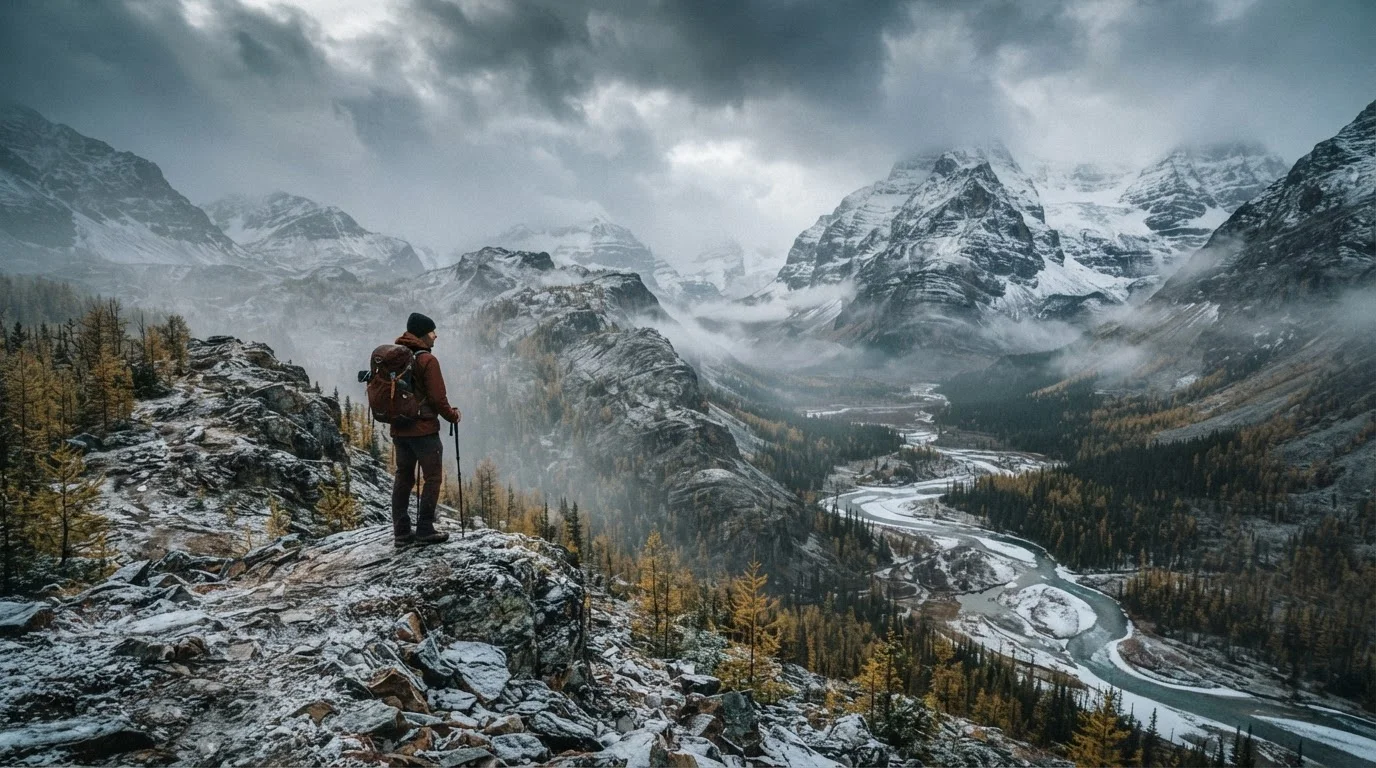
Photo credit: ExploreRoute.net | Travel Made Simple
In this article
Visiting a secret natural site outside peak season offers solitude—but also unpredictable conditions. Here's an honest look at both sides.
Key Takeaways
- Off-season visits to remote wilderness dramatically reduce human congestion and environmental pressure.
- Unpredictable weather, limited rescue infrastructure, and closed access roads are genuine hazards.
- Wildlife behavior, light conditions, and landscape character shift significantly outside peak season.
- Reduced support services — from ranger stations to nearby lodging — require more self-sufficiency.
- Proper pre-trip research and emergency planning are non-negotiable, not optional extras.
True solitude, not curated quietness
Off-season remote wilderness often means genuinely zero other visitors — not just fewer. That distinction changes the character of the experience completely, from how wildlife behaves to how sound travels across a valley.
Reduced environmental footprint per visit
Lower foot traffic during ecologically sensitive periods allows vegetation, soil crust, and wildlife corridors to recover. Research on fragile high-altitude ecosystems consistently links visitation pressure to measurable habitat degradation.
Distinct seasonal landscape character
Many remote landscapes reveal their most dramatic forms outside summer — dormant grasslands, ice-edged rivers, migrating species, low-angle light that photographers chase specifically in autumn and winter months.
Fewer permit and access conflicts
Sites that require lottery-based permits or timed entries during peak season often have substantially relaxed or suspended systems off-season, removing one of the most frustrating logistical barriers to remote access.
Richer sense of place and personal connection
Without the social dynamics of a crowded trail, travelers are more attentive to landscape detail, local knowledge, and their own responses to the environment — conditions that tend to produce more lasting and meaningful travel memories.
Unstable and rapidly changing weather conditions
Off-season wilderness weather can shift from manageable to dangerous within hours, and many remote areas sit outside reliable forecast coverage. This is not a theoretical risk — it's a practical planning constraint for every off-season itinerary.
Limited or closed emergency infrastructure
Ranger stations, staffed trailheads, and search-and-rescue response times all degrade significantly outside peak season. In some regions, a rescue operation that would take hours in summer can take days in November.
Road and trail access closures
Many unpaved access roads to remote sites are seasonally gated or become impassable due to mud, ice, or snow. Confirming current conditions with the relevant land management authority before departure is essential, not optional.
Reduced daylight narrows operating window
In autumn and winter, usable daylight in many wilderness regions shrinks to eight hours or fewer. Trips that were comfortably paced in June require tighter planning and earlier turnaround times off-season.
Fewer nearby services and support options
Lodging, fuel stations, and even mobile connectivity at gateway towns near remote sites often operate seasonally. Travelers can find themselves with no fallback accommodation or communication option if plans change.
Why Off-Season Wilderness Travel Has Its Own Logic
There's a particular kind of quiet that descends on a remote canyon or high-altitude lake once the peak-season crowds recede. Footpaths that were trampled flat by August regain definition by October. Wildlife moves more freely. The land, in a certain sense, exhales. For frequent travelers already familiar with the marquee parks and their shoulder-season scramble for permits, off-season access to genuinely remote wilderness represents a different category of experience entirely.
But that experience carries its own calculus. The same remoteness that makes a place feel pristine also means that when conditions turn — and off-season conditions often do — there's less infrastructure between you and a serious problem. Understanding both sides of that equation is what separates a memorable adventure from a dangerous one.
For context on how to even locate and research these kinds of sites, see our guide to planning a trip to a remote natural site you can't find on Google.
True solitude, not curated quietness
Off-season remote wilderness often means genuinely zero other visitors — not just fewer. That distinction changes the character of the experience completely, from how wildlife behaves to how sound travels across a valley.
Reduced environmental footprint per visit
Lower foot traffic during ecologically sensitive periods allows vegetation, soil crust, and wildlife corridors to recover. Research on fragile high-altitude ecosystems consistently links visitation pressure to measurable habitat degradation.
Distinct seasonal landscape character
Many remote landscapes reveal their most dramatic forms outside summer — dormant grasslands, ice-edged rivers, migrating species, low-angle light that photographers chase specifically in autumn and winter months.
Fewer permit and access conflicts
Sites that require lottery-based permits or timed entries during peak season often have substantially relaxed or suspended systems off-season, removing one of the most frustrating logistical barriers to remote access.
Richer sense of place and personal connection
Without the social dynamics of a crowded trail, travelers are more attentive to landscape detail, local knowledge, and their own responses to the environment — conditions that tend to produce more lasting and meaningful travel memories.
The Real Costs: What You're Trading Away
Romanticizing off-season wilderness travel is easy from the comfort of planning. In the field, the trade-offs become more concrete. Roads that appear open on a digital map may be gated by October or rendered impassable by early snowfall. Trailheads that are staffed in summer become unmanned — and unmarked — by late fall. Ranger stations with emergency communication equipment may be shuttered entirely.
Weather unpredictability is perhaps the sharpest edge. A high-desert gorge that's passable in early November can become a flash-flood zone within hours of a regional storm system. An alpine plateau that looks benign at dawn can be whiteout conditions by early afternoon. Unlike peak-season visits, where you're surrounded by other travelers who might raise an alarm, off-season remote travel routinely means being genuinely alone — which is often the whole point, until it isn't.
Unstable and rapidly changing weather conditions
Off-season wilderness weather can shift from manageable to dangerous within hours, and many remote areas sit outside reliable forecast coverage. This is not a theoretical risk — it's a practical planning constraint for every off-season itinerary.
Limited or closed emergency infrastructure
Ranger stations, staffed trailheads, and search-and-rescue response times all degrade significantly outside peak season. In some regions, a rescue operation that would take hours in summer can take days in November.
Road and trail access closures
Many unpaved access roads to remote sites are seasonally gated or become impassable due to mud, ice, or snow. Confirming current conditions with the relevant land management authority before departure is essential, not optional.
Reduced daylight narrows operating window
In autumn and winter, usable daylight in many wilderness regions shrinks to eight hours or fewer. Trips that were comfortably paced in June require tighter planning and earlier turnaround times off-season.
Fewer nearby services and support options
Lodging, fuel stations, and even mobile connectivity at gateway towns near remote sites often operate seasonally. Travelers can find themselves with no fallback accommodation or communication option if plans change.
It's also worth cross-referencing the logistical differences depending on the type of terrain you're targeting. The risks at a coastal wilderness site differ meaningfully from those in deep inland terrain — our piece on inland vs. coastal wilderness breaks down how those distinctions play out.
Preparation Isn't Optional — It's the Whole Framework
Every advantage of off-season wilderness access — the solitude, the ecological sensitivity of the landscape, the raw authenticity — depends on you arriving genuinely prepared. That means more than packing an extra layer. It means knowing what emergency resources exist (and don't) within a realistic radius, having a filed trip plan with someone who will act on it, carrying navigation tools that function without cell signal, and understanding the specific seasonal hazards of your target region.
Verify Before You Go — Every Time
Access conditions for remote wilderness sites can change significantly between your planning date and your departure date. Seasonal closures, fire restrictions, wildlife protection zones, and weather-related road conditions are updated by land management agencies on a rolling basis. Always check directly with the relevant federal or state authority — not a third-party travel site — immediately before your trip. Entry requirements, permit rules, and safety advisories for international wilderness destinations should be confirmed with official government travel resources.
Before any off-season wilderness trip, check current conditions and access status with the relevant land management agency — whether that's the U.S. Forest Service, Bureau of Land Management, or a state-level authority. Road closures, fire-related access restrictions, and seasonal wildlife protections can change on short notice. Always verify entry requirements and any permit systems directly with official sources before departure.
The pre-trip checklist for unmarked natural areas is worth working through in full before committing to a remote, off-season itinerary. And if you're weighing whether expedition-style depth is what you're actually after, our honest look at expedition travel trade-offs addresses the broader commitment that kind of travel requires.
~70%
U.S. national parks visits concentrated May–September
National Park Service visitation data consistently shows roughly 70% of annual visits occur within five peak-season months, leaving off-season windows comparatively uncrowded at most sites.
3–4x
Longer average SAR response times in winter
Wilderness search-and-rescue coordinators note that winter operations in remote terrain typically take three to four times longer than summer equivalents due to weather, reduced daylight, and limited aerial support.

Author
Hidden Destinations Editorial Team
Hidden Destinations Editorial Team is the collective byline for our editorial team and contributor network. Articles published under this byline or an editorial pen name are researched, written, and reviewed according to our editorial standards for clarity, consistency, and independence before publication.
View all articles →