
Packrafting: The Discipline That Connects Rivers, Ridgelines, and Remote Valleys
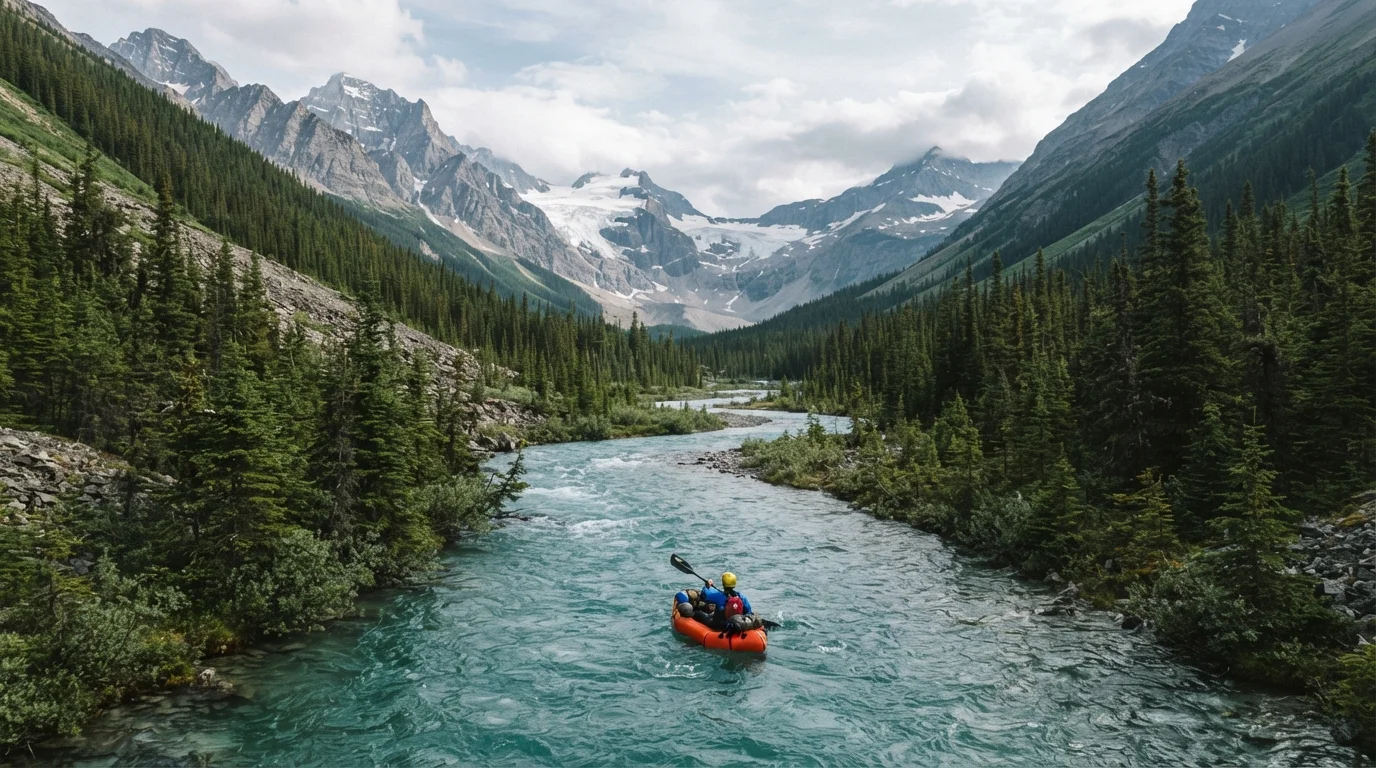
Photo credit: ExploreRoute.net | Travel Made Simple
In this article
Packrafting blends hiking and whitewater into one fluid journey. Learn what the activity involves, where it's practiced, and what it demands of travelers.
Key Takeaways
- Packrafting combines hiking and whitewater paddling, allowing travelers to move through landscapes inaccessible by either discipline alone.
- Packrafts weigh as little as 1–2 kg and pack into a standard backpack, making multi-day wilderness linkups genuinely feasible.
- Alaska, Patagonia, New Zealand, and Scandinavia offer some of the world's most established packrafting terrain.
- Safe packrafting requires foundational whitewater skills, swift-water rescue knowledge, and thorough route research.
- Permits, regulations, and land-access rules vary significantly by region and protected area.
What Packrafting Actually Is
Packrafting is a form of wilderness travel that treats land and water as a single continuous route rather than separate environments. Travelers carry a lightweight, inflatable raft in their pack, hike overland to a river or lake, inflate the boat, paddle downstream or across open water, deflate it again, and continue on foot — seamlessly switching modes as terrain demands.
The discipline emerged from Alaska's backcountry culture in the 1990s and early 2000s, when explorers began using rudimentary inflatables to cross glacial rivers that would otherwise stop foot travel cold. Refined packraft design and materials turned a workaround into a recognized outdoor discipline in its own right. Today it sits squarely within the broader world of adventure travel — as explored in what adventure travel actually means — offering a mode of movement that no single traditional sport can replicate.
The Gear That Makes It Possible
The packraft itself is the anchor of the system: a single-chamber or multi-chamber inflatable boat typically made from TPU-coated nylon or polyester, inflated via a breath-bag or pump sack in two to four minutes. Entry-level models are open-deck, flatwater-oriented craft; advanced versions feature self-bailing floors and neoprene spray decks for whitewater protection.
Beyond the boat, a packrafter carries a paddle that breaks into four sections for pack carry, a well-fitted PFD (personal flotation device), a whitewater helmet for any moving water, and a dry suit or drysuit underlayers depending on water temperature. Rescue kit — throw bag, knife, prussik loops — rounds out a responsible setup. Total watercraft weight for a stripped system runs roughly 1.5–2.5 kg, leaving room in a 65L pack for multi-day food and camp gear.
Start With a Guided Course
Before purchasing gear, consider joining a guided packrafting introduction course in a region with established instructors. You'll learn river-reading, paddle technique, and self-rescue in conditions where help is close. This investment typically prevents costly gear mistakes and, more importantly, builds the foundational judgment that keeps independent trips safe.
Where Packrafters Go
The discipline thrives wherever rivers and ridgelines intersect in remote, continuous landscapes. Alaska's Brooks Range remains its spiritual home — a place where glacier-fed braided rivers weave between roadless peaks for hundreds of miles. Patagonia's river corridors and wind-scoured valleys have drawn packrafters seeking technical paddling paired with serious mountaineering approaches. New Zealand's South Island offers accessible multi-day routes through beech forest and alpine valleys, while Norway and Sweden's fell country lends itself to long hut-to-river traverses.
Within the continental United States, the wilderness areas of Montana's Bob Marshall Complex, the rivers threading Idaho's Frank Church–River of No Return Wilderness, and portions of the Colorado Plateau offer demanding packrafting terrain. Many of these areas intersect with national parks and federally managed wilderness, so understanding permit systems — detailed in the complete guide to road tripping through national parks — is essential before planning any route.
Skills, Training, and Risk Awareness
Packrafting's central hazard is the intersection of remote location with moving water. Cold water immersion, hydraulics, strainers (submerged obstacles that trap swimmers), and undercut rocks are genuine threats that demand trained responses, not improvised ones. Before venturing onto any river with current, packrafters should complete a recognized swift-water rescue course and spend meaningful time developing paddle strokes, reading water, and practicing self-rescue in controlled conditions.
Cold Water Kills Quickly — Plan Accordingly
Many premier packrafting rivers are fed by glaciers or snowmelt and remain dangerously cold even in midsummer. Immersion in water below 15°C (59°F) can impair swimming ability within minutes. A dry suit — not just a wetsuit — is the appropriate protective layer for cold-water packrafting. Do not rely on air temperature alone to judge water hazard.
Navigation skills matter equally on land. Routes often cross unmaintained terrain with no marked trails, requiring confident map and compass use and, ideally, GPS proficiency. For travelers who are new to moving through genuinely remote landscapes, a foundational introduction to remote wilderness travel provides a solid starting framework. Packrafting-specific terminology — portage, eddy, strainer, confluence — is worth mastering before a trip; the adventure travel terminology reference covers the full vocabulary.
Planning Your First Packrafting Journey
Beginners are best served by guided courses that combine flatwater paddle instruction with route-planning fundamentals before any independent trip. Several wilderness schools and guiding operations — particularly in Alaska and the Pacific Northwest — run multi-day packrafting introduction courses. These structured experiences compress the learning curve significantly and build the pattern recognition needed to assess rivers independently.
When selecting a first independent route, prioritize flatwater or very gentle moving water, short portages, and reliable communication options. File a detailed trip plan with a trusted contact and understand your evacuation options before departing. Water temperature should drive gear choices; even in summer, many glacier-fed rivers run cold enough to make immersion dangerous without adequate protection. Verify any land-access permissions, wilderness permit requirements, and current water levels through land-management agencies and local gauging resources in the weeks before departure. Conditions on rivers change with rainfall and snowmelt and cannot be assumed from prior years' reports.
This article is for general informational purposes only. Packrafting involves inherent risks including serious injury. Readers should seek qualified instruction, consult relevant authorities for permits and access rules, and make decisions based on their own assessed skills and current conditions.
Frequently Asked Questions

Author
Specialty Travel Editorial Team
Specialty Travel Editorial Team is the collective byline for our editorial team and contributor network. Articles published under this byline or an editorial pen name are researched, written, and reviewed according to our editorial standards for clarity, consistency, and independence before publication.
View all articles →