
Your First Foray into Remote Wilderness Travel
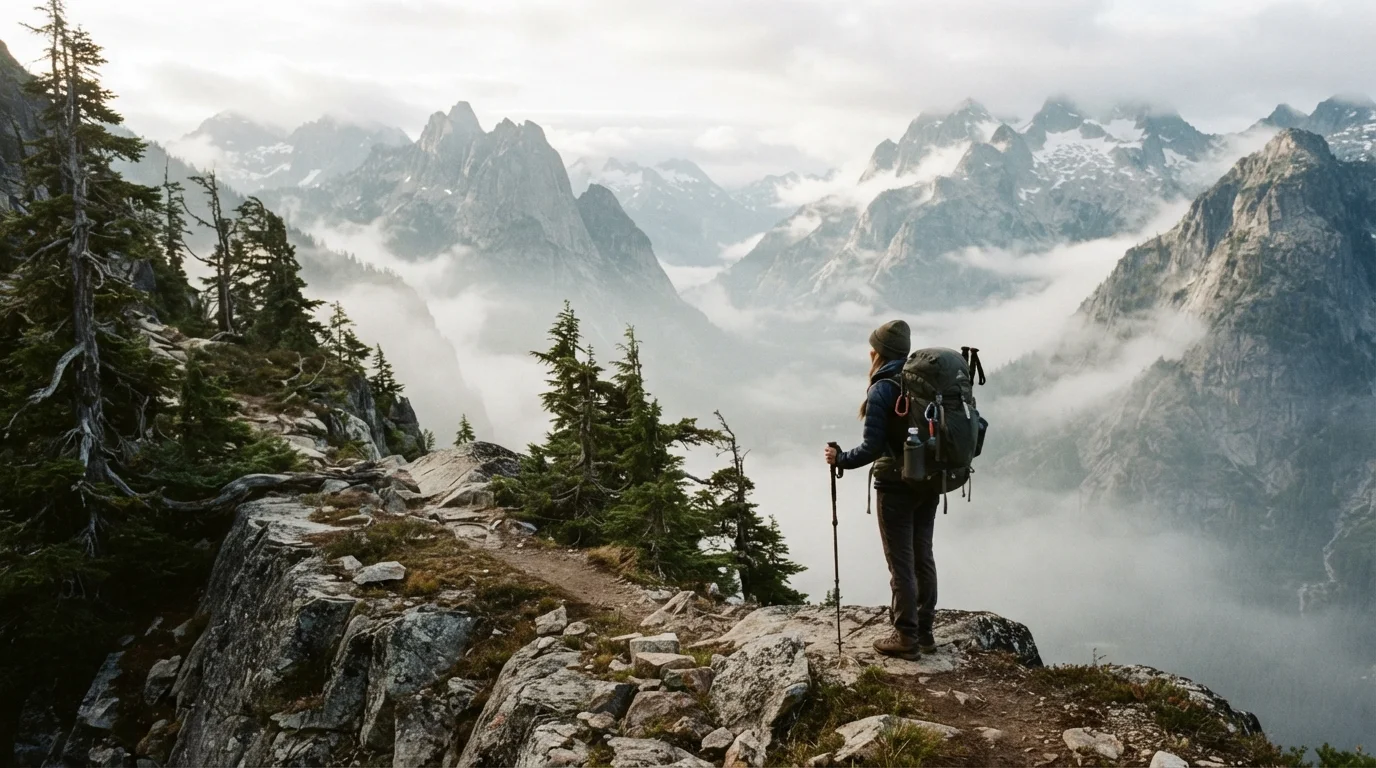
Photo credit: ExploreRoute.net | Travel Made Simple
In this article
Never ventured far from marked trails? This beginner's guide covers everything from navigation basics to leave-no-trace principles for new explorers.
Key Takeaways
- Remote wilderness travel requires navigating without reliable cell service or marked trail signs.
- A topographic map and compass remain the most dependable wayfinding tools in the backcountry.
- Leave No Trace principles protect fragile ecosystems — and they look different in extreme terrain.
- Thorough pre-trip research is as essential as physical preparation for first-time wilderness travelers.
- Always file a trip plan with a trusted contact before entering remote terrain.
- Start with shorter, less technical wilderness routes to build skills before committing to advanced terrain.
Why Remote Wilderness Travel Is Different
There is a particular silence that settles in when you have walked far enough that the trailhead parking lot has ceased to exist as a concept. No interpretive panels. No cell signal. No guarantee that anyone will pass through today or tomorrow. That silence is precisely what draws a certain kind of traveler deeper — and it is also what demands a fundamentally different approach than a weekend hike through a popular national park.
Remote wilderness travel — journeys into backcountry terrain well beyond maintained trails and reliable infrastructure — rewards preparation above all else. The landscapes that remain pristine are pristine in part because they ask more of visitors. Understanding what that asking looks like is the first and most important step.
Backcountry
Undeveloped, remote land beyond maintained trails and facilities, typically accessed on foot or by non-motorized means.
Topographic map
A detailed map showing elevation changes through contour lines, allowing travelers to visualize the shape of terrain before encountering it.
Leave No Trace (LNT)
A set of outdoor ethics principles designed to minimize the environmental and social impact of human activity in natural areas.
Bearing
A compass direction expressed in degrees, used to navigate from one point to another across terrain without marked paths.
Trip plan
A written document left with a trusted contact detailing your route, schedule, and who to call if you don't return as planned.
Ten Essentials
A survival-focused framework grouping the categories of gear and supplies every wilderness traveler should carry, regardless of trip length.
Navigation Essentials Before You Leave the Trailhead
In terrain without marked paths, your ability to read a landscape is not optional. A topographic map — one printed on waterproof paper and sourced from a land management agency or a reputable cartographic publisher — should be your primary tool. Learn to read contour lines before your trip: where they crowd together, the ground rises steeply; where they spread apart, the terrain opens. That knowledge can mean the difference between a deliberate route choice and a dangerous scramble.
A baseplate compass paired with your topo map lets you take bearings and triangulate your position — skills worth practicing at home on a local trail before you need them in earnest. GPS devices and offline mapping apps are genuinely useful supplements, but batteries fail and screens crack. Never make them your only navigation system.
For a thorough grounding in how to read terrain and assess trail difficulty before entering the backcountry, see reading the terrain before your first multi-day trek.
Practice Navigation at Home First
Before your trip, take your topographic map and compass to a local park or green space with visible landmarks. Practice identifying your position on the map, taking bearings to distant features, and walking a deliberate route without relying on your phone. An hour of hands-on practice is worth more than any tutorial video when you're standing at an unmarked junction in fading light.
Gear, Safety, and the Art of Packing Light but Right
Remote travel has a way of clarifying what actually matters in a pack. Every ounce you carry costs energy; every essential item you leave behind could cost considerably more. The classic wilderness framework of the Ten Essentials — covering navigation, sun protection, insulation, illumination, first-aid, fire, repair tools, nutrition, hydration, and emergency shelter — remains the most durable checklist for beginners because it covers survival categories rather than specific products.
Water filtration deserves special emphasis. Remote water sources often look pristine but may carry pathogens invisible to the eye. A filter or purification method appropriate to your destination's water conditions is non-negotiable.
Before you commit to a remote destination, invest time in thorough research. The habits and sources covered in deep-dive destination research apply just as meaningfully to wilderness planning as to city travel — more so, because the margin for error is narrower.
Remote Terrain Amplifies Every Risk
An injury or navigational error that would be a minor inconvenience near a trailhead can become a serious emergency hours from the nearest road. Assess your physical fitness, technical skills, and gear honestly before choosing a destination. If you are uncertain whether a route is within your current ability, start with something less committing and build toward it — there is no shame in a graduated approach, and considerable risk in overestimating your readiness.
Leave No Trace: Ethics at the Heart of Wild Travel
The places worth reaching are worth protecting. Leave No Trace (LNT) is a framework of seven principles — from traveling on durable surfaces to packing out all waste — designed to minimize the cumulative impact of human presence on wild ecosystems. In frequently visited areas, these guidelines are often posted at trailheads. In genuinely remote terrain, they operate entirely on the honor system.
Some standard LNT guidance shifts in extreme environments. Campfire rules, waste disposal methods, and even how you walk across certain surfaces all change when the ecosystem is unusually fragile. Our companion piece on how LNT principles adapt in extreme terrain is worth reading before any serious backcountry trip.
The core principle, however, is constant: if you can see evidence that a human was here before you, that is already one trace too many in the most sensitive places.
Planning Your First Remote Trip
Choose a destination that challenges you appropriately — not one that overwhelms. A wilderness area with some documented routes, manageable distances, and accessible land management contacts is a better first foray than the most isolated terrain you can find on a map. Build experience, then extend your range.
File a detailed trip plan with a trusted contact before you leave: your route, entry and exit points, expected return date, and the agency to contact if you are overdue. This single habit is among the most consequential safety decisions a wilderness traveler can make.
For destinations that exist at the edge of the documented world — sites with almost no public information — planning a trip to a remote natural site you can't find on Google offers a practical research methodology. And if you're drawn to routes that blend waterways with wilderness walking, the discipline of packrafting may open corridors that no overland trail can reach.
The wilderness is not waiting for you to be ready. But it does reward those who prepare honestly, travel humbly, and leave it exactly as they found it.
Entry requirements, permit availability, safety conditions, and land access rules vary by location and change over time. Always verify current information with the relevant land management agency and consult official government sources for any health, safety, or legal considerations before traveling.
Frequently Asked Questions

Author
Hidden Destinations Editorial Team
Hidden Destinations Editorial Team is the collective byline for our editorial team and contributor network. Articles published under this byline or an editorial pen name are researched, written, and reviewed according to our editorial standards for clarity, consistency, and independence before publication.
View all articles →