
Sleep Tourism: The Growing Interest in Travel Designed Around Rest
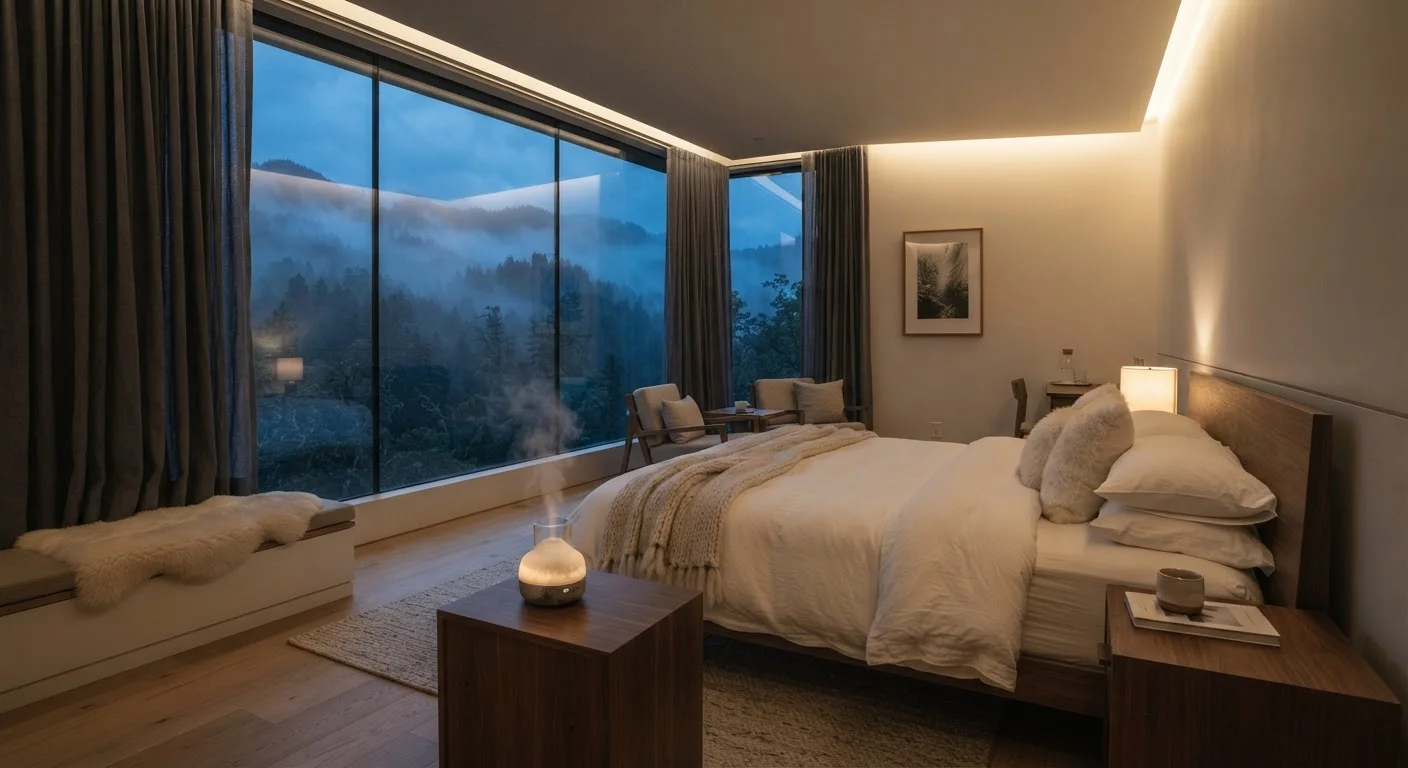
Photo credit: ExploreRoute.net | Travel Made Simple
In this article
Some destinations and programs now centre their offerings entirely on improving sleep. Explore what sleep tourism involves, where it exists, and what the evidence shows.
Key Takeaways
- Sleep tourism treats rest as a destination goal, not merely a byproduct of taking time off.
- Programs range from hotel sleep suites to multi-day wellness retreats with medical support.
- Environmental factors like light, temperature, and noise are central to what these programs manipulate.
- Evidence for benefits is promising but largely based on small studies; individual results vary.
- Travelers with serious sleep disorders should consult a healthcare professional before choosing programs marketed as therapeutic.
What Is Driving Interest in Sleep-Focused Travel
Sleep deprivation has become a broadly documented concern in contemporary life. The U.S. Centers for Disease Control and Prevention has identified insufficient sleep as a public health problem, with a substantial portion of American adults consistently sleeping fewer than the recommended seven hours per night. Against this backdrop, a niche within wellness travel has emerged that treats sleep not as rest between activities, but as the destination itself.
Travelers arriving at sleep tourism experiences are often high-functioning professionals who have tried conventional fixes — sleep apps, supplements, improved bedtime routines — without lasting results. What they haven't changed is their environment. Sleep tourism operates on the premise that environment is often the missing variable.
1 in 3
U.S. adults sleeping less than recommended
According to the CDC, about one-third of American adults report regularly sleeping fewer than seven hours per night.
~$814B
Annual economic impact of sleep deprivation in the U.S.
A RAND Corporation analysis estimated that insufficient sleep costs the U.S. economy hundreds of billions of dollars annually in lost productivity.
$919B
Global wellness tourism market value (projected)
The Global Wellness Institute has tracked substantial growth in wellness tourism, of which sleep-focused travel is an emerging sub-segment.
This intersects meaningfully with broader wellness travel trends. As our exploration of science-backed wellness practices shows, travelers are increasingly seeking experiences validated by some form of research rather than pure marketing.
What Sleep Tourism Programs Typically Offer
The category spans a wide spectrum. At the accessible end are hotel sleep suites — rooms engineered with circadian-friendly lighting that shifts color temperature across the day, temperature-regulating mattresses, white noise or sound-masking systems, and strict blackout capability. Some properties provide a sleep menu: pillow selection, aromatherapy options, and pre-sleep herbal preparations.
More immersive programs, typically running three to seven nights, layer on behavioral and coaching components. These may include cognitive behavioral strategies for sleep (often called CBT-I, which is considered a first-line clinical approach to insomnia by many sleep medicine organizations), guided breathwork sessions, digital device restrictions, and structured wind-down rituals. Meal timing is sometimes adjusted to support circadian alignment — an area of emerging but not yet conclusive research.
Evaluate Programs by Their Specificity
When assessing a sleep tourism offering, look for specificity over vague wellness language. Programs that name particular environmental controls (room temperature targets, lighting color schedules, noise management) and evidence-based behavioral approaches (such as CBT-I or structured wind-down protocols) are more likely to be grounded in sleep science than those that rely on generic 'relaxation' framing.
The environment of a sleep tourism destination is rarely accidental. Forested locations, low-altitude mountain retreats, and coastal settings are favored partly for their reduced artificial light and ambient noise — factors that research consistently links to improved sleep quality. For travelers curious about how natural environments interact with the body, the science behind nature-based wellness practices offers useful context.
How It Differs from Ordinary Rest Travel
A beach holiday or a slow countryside stay can certainly feel restorative, but sleep tourism is distinguished by intentionality. The itinerary is architected around sleep rather than treating it as a residual benefit. This means avoiding the common pitfalls that cause wellness travelers to return home feeling worse — overprogrammed days, misaligned expectations, and re-entry shock.
It also differs from accommodation novelty. Staying somewhere unusual — whether a historic lighthouse or a rainforest eco-lodge — may be memorable without being sleep-optimized. Some unique stays are genuinely restful; others introduce noise, temperature challenges, or unfamiliar stimulation that can undermine sleep. Sleep tourism reverses the logic: the accommodation is chosen first for its sleep properties, and the experience flows from there.
What the Evidence Actually Shows
The science underlying sleep tourism's core components is on reasonably solid ground. Research consistently supports the role of darkness, cooler room temperatures (generally between 60–67°F for most adults), reduced noise, and consistent sleep-wake timing in improving sleep quality. CBT-I, incorporated into some retreat programs, has a strong evidence base as a non-pharmacological intervention for insomnia.
Where the evidence thins is in the hospitality delivery of these principles. Few peer-reviewed studies have evaluated the outcomes of commercial sleep tourism programs specifically. Much of what is claimed by retreat operators reflects plausible extrapolation from sleep science rather than direct program evaluation. Travelers should approach outcome promises with measured expectations.
“Sleep is the foundation on which almost every other health outcome rests. When we treat it as optional or as something that can be hacked quickly, we misunderstand its biology. Environment, consistency, and reduced stimulation remain the most reliable levers we have.”
— Matthew Walker, Professor of Neuroscience and Psychology, University of California, Berkeley, and author of 'Why We Sleep'
For travelers managing sleep concerns that may have clinical dimensions, this is an important distinction. Sleep tourism may support better rest and serve as a meaningful reset — but it is not a substitute for working with a qualified sleep medicine professional. Anyone with persistent or severe sleep disruption should seek medical evaluation before and alongside any travel-based approach.
Frequently Asked Questions

Author
Specialty Travel Editorial Team
Specialty Travel Editorial Team is the collective byline for our editorial team and contributor network. Articles published under this byline or an editorial pen name are researched, written, and reviewed according to our editorial standards for clarity, consistency, and independence before publication.
View all articles →