
How Geography Shapes the Guest Experience: A Framework for Location-First Travel Planning
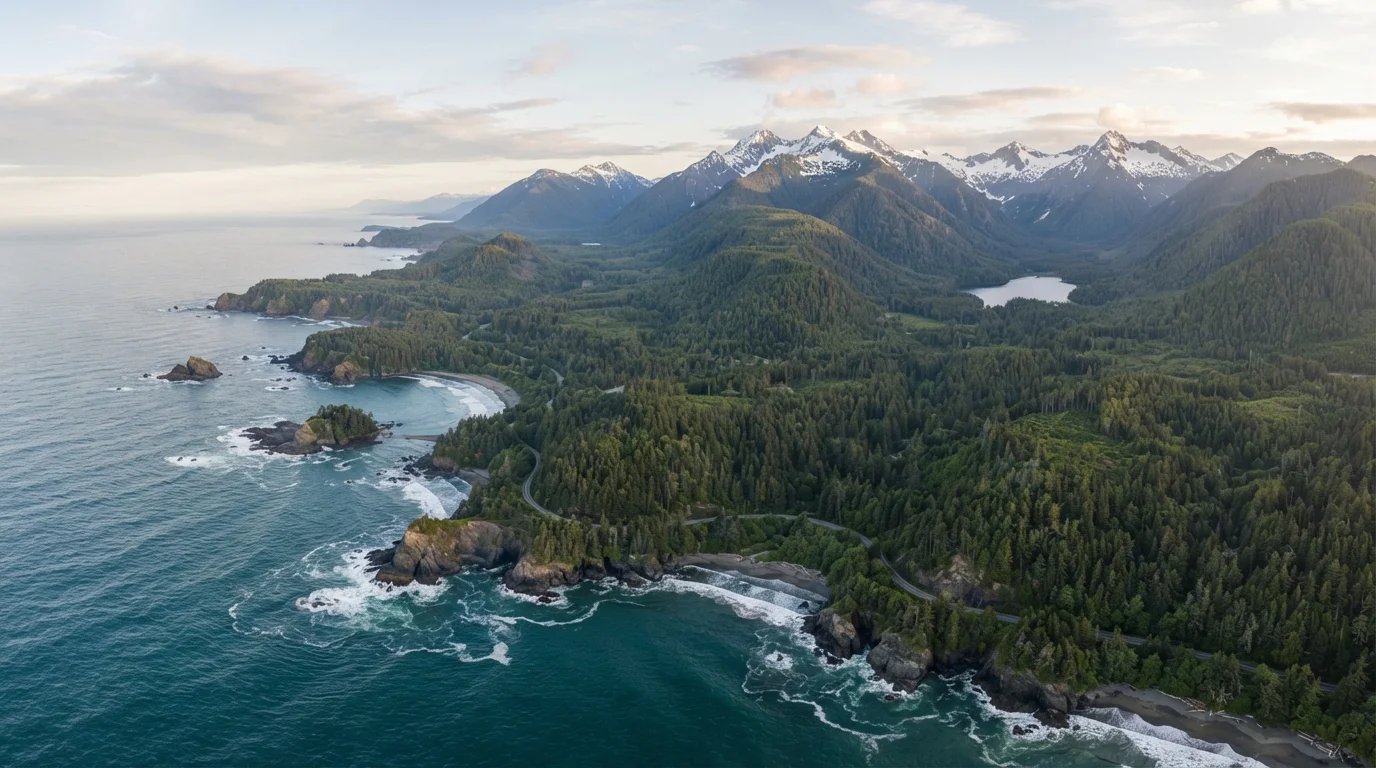
Photo credit: ExploreRoute.net | Travel Made Simple
In this article
Terrain, climate, and surrounding infrastructure all influence how a stay feels. Learn to evaluate destinations through a geographic lens.
Key Takeaways
- Terrain and elevation directly affect physical comfort, accessibility, and what activities are realistically available.
- Climate patterns — not just average temperature — determine whether a destination's setting enhances or undermines your trip.
- Urban density and surrounding infrastructure shape how easily guests can move between their accommodation and key attractions.
- Matching lodging style to landscape type produces more memorable, coherent travel experiences.
- Geography should inform itinerary building just as much as interest or budget does.
Why Geography Is the Invisible Architecture of Every Trip
Most travelers begin trip planning with a list: restaurants to try, landmarks to photograph, hotels with good reviews. What rarely appears on that list is the terrain itself — and yet terrain is arguably the most consequential factor in how a trip actually unfolds. Whether you're in a coastal fishing village, a high-plateau city, or a jungle interior, the physical setting determines temperature, light, noise, humidity, and how far your legs will carry you in a day.
Location-first planning reframes the process. Instead of asking where should I stay? as a hospitality question, it asks it as a geographic one: What is this place made of, and how will that shape my time here? This shift produces more coherent trips — ones where the accommodation feels like it belongs to the landscape rather than being dropped into it.
Geography Applies to Urban Stays Too
Location-first thinking isn't limited to nature-based or adventure travel. In cities, geography manifests as neighborhood topology, proximity to waterfronts, elevation above flood zones, and distance from transit corridors. Asking geographic questions about an urban accommodation — not just its amenities or reviews — brings the same clarity it provides in wilderness or coastal settings.
For travelers who want to go deeper into how specific terrain types align with unconventional lodging formats, see our companion piece on desert camps, jungle lodges, and arctic cabins.
The Four Geographic Variables That Matter Most
Not all geographic factors carry equal weight, but four consistently shape the guest experience across destination types:
- Terrain and elevation: Steep topography limits mobility and can cause altitude-related health effects. Flat coastal plains offer ease of movement but may expose guests to wind or flooding. Elevation also determines the range of temperatures a traveler encounters, sometimes dramatically across a single day.
- Climate and microclimate: Regional climate data is a starting point, but microclimates — shaped by altitude, prevailing winds, proximity to water, or urban heat — can differ sharply from broader averages. A coastal mountain town may be simultaneously rainier than the inland valley and sunnier than the harbor below it.
- Surrounding infrastructure: Roads, public transit, airport proximity, and supply chain access all flow from geography. Remote locations that require unpaved mountain roads or boat transfers introduce real logistical complexity that no amenity list can offset. Understanding this before booking prevents unpleasant surprises on arrival.
- Ecological setting: Whether a property sits within a protected ecosystem, on agricultural land, in a dense urban core, or along a working waterfront changes everything from ambient noise and wildlife encounters to how much privacy and natural light a guest can expect.
~1,600 ft
Elevation at which altitude effects can begin for some travelers
According to general altitude medicine guidance, mild effects such as headache or disrupted sleep can begin at elevations above roughly 1,500–1,600 meters (approx. 5,000 ft) for unacclimatized individuals, though thresholds vary by individual.
3x
Variability in microclimate conditions within a single region
Geographic research has consistently shown that temperature, rainfall, and wind conditions can vary by a factor of three or more across short distances within a single mountain or coastal region, depending on aspect and elevation.
Applying Geographic Thinking to Accommodation Choices
Once you understand a destination's geographic profile, accommodation selection becomes significantly more intuitive. A property advertised as a "beachfront retreat" means something very different on a protected lagoon versus an exposed surf beach. An "alpine escape" has a different character at 5,000 feet than at 10,000 feet. These aren't marketing distinctions — they're physical realities that determine comfort, accessibility, and whether the setting enhances or frustrates your plans.
Some hotel formats are so closely defined by their physical setting that geography is essentially the product. Overwater bungalows and other experiential hotel formats belong to this category — their value is inseparable from the lagoon, reef, or tidal environment they occupy. Evaluating them without understanding that context is like reading a menu without knowing the cuisine.
Use Satellite Imagery Before You Book
When researching a potential accommodation, pull up its coordinates in a satellite mapping tool and examine the immediate surroundings at multiple zoom levels. This reveals terrain features, proximity to roads or industry, and natural buffer zones that property photos rarely capture honestly. It takes under five minutes and can prevent significant mismatches between expectation and reality.
When researching a destination's geographic profile, cross-reference the property's listed coordinates with satellite imagery and topographic tools. This quickly reveals whether a coastal listing actually faces open ocean, a sheltered bay, or an industrialized port — details that photos rarely show honestly.
Geography, Mobility, and the Itinerary Relationship
Geography doesn't stop at the property edge. How travelers move through a destination — between neighborhoods, to natural landmarks, from one town to the next — is shaped entirely by terrain and infrastructure. Hilly cities demand different mobility planning than flat grid cities. Island destinations require understanding ferry schedules and water-taxi routes. High-altitude roads may be impassable seasonally or require vehicles with specific clearance.
This is where geography and itinerary building intersect most directly. A beautifully located lodge that requires a 90-minute unpaved road transfer each way will compress your available day significantly — something worth knowing before committing to a multi-night stay. For travelers who want a practical methodology for researching in-destination transit realities, our guide on researching transportation within a destination covers this in depth.
Treating geography as a foundational input — rather than an afterthought — is what separates travelers who return from a trip energized from those who return feeling like they fought the place the whole time. The landscape was never the obstacle; the mismatch between expectation and terrain was. Itinerary building done with geographic awareness tends to produce trips that feel both ambitious and achievable.
Frequently Asked Questions

Author
Where to Stay Editorial Team
Where to Stay Editorial Team is the collective byline for our editorial team and contributor network. Articles published under this byline or an editorial pen name are researched, written, and reviewed according to our editorial standards for clarity, consistency, and independence before publication.
View all articles →