
Misconceptions Travellers Have About Staying Off-Grid
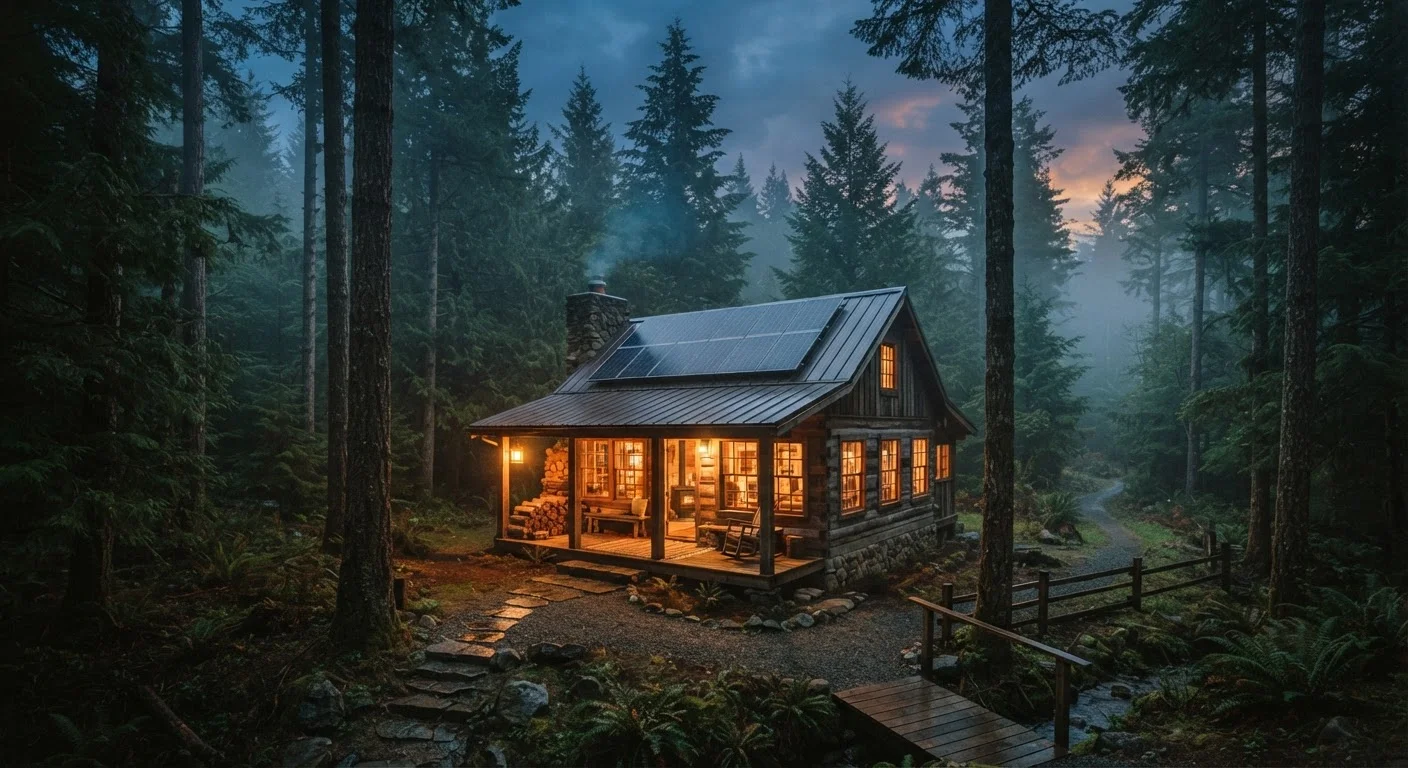
Photo credit: ExploreRoute.net | Travel Made Simple
Off-grid lodging is neither as primitive nor as inaccessible as most assume. Unpacking the myths that put curious travellers off.
Key Takeaways
- Off-grid lodging covers a wide spectrum — from basic tent sites to architect-designed eco-lodges with modern amenities.
- Solar, wind, and rainwater systems now power many off-grid properties reliably, including Wi-Fi and hot showers.
- Off-grid stays require preparation, but that doesn't mean they are inherently unsafe or inaccessible.
- Booking an off-grid property is often straightforward and doesn't require specialist knowledge or equipment.
- The experience is less about deprivation and more about intentional, place-focused travel.
Why These Myths Persist — And Why They Matter
Off-grid accommodation has expanded dramatically as a category, yet the mental image many travelers hold remains stubbornly outdated: pit toilets, no phone signal, and meals cooked over an open flame in the rain. That image keeps genuinely curious travelers from experiences that regularly rank among the most memorable of their lives.
The misconceptions tend to cluster around comfort, safety, accessibility, and booking complexity. Unpacking them isn't about selling a fantasy — it's about giving travelers an accurate picture so they can decide whether this style of stay genuinely suits them. For context on what remote lodging actually involves day-to-day, see our companion piece Misconceptions About Remote Lodging — And What the Experience Is Actually Like.
Myth
Off-grid means no running water, no electricity, and no real comfort. It's essentially camping with extra steps.
Fact
Many off-grid properties operate solar, wind, or micro-hydro systems that power full kitchens, hot showers, and even high-speed satellite internet.
The definition of off-grid simply means the property operates independently from municipal utility grids — it says nothing about the quality of the experience. A growing number of off-grid lodges and eco-cabins are architecturally designed, thoughtfully outfitted, and more comfortable than a mid-range hotel. The energy source is different; the amenity level often is not.
Myth
You won't be able to reach anyone in an emergency. Off-grid means being completely cut off.
Fact
Responsible off-grid operators maintain satellite communication devices, emergency protocols, and often have partnerships with local emergency services.
While cell coverage may be limited in remote areas, this is not the same as being unreachable. Satellite phones, personal locator beacons (PLBs), and two-way radios are standard equipment at well-managed off-grid properties. Guests should always ask about emergency procedures before arrival — but the absence of a cell tower does not equal an absence of safety infrastructure.
Myth
Booking an off-grid stay is complicated and requires specialist knowledge or gear most travelers don't have.
Fact
Most off-grid properties can be booked through standard reservation channels and provide clear packing guidance suited to their specific environment.
The booking process is rarely more complex than any other niche accommodation. Reputable off-grid operators are experienced at onboarding guests who have never stayed this way before. They typically provide detailed pre-arrival guides covering what to bring, what not to bring, and how to make the most of the systems on-site. The learning curve is gentle for most travelers.
Myth
Off-grid stays are only for hardcore outdoor enthusiasts or people who want to disconnect completely.
Fact
Off-grid accommodation attracts a wide range of travelers, including families, remote workers, and couples seeking a change of pace — not necessarily a digital detox.
The stereotype of the off-grid traveler as someone who runs ultramarathons and shuns screens is largely inaccurate. Satellite internet has made many off-grid properties viable for remote work. Families use them as a structured way to introduce children to nature without sacrificing basic comfort. The common thread is a preference for intentional, place-specific travel — not any particular fitness level or ideology.
Myth
Off-grid properties are environmentally irresponsible because they often sit in pristine or protected areas.
Fact
Many off-grid operators are subject to stringent land-use conditions and use low-impact construction and waste management as core design principles.
Operating in a remote or ecologically sensitive area typically requires permits, environmental impact assessments, and ongoing compliance with land management authorities. Off-grid properties that have earned certification through recognized sustainability programs are often held to higher environmental standards than conventional hotels. As always, travelers benefit from verifying the specific practices of any property they're considering rather than assuming either virtue or harm.
What to Actually Expect Before You Go
Understanding the myths is a starting point. The next step is practical preparation — and that looks very different depending on the specific property and its location. Variables worth verifying in advance include water source reliability, waste management systems, road access in different seasons, and whether emergency contact protocols are in place.
Don't Skip the Pre-Arrival Research
Off-grid stays vary enormously in their infrastructure and risk profile. A property that is suitable for a solo experienced traveler in summer may be genuinely hazardous in winter or for guests with specific medical needs. Always review the property's own guidance on road access, weather conditions, and nearest medical facilities. For road and terrain assumptions that can compound these risks, see our piece on myths about driving across remote terrain.
If your interest extends to a specific rural town or village rather than a standalone property, our practical pre-booking checklist for rural village stays covers the questions most travelers forget to ask. And if assumptions about small destinations are also holding you back, the misconceptions that keep travelers away from small towns addresses those directly.
Off-grid travel rewards preparation over improvisation. But preparation is learnable, and the stays that result — genuinely embedded in landscape, season, and place — tend to be the ones that stay with travelers longest.
~30%
Growth in glamping and off-grid listings
Industry analysts tracking alternative accommodation have noted significant year-on-year growth in off-grid and glamping listings across major booking platforms through the early 2020s.
72%
Travelers open to off-grid stays post-trip
Surveys of travelers who completed a first off-grid or remote stay consistently show high rates of willingness to repeat the experience, according to hospitality research published in recent years.

Author
Where to Stay Editorial Team
Where to Stay Editorial Team is the collective byline for our editorial team and contributor network. Articles published under this byline or an editorial pen name are researched, written, and reviewed according to our editorial standards for clarity, consistency, and independence before publication.
View all articles →