
Planning a Unique Stay Around Accessibility Needs
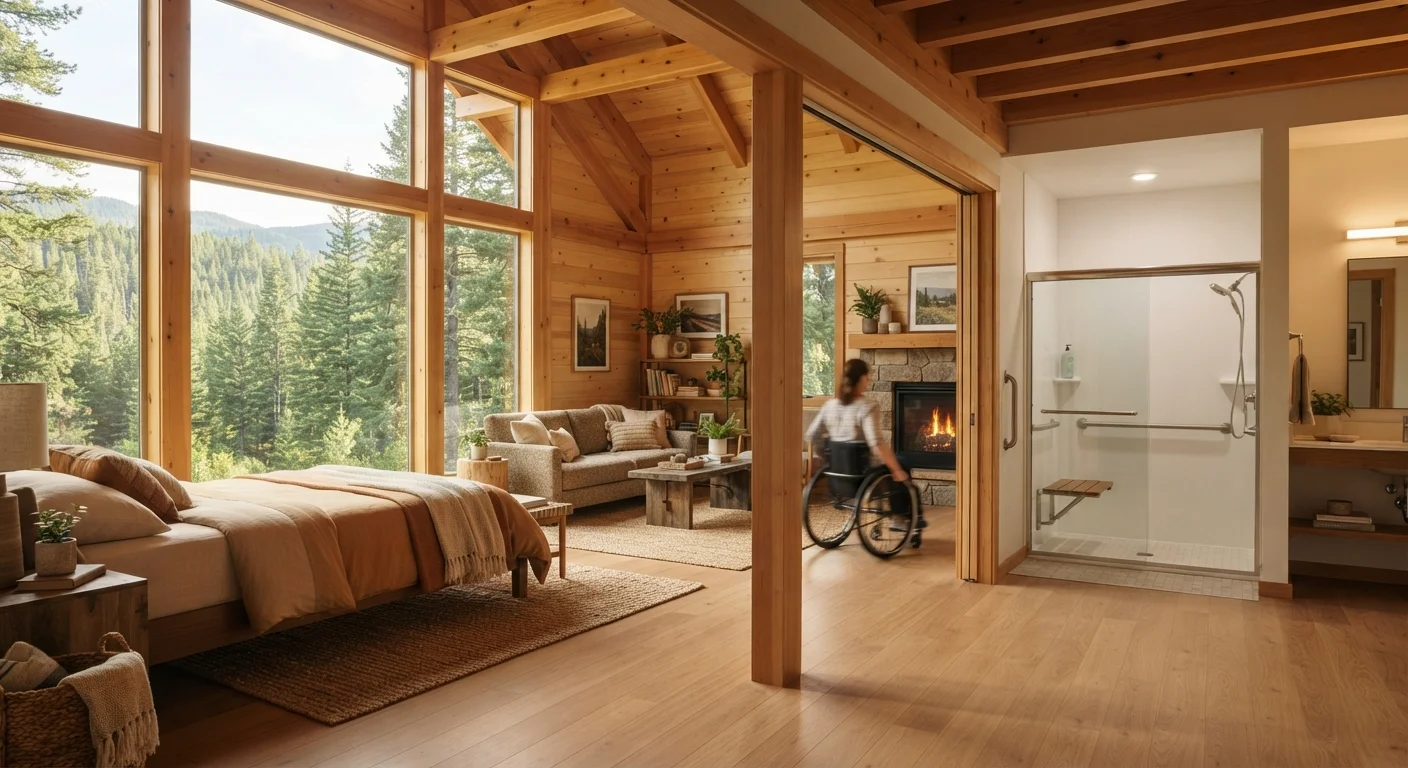
Photo credit: ExploreRoute.net | Travel Made Simple
In this article
Unconventional lodging and accessibility don't have to conflict. A guide to finding and assessing offbeat stays with mobility in mind.
Key Takeaways
- Accessibility features in unique stays vary widely and are rarely standardized — direct verification is essential.
- Framing your specific needs clearly when contacting hosts dramatically improves the quality of information you receive.
- Some unconventional lodging categories — converted historic buildings, glamping sites, renovated cabins — are more likely to offer accessible configurations.
- A written accessibility confirmation from the host provides a reference point if conditions differ on arrival.
- Backup planning for lodging near your unique stay adds practical safety net for travelers with critical mobility requirements.
Why Accessibility Planning Looks Different for Unique Stays
Unconventional lodging — from renovated grain silos to lakeside yurts — operates outside the standardized frameworks that govern hotel accessibility. There is no universal equivalent of ADA compliance in the world of independent, owner-operated unique stays. This doesn't mean accessible options don't exist; it means the research process is more active and the onus falls more squarely on the traveler to surface accurate information before booking.
The category of unique stay matters enormously. Ground-level structures with open floor plans offer more retrofitting potential than elevated treehouses or cliff-face cave dwellings. Understanding the structural character of each format — before you start searching individual properties — saves significant time and prevents the disappointment of getting attached to a stay that is fundamentally incompatible with your needs. For a deeper orientation, our complete guide to unique stays provides broad context for how this category of lodging works.
Verify Directly — Don't Rely on Listings Alone
Accessibility claims in unconventional lodging listings are often vague, inconsistent, or simply absent. What a host describes as 'easy access' may not meet your actual needs. Always contact the property directly with specific, written questions before booking — and request photo or video documentation where possible.
The steps below are designed to move you efficiently from a vague interest in unique stays to a grounded, informed decision about a specific property — with your accessibility needs treated as primary criteria throughout.
What you will need
Tools and Resources You'll Need
Approaching this process systematically requires a few practical inputs beyond enthusiasm. Having these in place before you begin makes each step faster and more reliable.
Direct host contact (email or phone)
Used to ask specific accessibility questions and request photos or video walkthroughs of the space.
Written accessibility checklist
A personalized list of your must-have features — step heights, bathroom dimensions, path surfaces — to systematically assess each property.
Satellite or street-view mapping tools
Used to assess the terrain surrounding a property before arrival, including driveway and path conditions.
Travel insurance documentation
Provides recourse if a stay is misrepresented and you need to make alternative arrangements on arrival.
If you're new to the broader landscape of unconventional lodging options, consider spending time with our guide to booking beyond the hotel search bar before applying the steps below.
Step-by-Step: Assessing and Booking an Accessible Unique Stay
Follow these steps in sequence. Earlier steps are designed to eliminate incompatible options before you invest time in detailed research on individual properties.
Define your non-negotiables before searching
Before evaluating any specific property, build a written list of features your stay must have versus those that are simply preferred. These will differ by traveler — a wheelchair user's requirements are distinct from someone with low vision or a cardiac condition. Consider interior thresholds, bathroom configuration (roll-in shower vs. tub, grab bar placement), bed height, path surfaces from parking to entry, and proximity to emergency services if relevant. This list becomes your filter at every subsequent step.
Screen listing categories for structural feasibility
Not all unique stay formats carry the same accessibility potential. Before diving into individual properties, filter your options by category. Our field guide to unconventional stays outlines the structural character of each type — which is useful context for anticipating what each format can and cannot accommodate. Ground-level glamping pods, renovated cottages, and certain converted buildings are generally more promising starting points than treehouses or floating cabins for travelers with mobility requirements.
Contact hosts with specific, written questions
Once you've identified candidate properties, reach out to each host via email so responses are documented. Ask specific questions rather than broad ones: not 'Is your property accessible?' but rather 'Is the path from parking to the front door paved or gravel, and what is the approximate distance?' Ask about step counts and heights, door widths, whether the bathroom has a walk-in shower, and whether any steps inside the unit can be ramped. Request photos or a short video walkthrough of the entry route and bathroom.
Evaluate the surrounding environment, not just the unit
The lodging unit itself is only part of the accessibility equation. Assess the terrain and infrastructure around the property: Is parking close to the entrance? What are the ground conditions on paths between the cabin and any shared facilities (fire pits, bathhouses, dining areas)? Use mapping tools to get a sense of the landscape before arrival. For rural or remote unique stays, also consider the distance to the nearest medical facility — relevant context for travelers managing serious health conditions.
Request written confirmation of key accessibility features
Once you're satisfied with a host's responses, ask them to confirm the key accessibility details in writing — either by email or through the platform's messaging system. This isn't adversarial; it simply establishes a shared record. If conditions on arrival differ materially from what was confirmed, you have a documented basis for discussing resolution with the host or pursuing recourse through the booking platform.
Build a contingency plan before you travel
For travelers whose needs are critical rather than preferential, identify a backup accommodation option — ideally a nearby hotel with verified ADA-compliant features — before departing. This isn't pessimism; it's practical risk management for situations where a property doesn't match its description. Knowing you have a fallback reduces the stress of navigating a mismatch on arrival and allows you to engage with the host calmly. See our guide to what makes unique stays genuinely worthwhile for how to weigh the character of a stay against its practical constraints.
Adaptive Reuse Properties Are Worth Prioritizing
Converted buildings — former schools, warehouses, and churches — are sometimes retrofitted to current building codes during renovation, which can mean more consistent accessibility than purpose-built rustic stays. Our guide to adaptive reuse lodging covers what to look for in these properties.
Unique Stays Have Structural Limitations
Treehouses, cave dwellings, yurts, and boats are structurally constrained in ways that standard hotels are not. Even well-intentioned hosts may be unable to retrofit these spaces. Go in with calibrated expectations and read our honest look at unique stay trade-offs before committing.
The process takes more effort than booking a chain hotel — but the result can be a stay that is both genuinely accessible and genuinely memorable. Those two qualities are not mutually exclusive.

Author
Where to Stay Editorial Team
Where to Stay Editorial Team is the collective byline for our editorial team and contributor network. Articles published under this byline or an editorial pen name are researched, written, and reviewed according to our editorial standards for clarity, consistency, and independence before publication.
View all articles →