
Your First Unique Stay: Navigating Bookings Beyond the Hotel Search Bar
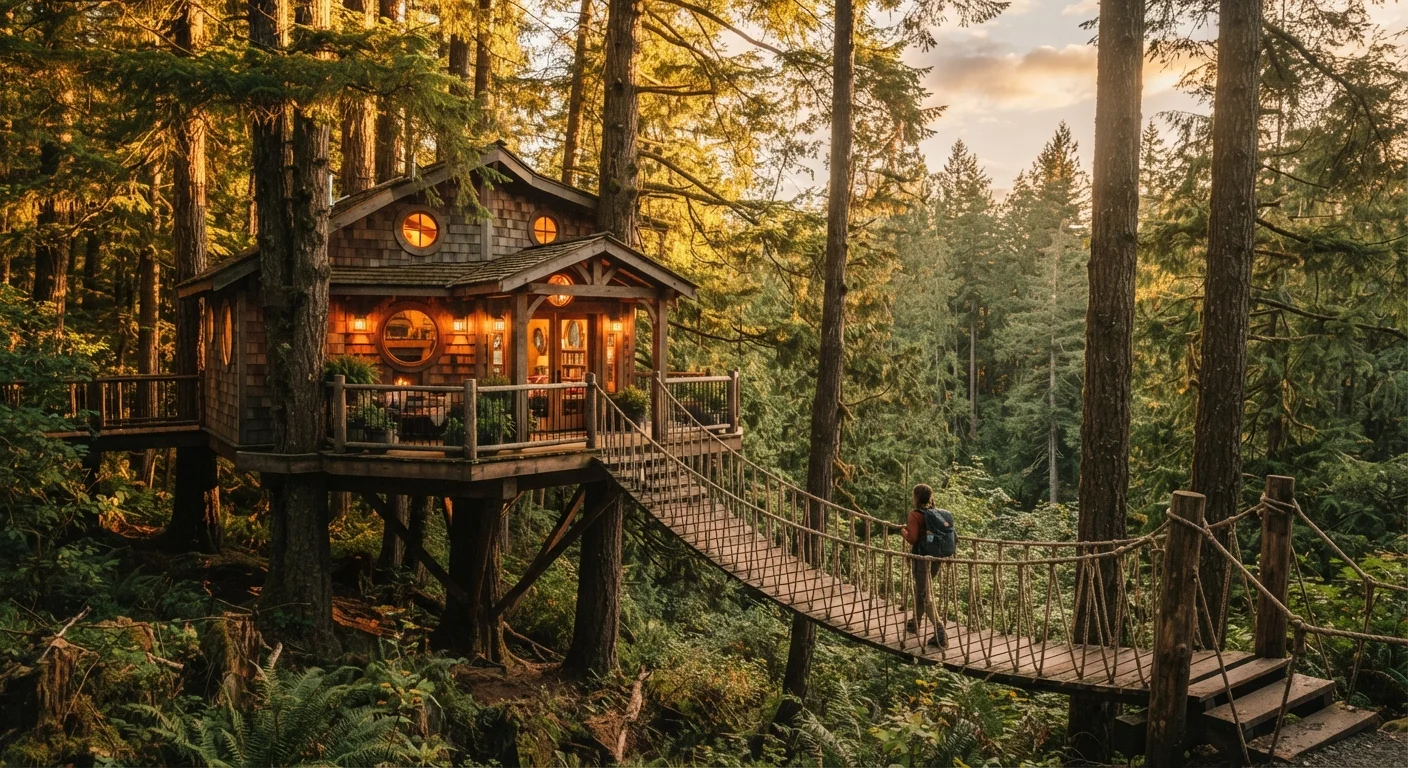
Photo credit: ExploreRoute.net | Travel Made Simple
In this article
New to unconventional lodging? This guide walks you through how to find, vet, and book offbeat accommodation confidently.
Key Takeaways
- Unique stays span far beyond treehouses — caves, converted vessels, yurts, and historic structures all qualify.
- Specialty platforms and direct outreach often surface properties that mainstream hotel searches miss entirely.
- Thorough listing scrutiny — photos, host communication, and cancellation policies — reduces booking risk significantly.
- Trade-offs like limited amenities or remote locations are real; calibrating expectations before arrival matters.
- Accessibility varies widely across unconventional properties; always verify specifics directly with the host.
What Counts as a Unique Stay?
The phrase "unique stay" gets used loosely, but in practical terms it describes any lodging that prioritizes experience and distinctiveness over the standardized comfort model of conventional hotels. That covers a broad spectrum: treehouses, cave dwellings, floating cabins, converted train carriages, lighthouse apartments, geodesic domes, underground burrows, and shepherd's huts, among many others.
What unites them isn't quirk for its own sake — it's that the structure, setting, or concept of the accommodation is itself part of what you're traveling for. The stay is the destination as much as any local attraction. Our field guide to unconventional stay categories breaks down the most distinct types in detail, including who each tends to suit. If you're still mapping the landscape, that's a useful reference alongside this guide.
Unique stay
Lodging where the structure, setting, or concept is itself a primary draw — treehouses, caves, converted vessels, and similar properties that offer a distinctly different experience from conventional hotels.
Glamping
A form of camping that provides elevated comfort — think furnished safari tents, yurts with real beds, or dome structures with climate control — while still placing guests in natural or semi-wild settings.
Host
The individual or small business that owns and manages a unique stay property, often accessible directly through a listing platform and typically the main point of contact for questions and logistics.
Off-grid
A property that operates independently of municipal utilities, relying instead on solar power, rainwater collection, composting toilets, or similar self-contained systems — common in remote unique stays.
Cancellation policy
The terms under which a booking can be cancelled and whether a refund is issued. Unique stays often have stricter or non-standard policies compared to hotel chains, making it essential to read before booking.
Where to Actually Find These Properties
Standard hotel search engines index conventional inventory and surface unique stays only inconsistently. More reliable approaches include specialty platforms built specifically around alternative lodging, direct searches on vacation rental sites filtered aggressively by property type, and niche travel blogs or editorial sites that curate unusual properties by category or region.
Social platforms, particularly those organized around photography, have also become informal discovery channels — searching a structure type alongside a destination can surface privately operated properties with no major platform presence. Once you identify a property independently, reaching out directly to ask about booking is entirely reasonable.
For location-specific searches, browsing stays by destination type can narrow your focus to what's feasible in a given region. Some areas — the American Pacific Northwest, rural Iceland, parts of coastal Portugal — have dense concentrations of unconventional properties worth searching specifically.
Search Beyond the Big Platforms
Niche booking platforms focused on eco-lodges, farm stays, or wilderness properties often carry inventory that never appears on mainstream travel sites. Spending twenty minutes on a specialty platform before defaulting to a general search can surface genuinely different options. Some of the most memorable properties operate with minimal digital marketing and are easy to overlook if you only search familiar channels.
How to Vet a Listing Before You Commit
The diligence required here is higher than for a branded hotel chain, where consistency is built into the model. For unique stays, the listing itself is your primary source of truth — and listings vary enormously in quality and accuracy.
- Photos: Look for images that show all rooms, the bathroom, kitchen facilities if any, and the exterior access path. Absence of certain photos is informative.
- Reviews: Prioritize reviews that mention specifics — sleep quality, noise, temperature regulation, host responsiveness — over those that are purely enthusiastic. Recent reviews carry more weight than older ones.
- Host communication: Message the host before booking with a specific question. Response time, tone, and the quality of the answer reveal a lot about what your stay experience will be like.
- Cancellation policy: Unique stays often have stricter cancellation terms than hotels. Read these carefully before committing, particularly for expensive or remote properties.
For an honest look at where these stays can fall short, our guide on the trade-offs of unconventional lodging is worth reading before you book your first one.
Managing Expectations Going In
The most common source of disappointment with unique stays isn't the property itself — it's the mismatch between expectation and reality. A converted train carriage, for example, has genuine quirks that no renovation fully eliminates: curved walls, compact layouts, acoustics shaped by decades of industrial use. Understanding those realities ahead of time makes the difference between charm and frustration.
More broadly, unique stays frequently involve trade-offs that standard hotels don't: limited mobile signal, no on-site staff, self-catering requirements, unconventional sleeping surfaces, and weather dependency for outdoor elements. These aren't flaws — they're often inseparable from what makes the experience worthwhile. The question to ask yourself before booking is whether those conditions fit your specific trip, not whether they'd suit an idealized version of it.
What separates a gimmick from a genuinely transformative stay is worth understanding, too — not every offbeat listing delivers an experience that justifies its novelty.
Novelty Doesn't Guarantee Quality
A property can be genuinely unusual and still deliver a poor experience — through inadequate maintenance, misleading photos, or a host who's difficult to reach. Treat unconventional lodging with the same critical scrutiny you'd apply to any accommodation. A striking concept doesn't offset thin review history or vague listing descriptions.
Accessibility and Practical Logistics
Unconventional properties often present accessibility challenges that standard lodging wouldn't. Elevated structures, ladder-only access, uneven terrain, composting toilets, and off-grid power sources are common. If any of these factors matter to your group, verify them explicitly — don't assume the listing description covers everything.
Our guide to planning unique stays around accessibility needs goes into this in depth, including the right questions to ask hosts and what to look for in photos. As a baseline: always contact the host directly with any accessibility-specific question before booking. Written confirmation of details — parking proximity, step counts, bathroom configuration — protects you and sets clear expectations for both parties.
Finally, practical logistics deserve attention: how far is the nearest town or grocery store, is the road accessible in your expected season, and what happens if something goes wrong on-site? Having answers to these before arrival prevents situations that are merely inconvenient from becoming genuinely disruptive. For a broader framework on navigating all types of stays, our complete guide to unique stays offers a thorough foundation.
Frequently Asked Questions

Author
Where to Stay Editorial Team
Where to Stay Editorial Team is the collective byline for our editorial team and contributor network. Articles published under this byline or an editorial pen name are researched, written, and reviewed according to our editorial standards for clarity, consistency, and independence before publication.
View all articles →