
Cabin Categories Decoded: Inside, Oceanview, Balcony, and Suite
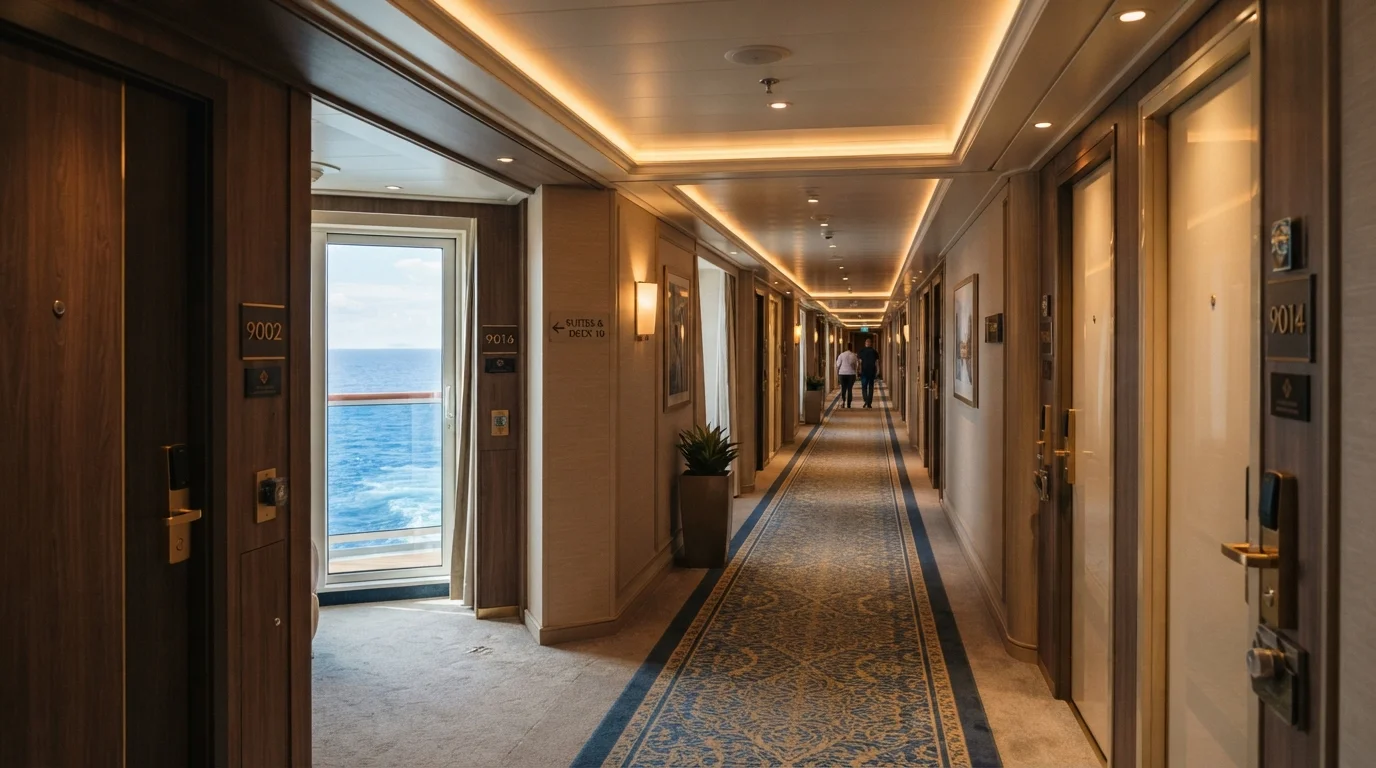
Photo credit: ExploreRoute.net | Travel Made Simple
In this article
A clear breakdown of every standard cabin type on a cruise ship — what you get, what you sacrifice, and who each suits best.
The Four Core Cabin Categories
Every ocean cruise ship organizes its staterooms into four foundational categories: inside, oceanview, balcony, and suite. While marketing names vary by line — "interior," "porthole cabin," "veranda," "penthouse" — the underlying distinctions are consistent across the industry. Knowing what separates each tier helps you allocate your budget where it genuinely improves your experience at sea.
| Inside Cabin Typical Size | 150–200 sq ft |
| Oceanview Cabin Typical Size | 150–210 sq ft |
| Balcony Cabin Typical Size | 200–250 sq ft + 40–60 sq ft balcony |
| Junior Suite Typical Size | 300–400 sq ft |
| Full Suite Typical Size | 500–1,000+ sq ft |
| Lowest-motion deck position | Midship, lower-to-middle decks |
For a deeper look at how accommodation tiers stack up across the broader travel landscape, see our hotel style spectrum guide for a parallel breakdown across land-based lodging.
Inside Cabins: The Case for Going Windowless
What you get: A fully self-contained stateroom — bed, bathroom, storage, climate control — with no window or natural light. Sizes range from roughly 150 to 200 square feet on most mainstream ships.
What you sacrifice: Any visual connection to the sea. Noise from neighboring cabins or ship infrastructure can be more noticeable depending on deck placement. That said, blackout conditions can be a genuine advantage for heavy sleepers or those crossing multiple time zones.
Best suited for: Budget-conscious travelers who plan to spend most waking hours off the ship or on public decks. Inside cabins also appeal to solo cruisers paying a single supplement, since the per-person cost difference widens considerably in higher categories.
Inside Cabin
A stateroom with no window or porthole. It is typically the smallest and least expensive cabin category, offering full amenities but no natural light or ocean views.
Oceanview Cabin
A stateroom with a fixed window or porthole providing natural light and sea views. The window does not open, so there is no outdoor access or fresh air.
Balcony Cabin
A stateroom with a private outdoor balcony accessible via a sliding or hinged door. Balconies offer fresh air, personal sea views, and outdoor seating, usually at a price premium over oceanview.
Suite
The highest standard cabin tier, offering significantly more living space than other categories. Suites often include exclusive perks such as dedicated concierge service, priority boarding, and access to private dining venues.
Junior Suite
An entry-level suite category, larger than a standard balcony cabin but generally without the full service perks of higher suite tiers. A common middle ground for travelers seeking more space without full suite pricing.
Ship Within a Ship
A hospitality concept offered by some cruise lines where suite guests have access to a private enclave — exclusive sun decks, restaurants, and lounges — separate from the main passenger areas of the ship.
Deck Plan
A schematic layout of a cruise ship showing the exact location of every cabin, public space, and amenity on each deck. Reviewing a deck plan before booking helps identify noise-prone or obstructed-view staterooms.
Oceanview Cabins: A Window to the Sea
What you get: A fixed porthole or picture window that lets in natural light and views — but does not open. Sizes are comparable to inside cabins, sometimes slightly larger. The psychological lift of waking to daylight and being able to gauge weather conditions is meaningful on longer voyages.
What you sacrifice: Fresh air and any outdoor access. Window placement varies widely; lower-deck oceanviews on older ships sometimes face lifeboats or structural obstructions, so it's worth checking deck plans before booking.
Best suited for: Travelers who want natural light on a constrained budget and spend limited time in their cabin. Families with young children who nap on schedule also find the day/night light cue useful without paying for a balcony.
Balcony Cabins: Fresh Air and Private Outdoor Space
What you get: A sliding or hinged door opening onto a private furnished balcony — typically fitted with two chairs and a small table. Total square footage usually runs 200–250 sq ft with an additional 40–60 sq ft of balcony. You control your own access to sea air, sailaway views, and quiet mornings at sea.
What you sacrifice: A meaningful price premium over oceanview. Privacy on balconies is imperfect — neighbors can often hear conversations, and some ships position balconies where they overlook a lower deck. Forward and aft balconies tend to be windier than midship positions.
Best suited for: Cruisers taking longer itineraries (seven nights or more), sea-day-heavy routes, or scenic sailings where landscapes justify private viewing. Couples celebrating occasions, and passengers who value morning coffee outdoors, consistently rate balconies as their most-used cabin feature. For a rigorous side-by-side comparison, see Balcony Cabin vs. Oceanview.
Suites: Space, Service, and Ship-Within-a-Ship Access
What you get: Significantly more living space — junior suites start around 300 sq ft, full suites often exceed 500 sq ft, and multiroom suites on premium ships can surpass 1,000 sq ft. Beyond size, suites typically unlock dedicated concierge service, priority embarkation and tendering, exclusive dining venues, and private sun decks on ships that operate a "ship within a ship" concept.
What you sacrifice: A substantially higher fare. The value equation hinges on whether you actually use the included perks — if exclusive dining and concierge service are central to your travel style, the premium compresses; if you prefer the communal ship atmosphere, it's harder to justify.
Best suited for: Longer voyages, luxury-oriented travelers, or those using the cruise as a primary destination rather than a platform for port exploration. Understanding the full rhythm of daily life aboard — what a typical sea day actually looks like — helps contextualize how much time you'll actually spend in the cabin.
~40%
Share of staterooms that are inside cabins on many large ships
Inside cabins typically make up the largest single cabin category by count on mainstream cruise ships, reflecting strong demand from value-oriented travelers.
500+ sq ft
Minimum size of full suites on premium cruise lines
Full suites on premium and luxury ships routinely exceed 500 square feet of interior space, often with separate living and sleeping areas.
Choosing the Right Category for Your Voyage
The right cabin is not simply the most expensive one available — it's the one whose trade-offs align with how you actually cruise. Itinerary type matters: a port-intensive Mediterranean run means less cabin time, shifting value toward inside or oceanview. A scenic Alaska or Norwegian fjords voyage tilts the calculation decisively toward balconies. Suite-tier perks compound over longer sailings where concierge access and exclusive venues get daily use.
Deck and position within a category can matter as much as the category itself. Midship cabins on lower-to-middle decks experience less motion at sea. Cabins directly below pool decks or above entertainment venues are consistently noisier. Consulting ship-specific deck plans — available through cruise line websites — before finalizing a booking is always worthwhile.
For context on the unspoken social dynamics that shape how cabin choices interact with shared ship spaces, our guide on onboard etiquette rules is a practical companion read. And for terminology you'll encounter on booking documents, the cruise itinerary terms glossary covers the language of cruise planning from end to end.
Cabin Category Names Vary by Cruise Line
There is no industry-wide standardization for cabin category names. What one line calls a "Veranda" another calls a "Balcony Stateroom" or "Sea View with Private Terrace." Always read the category description rather than relying on the label alone. Confirming whether a balcony is fully or partially obstructed, and whether a suite tier includes specific perks, requires checking the cruise line's own specifications before booking.

Author
Cruise Journeys Editorial Team
Cruise Journeys Editorial Team is the collective byline for our editorial team and contributor network. Articles published under this byline or an editorial pen name are researched, written, and reviewed according to our editorial standards for clarity, consistency, and independence before publication.
View all articles →