
Onboard Etiquette Rules That Seasoned Cruisers Live By
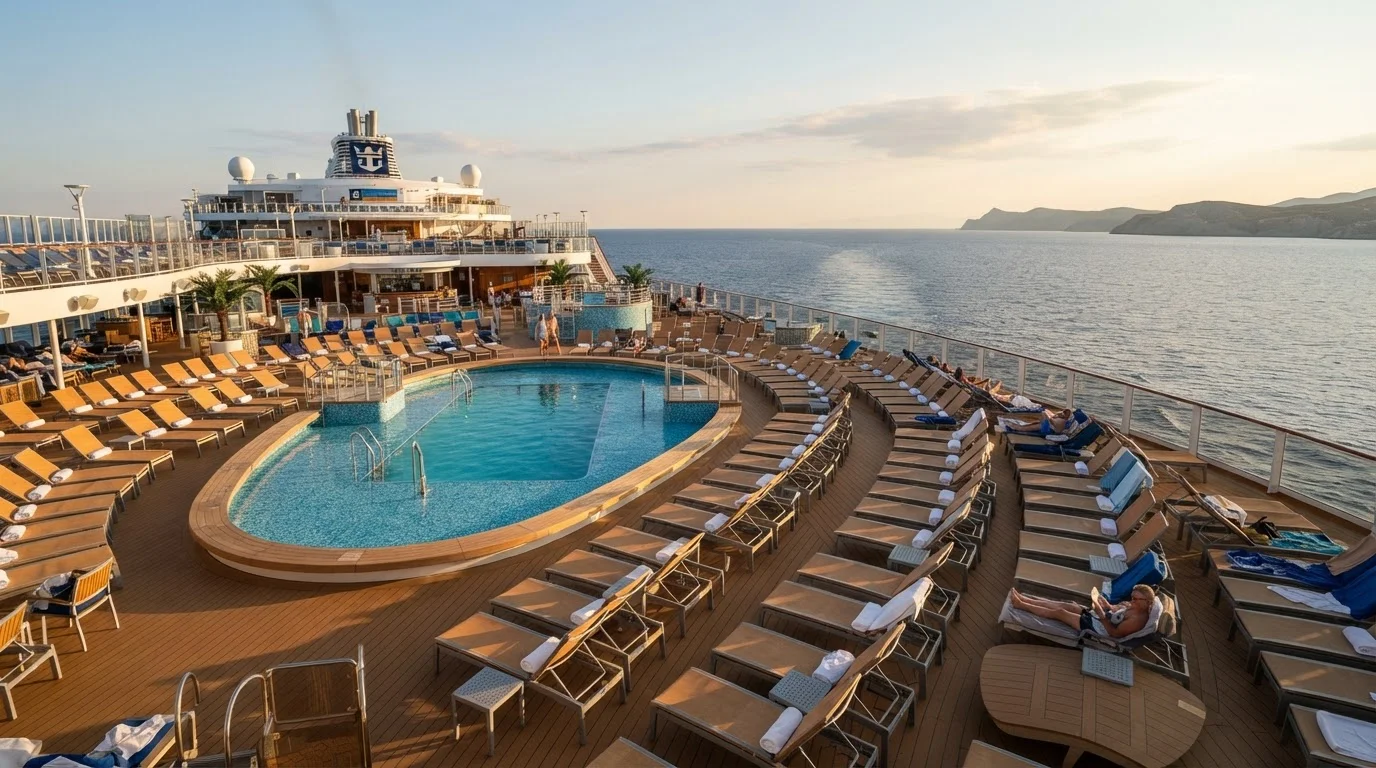
Photo credit: ExploreRoute.net | Travel Made Simple
In this article
Deck chairs, dining reservations, elevator habits — the unspoken social norms that keep cruise life pleasant for everyone.
Key Takeaways
- Reserving deck chairs with towels and then leaving for hours is widely considered the single most discourteous act onboard.
- Dining room etiquette — including punctuality and dress codes — signals respect for fellow guests and crew alike.
- Elevator and corridor habits aboard ship matter more than on land because shared spaces are unavoidable and constant.
- Understanding gratuity norms and how pooled tips support crew welfare is essential knowledge for every cruiser.
- Balcony behavior directly affects neighboring cabins — sound and smoke travel farther at sea than most guests expect.
The Deck Chair Problem — and How Ethical Cruisers Handle It
Ask any veteran cruiser to name the most persistent shipboard grievance and the answer is almost always the same: towel-reserved deck chairs left empty for hours. On a ship carrying thousands of passengers, premium poolside real estate is genuinely finite. Placing a towel on a lounger at 7 a.m. and returning at noon isn't reserving a seat — it's removing it from circulation for the benefit of no one.
Most cruise lines have policies permitting staff to clear unattended chairs after 30 to 60 minutes, though enforcement varies. Seasoned cruisers don't rely on enforcement; they simply arrive, occupy, and yield. If you need to leave the deck for a meal or a quick dip, take your belongings with you or accept that another guest may use the space. On sea days especially — when the deck competes with many onboard options — redistributing space organically keeps the atmosphere pleasant for everyone.
Occupy deck chairs only when you are actively present and using them
Towel-saving removes scarce poolside space from circulation for hours, creating friction that ripples through the entire passenger community on sea days. Respecting this norm signals awareness of shared space and earns goodwill among fellow guests.
Arrive on time for dining reservations and honor cancellation windows
Late arrivals disrupt service choreography for entire dining sections, and no-shows at specialty restaurants deprive other guests of access. Crew members manage precise timing sequences that a single latecomer can derail.
Keep balcony sound at conversational volume, especially after 9 p.m.
Balcony partitions offer minimal acoustic separation, and sound carries across open water. What feels like a private outdoor moment can be clearly audible in two or three neighboring cabins simultaneously.
Shower before using pools or hot tubs
Pre-swim showers are a ship-posted requirement that exists for genuine sanitation purposes, not ceremony. Oils, sunscreen, and sweat compound water-treatment demands in enclosed aquatic environments.
Maintain auto-gratuities and address service concerns through guest services
Pooled gratuities form a structurally significant part of crew wages. Blanket removal affects every member of the service team, including those whose individual performance was not the issue.
Keep corridor and common-area conversations brief and low-volume after 10 p.m.
Cabin walls on ships are thinner than most hotel construction, and corridor sound travels. Late-night noise on cabin decks wakes passengers who may have early port calls the next morning.
Dining Room Conduct and Specialty Restaurant Norms
The main dining room operates on rhythms that every passenger implicitly agreed to join. Arriving late to a shared table disrupts service timing, delays courses for the entire table, and puts avoidable pressure on servers managing multiple seatings. If your plans genuinely run long, a quick call to the dining room saves everyone frustration.
Dress codes in formal dining spaces are another area where experience matters. Most ships still designate at least one or two formal evenings per voyage. For guidance on what to pack across these occasions, the comprehensive cruise packing list is a practical reference. Showing up to a formal night in poolside attire isn't a minor faux pas — it signals indifference to a shared experience that other guests have invested in.
At specialty restaurants, honor cancellation windows. These venues operate with tight covers, and a no-show blocks another guest from booking. Cancel by the posted deadline; your cabin steward or the ship's app can usually handle this in under a minute.
A Simple Rule for Specialty Dining
Most specialty restaurants on contemporary ships open cancellation free-of-charge up to two to four hours before your booking. Check the specific window on embarkation day and save the cancellation method — app, phone, or front desk — so you're never caught holding a reservation you can't use. It's a small act that directly benefits another passenger on the waitlist.
Elevator, Corridor, and Common Space Habits
On a ship, you share corridors, elevators, and stairwells with the same several thousand people for the entire voyage. Small courtesies accumulate — or erode — over days at sea in ways they simply don't in a hotel. Allow elevator passengers to exit before boarding. Keep corridor conversations brief and low-volume, particularly on cabin decks after 10 p.m. Stow luggage and strollers against bulkheads rather than blocking passageways.
Pools and hot tubs carry their own specific norms. Shower before entering — every ship posts this requirement, and it exists for genuine sanitation reasons, not formality. Hot tubs have occupancy limits for safety, not suggestion. If a tub is at capacity, wait. These are the kinds of details that first-time cruisers rarely anticipate but that experienced passengers treat as baseline behavior.
30–60 min
Typical unattended chair policy window
Most major cruise lines permit staff to remove personal items from unoccupied deck chairs after 30 to 60 minutes, though active enforcement varies by ship and season.
1:2.5
Approximate crew-to-guest ratio on large ocean ships
Industry figures for large resort-style cruise ships suggest roughly one crew member for every two to three guests, meaning individual staff members manage demanding simultaneous workloads throughout every sailing day.
Balcony Etiquette and Cabin Neighbor Awareness
Balcony cabins create an illusion of private outdoor space, but the partition between your balcony and your neighbor's is thin — often a folding or sliding divider — and sound carries across open water far more readily than most guests expect. Loud music, speakerphone calls, and late-night conversations at balcony rail are genuinely intrusive to adjacent cabins. Keep balcony sound at a conversational level after 9 p.m.
Smoking on balconies is prohibited on the vast majority of cruise ships, and the reason is straightforward: cigarette smoke drifts directly into neighboring balconies and open cabin windows. Violations can result in disembarkation at the next port. For those selecting a balcony or suite cabin, understanding what comes with that space — including shared acoustic walls — is part of making an informed choice.
Smoking Policies Vary — But Rarely Include Balconies
The overwhelming majority of ocean cruise ships prohibit smoking on cabin balconies entirely. Designated smoking areas are typically limited to specific open-deck sections on one side of the ship. Violations are treated seriously and can result in significant fines or disembarkation. Always verify your ship's specific policy in the passenger contract or onboard guide at embarkation.
Gratuities, Crew Respect, and the Social Contract Onboard
Cruise ship gratuities — whether added automatically to your onboard account or distributed through a pooled system — represent a meaningful portion of crew compensation. Removing or reducing auto-gratuities without a documented service failure is broadly considered the most financially damaging thing a passenger can do to the people who make their voyage work. If a specific service issue warrants adjustment, address it through guest services rather than blanket removal.
Beyond tipping, basic courtesy toward crew — using names, acknowledging effort, not treating service staff as invisible — sets a tone that experienced cruisers understand reflects well on everyone in the shared environment. The crew-to-guest ratio on most ocean ships means the same individuals are serving, cleaning, and managing your experience simultaneously across multiple areas. A moment of patience or a simple acknowledgment costs nothing and matters considerably.
For context on how tipping customs extend beyond the ship itself, port tipping and payment norms vary significantly by region and are worth understanding before going ashore.

Author
Cruise Journeys Editorial Team
Cruise Journeys Editorial Team is the collective byline for our editorial team and contributor network. Articles published under this byline or an editorial pen name are researched, written, and reviewed according to our editorial standards for clarity, consistency, and independence before publication.
View all articles →