
Shore Excursions Through the Ship vs. Going Independent
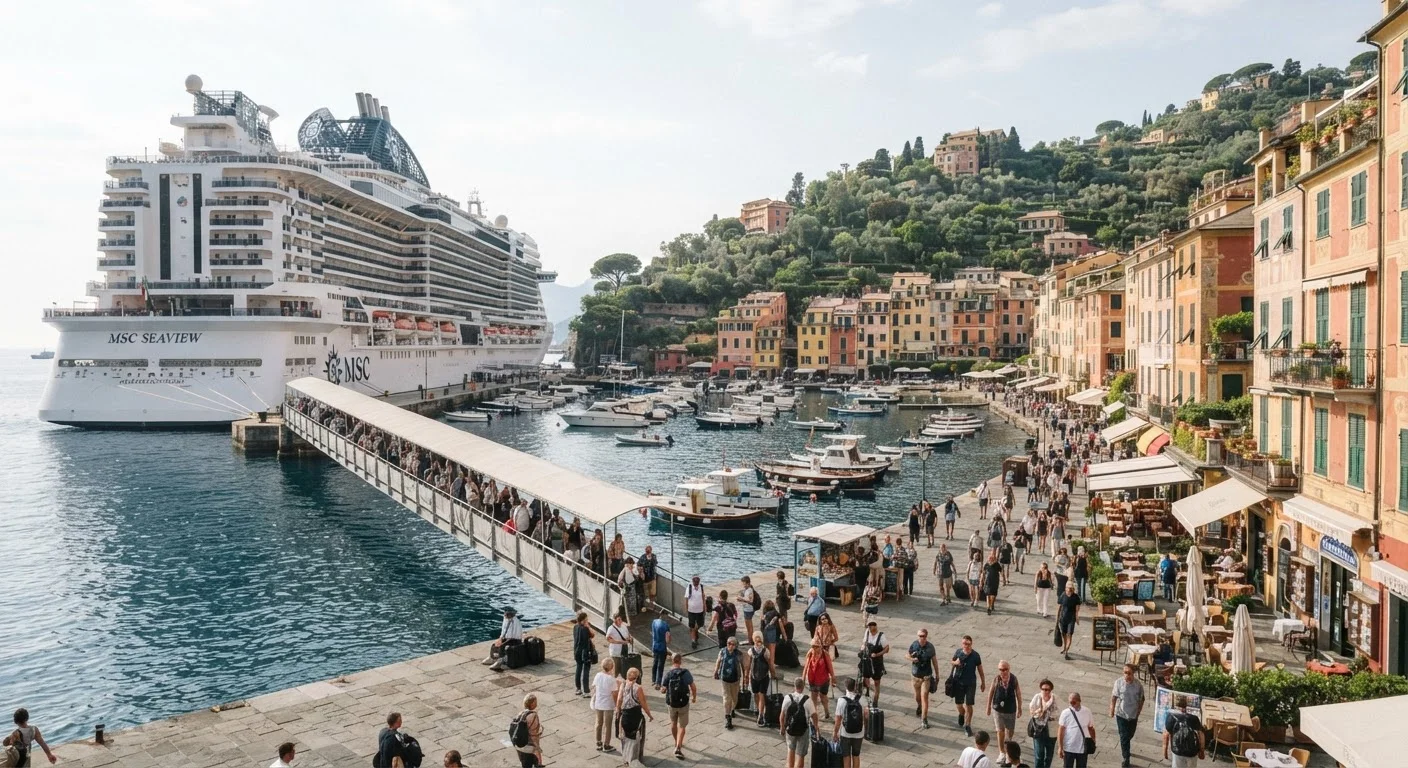
Photo credit: ExploreRoute.net | Travel Made Simple
In this article
Weigh the trade-offs between booking port tours through your cruise line and organising independent day trips ashore.
Key Takeaways
- Ship-organized excursions offer a guaranteed return policy — the vessel won't sail without you if you're on an official tour.
- Independent arrangements typically cost less and allow for more flexible, personalized itineraries ashore.
- Port complexity, language barriers, and available time are the key variables that should drive your decision.
- Some ports — particularly tender ports and those with limited infrastructure — genuinely favor ship-sponsored options.
- Mixing both approaches across a single itinerary is a common strategy among experienced cruisers.
The Core Trade-Off Every Port Day Forces
Every time a cruise ship drops anchor or ties up at a pier, passengers face the same quiet pressure: commit to a ship-sold excursion or step off the gangway on your own terms. The decision feels simple until you're weighing a €120-per-person bus tour against the uncertainty of finding a local taxi at 8 a.m. in a port you've never visited.
The Ports & Shore Life hub covers the full spectrum of port-day strategies, but the ship-versus-independent question sits at the center of nearly every planning conversation. Both approaches have genuine merit — and real drawbacks. Understanding them structurally, rather than defaulting to habit, is what separates reactive cruisers from intentional ones.
| Ship Excursions | Independent Exploration | |
|---|---|---|
| Cost | Higher — cruise line markup applies | Lower — book direct or use local transport |
| Re-boarding guarantee | Yes — ship waits for official tour groups | No — traveler assumes full responsibility |
| Flexibility | Fixed itinerary and group pace | Full control over timing and routing |
| Tender port priority | Priority boarding in most cases | Standard queue with other independent guests |
| Operator vetting | Cruise line audits partners for compliance | Traveler responsible for due diligence |
| Authenticity of experience | Curated, highlights-focused | Deeper local immersion possible |
| Best suited for | Complex ports, first-time visitors | Familiar ports, experienced travelers |
Where Ship Excursions Earn Their Premium
The single most defensible reason to book through your cruise line is the guaranteed re-boarding policy. On a ship-sponsored tour, if a road closure, mechanical issue, or delayed attraction runs your group over time, the vessel is contractually obligated to wait — or arrange transportation to the next port. That safety net has real value, particularly in ports where traffic is unpredictable or where the ship has a tight turnaround window.
Ship excursions also make logistical sense in tender ports — anchorages where passengers are ferried to shore by smaller boats — where independent travelers may face long queues for tender tickets while excursion groups board priority tenders first. Similarly, destinations with significant language barriers, limited English-speaking taxi drivers, or poorly marked attractions benefit from the built-in guidance that ship tours provide.
Research Ports Before You Sail
Spend time before departure reviewing each port's pier location, distance to town, and available local transport options. Cruise travel forums and port-specific guides are reliable sources for current conditions. Knowing whether a port is walkable — or whether you'll need a taxi or shuttle — is the single most useful piece of pre-sailing research you can do for independent days ashore.
There's also the matter of vetting. Reputable cruise lines audit their shore excursion operators on safety and licensing standards, which carries meaning in destinations where independent operator quality varies considerably. That said, see our piece on common shore excursion myths for a clear-eyed look at which safety claims hold up and which are overstated.
The Independent Case: Cost, Flexibility, and Authenticity
The financial argument for going independent is straightforward. Cruise lines typically mark up third-party tour operators significantly — a private tour that costs $60 per person booked directly may appear on the ship's excursion list at $110 or more. For families or groups of four, that differential compounds fast across a ten-day itinerary.
Beyond cost, independence unlocks a different quality of experience. Ship excursions are designed for large groups moving efficiently between highlights; independent travelers can linger at a fish market, divert to a neighborhood not on any tour map, or spend three hours at a single archaeological site. For experienced travelers already familiar with a region's rhythm, that autonomy is often the entire point of going ashore.
Shore time on a budget explores this in practical depth — covering everything from pre-researching local taxi rates to identifying which ports are genuinely walkable from the pier. The preparation that independent exploration demands is also its barrier: travelers who don't research in advance can end up spending more time and money than a ship tour would have cost.
For those traveling solo, the calculus shifts further — see our analysis of solo cruising trade-offs for how port-day decisions intersect with the broader solo travel experience.
Port-by-Port Decision Framework
The most effective approach treats each port as its own decision rather than applying a blanket rule. Consider these variables:
- Port infrastructure: Ports with reliable public transit, metered taxis, and walkable town centers (think Dubrovnik, Nassau, or Victoria, BC) suit independent travelers well. Remote or sprawling destinations with few transport options favor ship tours.
- Time ashore: A six-hour port call with an 8 a.m. arrival gives independent travelers ample runway. A four-hour window at a complex site often argues for a structured tour.
- Personal familiarity: Returning to a port you've visited before is an ideal moment to go independent — you already know the layout and have a baseline for local pricing.
- Group composition: Traveling with young children, elderly family members, or anyone with mobility considerations may tip the balance toward the logistical predictability of a ship excursion.
For a broader look at how these decisions play out across different traveler profiles, our dedicated comparison of organized excursions versus independent exploration provides additional port-specific context.
~30–50%
Typical cruise line markup on third-party tours
Industry observers and travel analysts generally estimate cruise lines apply a 30–50% margin over operator wholesale rates for excursion bookings.
Tender priority
Key advantage in anchor ports
In ports requiring tender boats, ship-excursion passengers typically board before independent travelers, shortening time ashore lost to waiting.

Author
Cruise Journeys Editorial Team
Cruise Journeys Editorial Team is the collective byline for our editorial team and contributor network. Articles published under this byline or an editorial pen name are researched, written, and reviewed according to our editorial standards for clarity, consistency, and independence before publication.
View all articles →