
Alaska Cruise Ports: Wilderness Access, Wildlife, and What Each Stop Offers
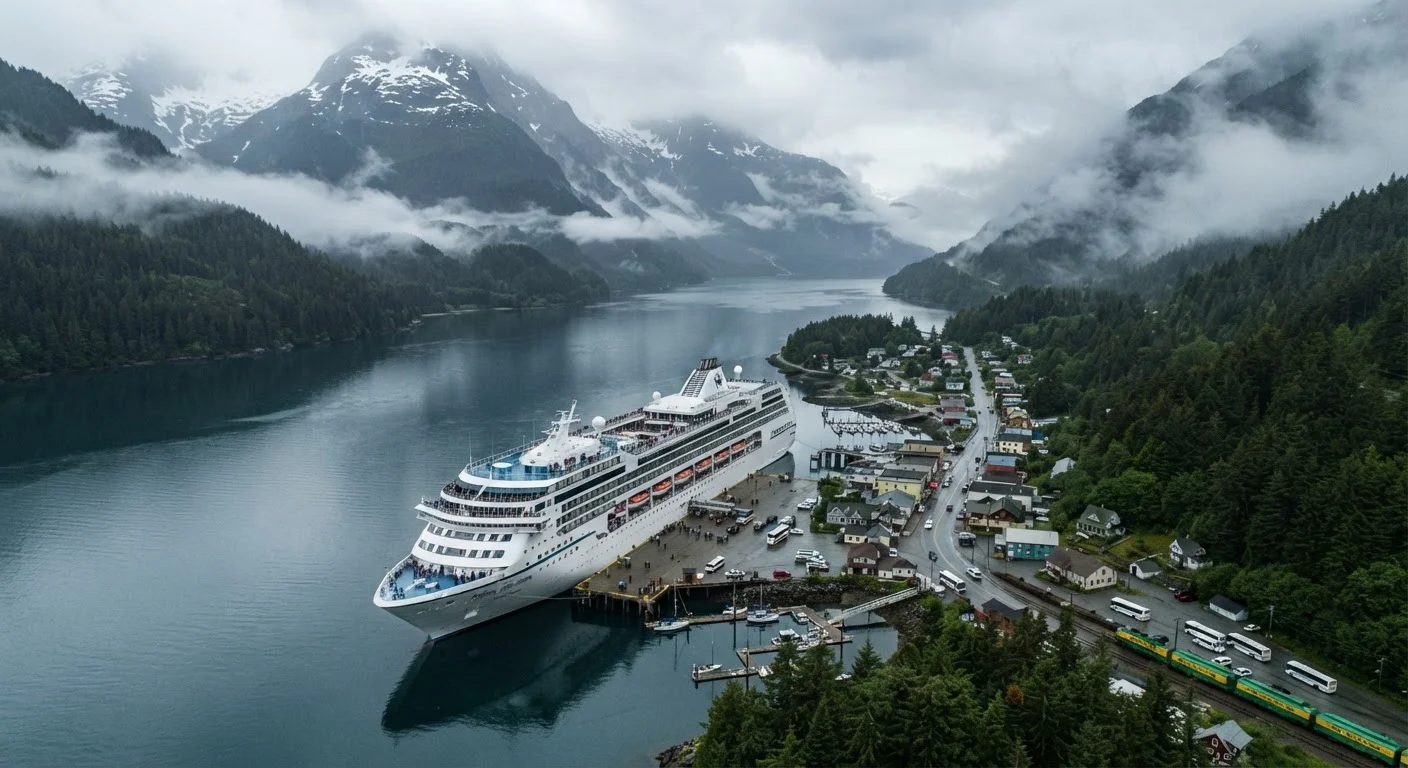
Photo credit: ExploreRoute.net | Travel Made Simple
In this article
Juneau, Ketchikan, Skagway — each Alaskan port has a distinct character and different access to the landscape. Here's how they compare.
Key Takeaways
- Juneau provides the most diverse wilderness access of any Southeast Alaska port, from glaciers to alpine terrain.
- Ketchikan is the strongest choice for totem pole culture, rainforest trails, and accessible wildlife viewing.
- Skagway's value lies in Klondike history and the White Pass rail corridor rather than raw wilderness immersion.
- Each port suits different traveler priorities — knowing these distinctions is key to maximizing limited shore time.
- Ship schedules typically allow four to eight hours ashore, making pre-planned priorities essential.
Why Port Selection Shapes the Entire Alaska Cruise Experience
Alaska's Inside Passage itineraries follow a broadly predictable route, yet the ports themselves could not be more different from one another. Juneau, Ketchikan, and Skagway each sit within a distinct ecological and historical context, and the traveler who treats them as interchangeable scenic backdrops will consistently under-use the hours available ashore.
Most ships dock for between four and eight hours at each stop — enough time to go deep into one or two meaningful experiences, but not enough to improvise effectively. The goal of this guide is to map the genuine strengths and limitations of each port so you can plan with intent rather than arriving at the pier with no clear direction.
For context on how wilderness access changes depending on the season you sail, see our piece on off-season wilderness trade-offs — the same considerations apply when positioning an Alaska voyage in early May or late September.
| Juneau | Ketchikan | Skagway | |
|---|---|---|---|
| Primary draw | Glacier & alpine wilderness | Rainforest & Indigenous culture | Gold Rush history & rail scenery |
| Wildlife viewing | Brown bear, humpback whales, eagles | Bald eagles, black bear, deer | Mountain goat, marmot (via rail) |
| Wilderness proximity to dock | Moderate (12 miles to glacier) | Close (forest within walking distance) | Limited (rail journey required) |
| Cultural heritage depth | Alaska State Museum, Tlingit history | Totem poles, Saxman Native Village | National Historical Park, gold-rush era |
| Typical shore time needed | 5–7 hours to do justice | 4–6 hours for core highlights | 4–5 hours via White Pass rail |
| Weather resilience | Glacier accessible in most rain | Rainforest immersive in drizzle | Rail runs in most conditions |
Juneau: Glaciers, Bears, and Surprising Alpine Range
Alaska's state capital is the only U.S. state capital unreachable by road from the rest of the country, which concentrates its landscape access in a surprisingly compact footprint. The Mendenhall Glacier — a federally managed visitor area within the Tongass National Forest — sits roughly twelve miles from the downtown cruise docks. Visitors can reach the glacier face on foot, observe calving from viewing platforms, and, depending on season and conditions, access trails that climb above the ice to Nugget Falls.
Juneau is also among the most reliable Southeast Alaska ports for brown bear observation, particularly along the Sheep Creek and Montana Creek corridors during salmon runs. Whale watching in Stephens Passage and Lynn Canal produces consistent humpback sightings through the summer season. For travelers interested in the convergence of coastal and inland landscapes, Juneau's range is unmatched among Inside Passage stops.
Time Your Glacier Visit to Ship Schedules
Mendenhall Glacier can draw large crowds when multiple ships are in port simultaneously. Check your ship's itinerary against other vessels scheduled for the same day — arriving at the glacier early in the morning or later in the afternoon significantly reduces congestion at the most scenic viewpoints. Many experienced Alaska cruisers treat this as the single most impactful logistics decision at the Juneau stop.
The city's walkable downtown — home to the Alaska State Museum and the historic Red Dog Saloon district — functions as a reasonable fallback if weather forces you off the glacier or wilderness trails, though experienced Alaska cruisers tend to weight outdoor access above town exploration here.
Ketchikan: Rainforest Depth and Totem Heritage
Ketchikan receives more annual rainfall than almost any other city in the United States, which produces the temperate rainforest ecosystem that defines the experience ashore. The Tongass National Forest surrounds the port on all sides, with old-growth Sitka spruce and western hemlock dominating the canopy. Creek Street — the historic boardwalk built over Ketchikan Creek — offers an atmospheric introduction to the town, but the more substantive experiences lie a short distance away.
Saxman Native Village and Totem Bight State Historical Park collectively hold one of the world's largest concentrations of standing totem poles, many of them representing the work of master carvers working under federal restoration programs during the twentieth century. Klawock, accessible by floatplane, extends the cultural experience further. Wildlife common to Ketchikan port visits includes bald eagles — often visible from the pier itself — Sitka black-tailed deer, and black bear along forest margins.
Ketchikan also provides the clearest access to misty fjord terrain by floatplane, with Misty Fiords National Monument a short flight to the east. For cruisers interested in how coastal and inland wilderness environments compare, our editorial on coastal versus inland wilderness provides useful framing.
Skagway: The Klondike Corridor and White Pass Scenery
Skagway functions differently from Juneau and Ketchikan as a port because its primary draw is historical and topographical rather than ecological. The town itself is almost entirely preserved as a National Historical Park commemorating the 1898 Klondike Gold Rush, and the National Park Service manages much of the downtown streetscape. The lived-in character of Juneau or Ketchikan is largely absent — Skagway exists, in many respects, as a purpose-built cruise port overlaid on a gold-rush relic.
Its singular asset is the White Pass & Yukon Route railway, a narrow-gauge line completed in 1900 that climbs from sea level to the Canadian border through hanging glaciers, rock-cut ledges, and dead-horse gulch — named for the animals that perished during the stampede. The summit reaches roughly 2,865 feet in approximately twenty miles, producing panoramic views that are genuinely difficult to access any other way. Wildlife sightings along the corridor include mountain goat, hoary marmot, and — occasionally — wolf.
For cruisers who have already done Alaska and are weighing it against other dramatic landscape destinations, our comparison of Baltic versus Norwegian fjord shore experiences provides a useful calibration point for what defines genuinely distinct port character.
17 million
Acres in Tongass National Forest
The Tongass is the largest U.S. national forest and forms the ecological backdrop for Ketchikan and Juneau port experiences.
2,865 ft
White Pass summit elevation
The White Pass & Yukon Route railway climbs from sea level to this elevation in roughly twenty miles, offering dramatic high-altitude scenery from Skagway.
~150 in
Ketchikan's average annual rainfall
Ketchikan's exceptional precipitation sustains the old-growth temperate rainforest that defines the port's natural character.

Author
Cruise Journeys Editorial Team
Cruise Journeys Editorial Team is the collective byline for our editorial team and contributor network. Articles published under this byline or an editorial pen name are researched, written, and reviewed according to our editorial standards for clarity, consistency, and independence before publication.
View all articles →