
Inland vs. Coastal Wilderness: Comparing Two Approaches to Finding Solitude in Nature
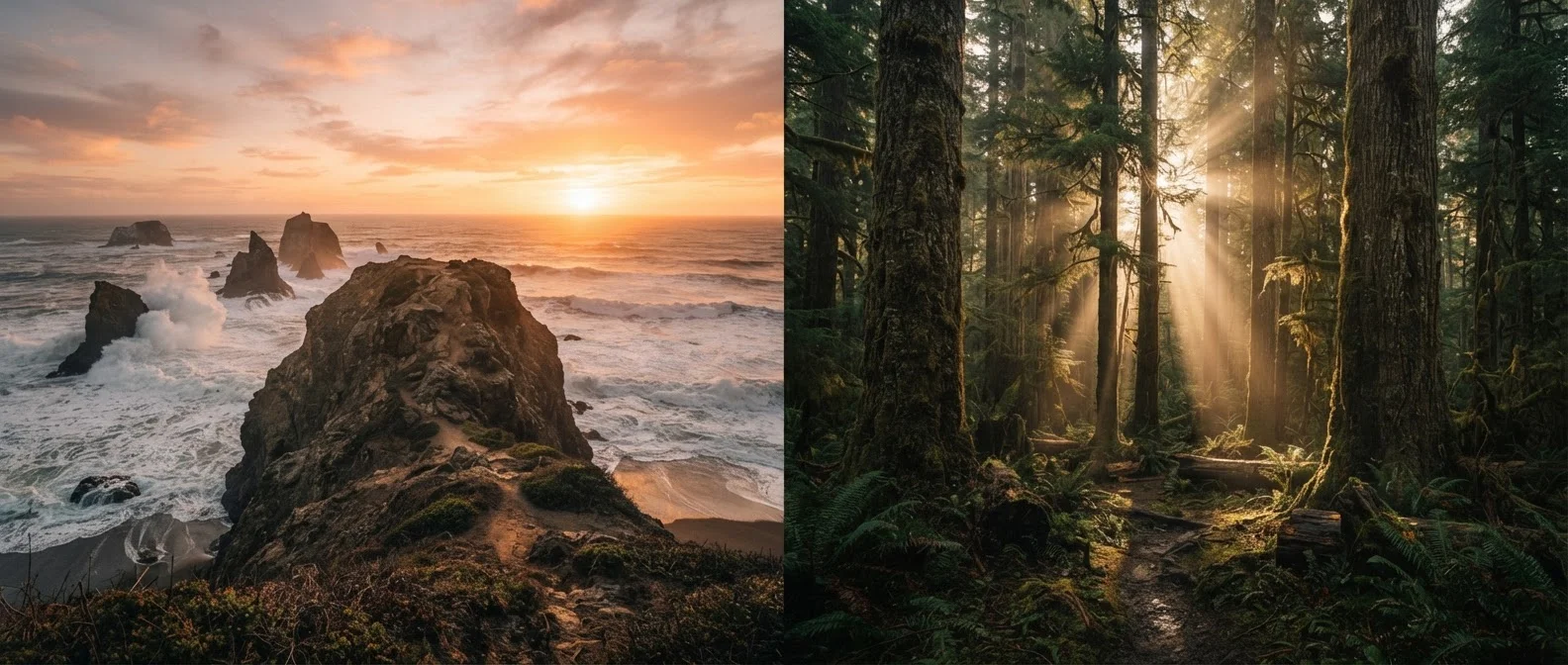
Photo credit: ExploreRoute.net | Travel Made Simple
In this article
Coastal secret spots and deep inland wilderness both offer escape, but the logistics, risks, and rewards differ significantly.
Key Takeaways
- Coastal wilderness offers dramatic scenery but often attracts more foot traffic due to accessible shorelines.
- Inland wilderness typically demands greater logistical effort but rewards travelers with deeper isolation.
- Weather patterns, gear requirements, and safety risks differ substantially between the two environments.
- Neither setting is universally superior — the right choice depends on your experience level and goals.
- Timing your visit strategically can dramatically shift the solitude equation in either setting.
The Myth of the Empty Shore
There's a persistent idea that coastal wilderness is somehow wilder — edgier, more elemental. Stand at the lip of a sea cliff above a cove accessible only at low tide and it's easy to understand why. But that same allure draws others. The very qualities that make secret coastal spots compelling — tidal pools, sea stacks, open sky — also make them photographable, shareable, and eventually crowded.
What makes a coastal location feel genuinely remote is usually a friction point: an unmarked trail, a boat-only approach, or a tide window that limits safe access. Those friction points are the same ones that separate a true hidden shore from a merely scenic one. For a deeper look at what keeps any wild place genuinely unknown, see our guide to what makes a natural wonder truly secret.
That friction, though, is rarely as formidable as what inland wilderness demands. A remote coastal cove might require a two-mile scramble. A remote high-desert canyon or boreal interior might require two days of driving, a float plane, or a week on foot.
| Coastal Wilderness | Inland Wilderness | |
|---|---|---|
| Typical Access | Trail, kayak, or boat; often day-reachable | Multi-day drive, hike, or float plane required |
| Crowd Pressure | Higher; scenic shorelines spread via social media | Lower; access friction limits visitor numbers |
| Primary Hazards | Tidal change, fog, exposed rock | Altitude, heat, wildlife, extended self-reliance |
| Gear Complexity | Waterproof layers, tide charts, sturdy footwear | Navigation, bear protection, extended food supply |
| Solitude Reliability | Variable; depends heavily on season and access | High; friction filters casual visitors naturally |
| Rescue Response Time | Faster; coast guard and road access nearby | Slower; remote terrain extends response windows |
| Ecosystem Variety | Intertidal, marine, coastal forest zones | Desert, alpine, boreal, canyon, old-growth |
Logistics, Access, and What You'll Actually Need
Coastal wilderness access tends to follow shorelines — paths that hikers, kayakers, or even cruise passengers can reach with standard outdoor gear. The ports and shore life of places like Southeast Alaska illustrate this dynamic well: wild, glacier-carved coastline sits minutes from a dock, yet deeper wilderness begins the moment you leave the harbor behind.
Inland wilderness strips away that coastal infrastructure entirely. There are no port towns, no seasonal ferry services, no reliable cell signal triangulated off a offshore tower. Navigation demands more confidence, water sources require treatment, and the margin for error in weather or injury shrinks considerably.
Match Your Gear to the Specific Environment
Before committing to either setting, research the specific ecosystem you'll be entering — not just the general category. A Pacific Northwest coastal headland and a Gulf Coast barrier island have almost nothing in common logistically. The same applies inland: a Utah canyon and a Minnesota boundary waters canoe area demand entirely different preparation. Starting with a land management agency's visitor guide for your specific destination will surface hazard and gear details no general list can anticipate.
Gear requirements diverge sharply. Coastal travelers prioritize waterproof layers, footwear suited to uneven wet rock, and tidal awareness. Inland travelers need navigation tools, bear canisters in many western ranges, emergency shelter rated for sudden temperature swings, and enough food for extended self-sufficiency. The hidden scenic drives that thread through interior landscapes often hint at how quickly road access disappears once you leave the pavement.
Risk Profiles: What Each Environment Asks of You
Coastal risk is immediate and time-sensitive. Tides don't negotiate. A cove that's passable at 6 a.m. can become a chest-deep channel by mid-morning, and fog can roll in within minutes along exposed headlands. These are predictable hazards — manageable with preparation and local tide charts — but they reward vigilance in a very specific way.
Inland wilderness risk is cumulative and often less obvious. Heat exposure in desert canyons, altitude-related illness above treeline, flash floods in slot canyons, wildlife encounters in bear country — these dangers develop gradually and can compound. Rescue response times are longer, and the psychological weight of extended isolation affects travelers differently than an afternoon on a remote beach.
The trade-off is genuine solitude. An inland alpine lake three days from a trailhead is almost never crowded. A dramatic sea arch that appears in one travel photograph will, eventually, appear in ten thousand more. For a candid look at how timing can shift this dynamic in either environment, the piece on off-season access to remote wilderness is worth reading before you plan.
Always verify current conditions, entry requirements, and any relevant safety advisories through official land management agencies and government sources before traveling to either setting.
Conditions Change Faster Than Forecasts
Both coastal and inland wild environments can shift dramatically within hours. Tides, weather fronts, flash flood warnings, and wildfire smoke don't follow travel itineraries. Always carry a reliable means of receiving updated weather information — whether a satellite communicator, a VHF radio in coastal zones, or a personal locator beacon. Never enter a remote natural area without informing a trusted contact of your route and expected return.
Choosing the Setting That Matches Your Intent
The real comparison isn't coastal versus inland — it's about what kind of solitude you're seeking and what you're prepared to offer in exchange for it. Coastal wilderness often delivers beauty on shorter timelines and with more predictable logistical anchors. Inland wilderness offers a depth of removal that's harder to find and harder to replicate.
Travelers who have already explored inland versus coastal small towns will recognize a similar pattern: coastal landscapes get the attention, inland landscapes get the solitude. That pattern holds even in purely natural settings.
If your goal is genuine disconnection — the kind where your schedule is set by light and weather rather than ferry times — inland wilderness is the more reliable path. If you want dramatic, verifiable wildness without a week of backcountry preparation, a well-chosen coastal stretch still delivers something authentic. The deciding factor, ultimately, is self-knowledge: how prepared are you, what do you want to feel, and how much friction are you willing to accept to feel it?
For those weighing similar decisions between accessibility and remoteness more broadly, our comparison of remote access versus easy infrastructure at lesser-known historic sites offers a parallel framework that translates directly to natural landscapes.
~80%
US population living within 100 miles of coast
According to NOAA, roughly 40% of Americans live in coastal counties — proximity that drives higher recreational pressure on accessible shorelines.
640M+
Acres of US federal public land, mostly inland
The Bureau of Land Management and US Forest Service administer hundreds of millions of acres, the vast majority situated well away from the coasts.

Author
Hidden Destinations Editorial Team
Hidden Destinations Editorial Team is the collective byline for our editorial team and contributor network. Articles published under this byline or an editorial pen name are researched, written, and reviewed according to our editorial standards for clarity, consistency, and independence before publication.
View all articles →