
Hidden Coastal Neighbourhoods Worth Seeking Out in Mediterranean Ports
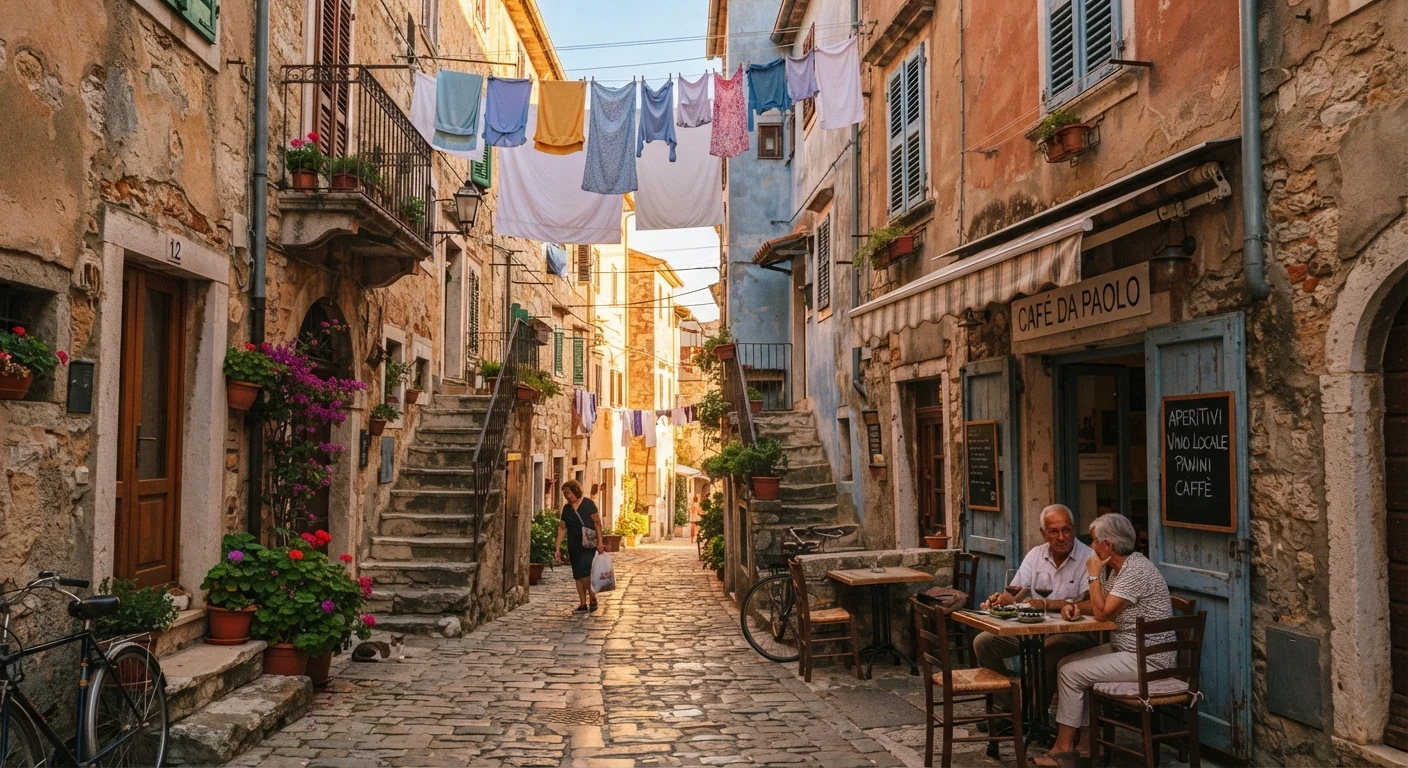
Photo credit: ExploreRoute.net | Travel Made Simple
In this article
Beyond the cruise pier, Mediterranean port towns hold quiet markets, local cafés, and historic lanes most visitors never find.
Key Takeaways
- Most Mediterranean port towns have residential neighbourhoods within easy walking distance of the cruise pier that most visitors never reach.
- Morning hours — before organized shore excursions disperse crowds — are the best time to explore local markets and backstreet cafés.
- Researching a port's layout before sailing makes the difference between a rushed tourist loop and a genuinely local experience.
- Each neighbourhood featured here is publicly accessible on foot and requires no booking, guide, or special access.
- Transport, hours, and conditions vary — always verify current details through official local sources before disembarking.
Why the Street Behind the Waterfront Changes Everything
Cruise piers are engineered for throughput. Gift shops, taxi ranks, and tour-operator placards funnel thousands of passengers toward the same well-worn circuit before the ship sails again. Most travelers never question it — and most leave without knowing what they missed.
Mediterranean port towns are, almost without exception, layered places. Behind every tourist-facing promenade sits a neighbourhood where residents actually live: covered markets still stocked for locals, neighbourhood bars that don't list prices in three currencies, lanes that see more cats than cameras. Finding those layers doesn't require a private guide or an early riser's luck. It requires intention — and a little preparation before the gangway drops.
If you're still building that research habit, our practical guide to researching an unfamiliar port lays out a reliable method. And if you're newer to shore exploration altogether, our first-timer's orientation to port towns covers the fundamentals worth knowing before you step off the ship.
Below, we highlight specific neighbourhoods across five Mediterranean ports that consistently reward independent explorers — places that sit close enough to the pier to be practical, yet far enough from the tour-group circuit to feel genuinely different.
Kotor, Montenegro — the Škaljari District
Kotor's walled old town draws every camera on the pier. Walk fifteen minutes north along the bay shoreline, past the land gate and the bus station, and you enter Škaljari — a low-rise residential quarter where the stone-building tradition continues but the souvenir density drops to near zero. The neighbourhood rises gently toward the city wall's upper circuit, offering unobstructed views back across the bay that most visitors only see from boat excursions. A handful of neighbourhood konobas (small taverns) serve ćevapi and grilled fish at prices aimed at residents. The walk itself, along a quiet coastal path shaded by fig trees, is worth the detour regardless of what you find at the other end.
Fifteen minutes north of Kotor's walled city, the tourist infrastructure evaporates almost entirely.
Palermo, Sicily — the Ballarò Market Quarter
Palermo's cruise terminal sits at the northern edge of a city whose street markets are among the most vivid in the Mediterranean. The Ballarò market, anchored in the Albergheria neighbourhood about a 20-minute walk south of the port, functions primarily as a working food market rather than a tourist attraction — stalls piled with swordfish, blood oranges, and braided cheeses, vendors calling prices in Sicilian dialect, and no consistent signage in English. The surrounding streets hold Norman-Arab-Byzantine architecture — a genuinely unusual architectural hybrid — that gets significantly less attention than the city's headline monuments. Come before noon when the market is fully active; by early afternoon it winds down. The hill towns of southern Italy's interior share this same quality of everyday authenticity at a different scale.
Ballarò functions as a working food market first — tourist attraction a distant second.
Dubrovnik, Croatia — Gruž and the Lapad Peninsula
Dubrovnik's old town is genuinely extraordinary and genuinely saturated. The city's ferry and cruise port actually docks at Gruž, a working harbour district about two kilometres northwest of the old town walls — and many passengers rush straight through it toward the cable car and city gate queues. Gruž itself has a covered daily market (Tržnica Gruž) that serves the city's residential population, a waterfront lined with fishing boats rather than excursion catamarans, and a relaxed café culture that reflects a city living alongside — rather than solely for — its tourists. From Gruž, local buses and a short walk reach the Lapad Peninsula, a quieter residential and beach neighbourhood that offers a very different reading of what Dubrovnik actually is.
Gruž market serves the city's residents — a deliberate counterpoint to the old town's tourism pressure.
Valletta, Malta — Floriana and the Msida Waterfront
Valletta is compact enough that its immediate surroundings are often overlooked in favor of covering the city itself. The suburb of Floriana, which most visitors cross through without noticing, contains the Argotti Botanic Gardens, a network of baroque piazzas with almost no tourist infrastructure, and the Granaries — a massive public square built over Baroque-era grain storage tunnels that sit beneath the surface. Subterranean historic sites like these appear throughout the Mediterranean but are rarely signposted for cruise visitors. The Msida waterfront, a short walk further, offers a yacht marina lined with Maltese cafés and a perspective of Valletta's fortifications that no postcard seems to use.
Floriana's Granaries cover genuine underground history that most Valletta visitors walk right past.
Marseille, France — the Panier and Joliette Neighbourhoods
Marseille's reputation precedes it in ways that discourage exploration — which is partly why its residential quarters remain so accessible. Le Panier, the historic neighbourhood climbing the hill immediately north of the Vieux-Port, is the city's oldest district: a dense grid of pastel-painted buildings, street-art murals, independent artisan studios, and neighbourhood épiceries (small grocery shops) catering to a genuinely mixed local population. It is not pristine or particularly polished, and that is precisely its value. Adjacent Joliette, reoriented around a redesigned waterfront in recent years, blends the city's working port history with contemporary cultural venues and a market scene that draws Marseille residents far more than visitors. For context on how Mediterranean itineraries position Marseille relative to other western ports, see our comparison of eastern, western, and Adriatic routes.
Le Panier rewards exactly the kind of unscripted wandering that organized shore excursions cannot offer.
Making the Most of What You Find
The neighbourhoods described above share a common trait: they are ordinary to the people who live in them. That ordinariness is the point. Approach them with curiosity rather than urgency, observe local rhythms before inserting yourself, and you'll find that the hospitality is real rather than transactional.
Maximize limited shore time with one clear priority
Rather than attempting to cover multiple neighbourhoods in a single port call, pick one area and give it your full attention. Two hours spent properly in one local quarter — having a coffee, browsing a market, sitting in a square — will produce a richer experience than a rushed circuit of four. Check disembarkation and all-aboard times carefully and build in a buffer; local transport can be unpredictable.
For those whose itinerary touches the Adriatic, the contrast between these accessible port-side quarters and the quieter inland towns is worth understanding — villages beyond Dubrovnik and Kotor offer the same unhurried character on a longer timescale. Equally, if your Mediterranean cruise connects to Atlantic island stops, note that the dynamic shifts considerably — Atlantic island ports carry a different cultural grain shaped by volcanic geography and distinct colonial histories.
Shore time is finite. Used well, even two hours in the right neighbourhood can reframe an entire port call — turning a logistical stop into the part of the voyage you actually remember.
Conditions and access change — always verify locally
Market hours, neighbourhood accessibility, and transport connections at Mediterranean ports shift seasonally and can change without wide notice. The information here reflects general, publicly established patterns rather than current operational status. Before disembarking, check with your ship's port agent or the local tourist authority for up-to-date conditions. Entry requirements, safety advisories, and local regulations should be confirmed through official government and provider sources before travel.

Author
Cruise Journeys Editorial Team
Cruise Journeys Editorial Team is the collective byline for our editorial team and contributor network. Articles published under this byline or an editorial pen name are researched, written, and reviewed according to our editorial standards for clarity, consistency, and independence before publication.
View all articles →