
Small Towns Worth Slowing Down For in the Balkans
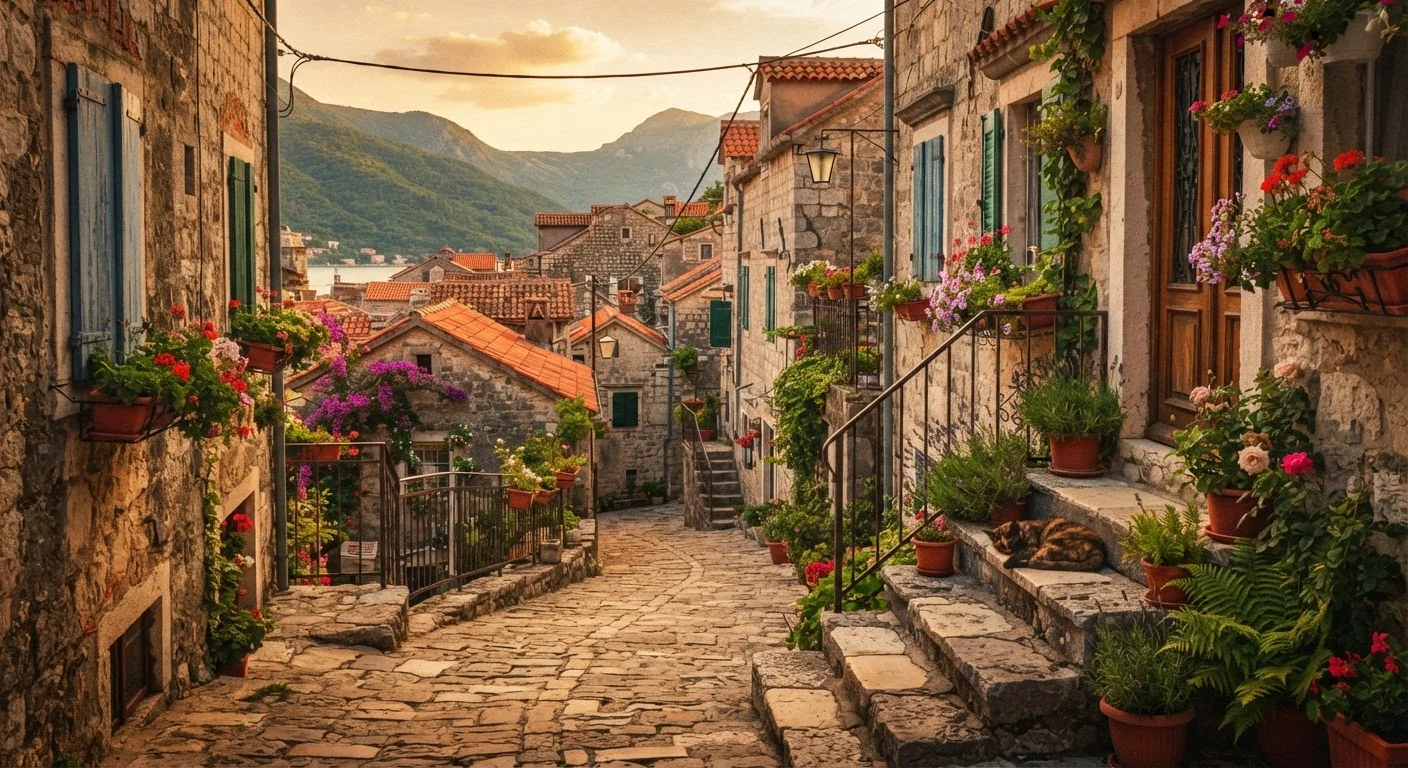
Photo credit: ExploreRoute.net | Travel Made Simple
In this article
Beyond Dubrovnik and Kotor lie villages and market towns that reward patient travelers with genuine hospitality, cobbled lanes, and untouched local life.
Key Takeaways
- Several Balkan small towns offer rich Ottoman, Venetian, and Byzantine heritage with very few foreign visitors.
- Slower travel in these towns typically means genuine local interaction, affordable stays, and uncrowded historic sites.
- Each town on this list is reachable by regional bus or car, often within two hours of a major hub.
- Visiting responsibly — spending locally, respecting customs — helps these communities without replicating the pressures of overtourism.
- Entry requirements, transportation schedules, and local conditions vary by country; always verify before departure.
The Case for Slowing Down in the Balkans
Dubrovnik's walls and Kotor's bay have earned their fame, but the line between discovery and overcrowding crossed long ago. Meanwhile, a remarkable network of smaller towns — draped across limestone ridges, tucked beside rivers, or anchored to forgotten trade crossroads — continues to hold the authentic texture that once made the Adriatic coast feel genuinely exotic. These are places where the afternoon coffee still happens in the same square it always did, where locals outnumber visitors on a Saturday market morning, and where the architecture layers Ottoman, Venetian, Byzantine, and Austro-Hungarian histories without a single interpretive panel to explain it.
What keeps a town off the map is often a combination of poor road access, political complexity, or simply the luck of not being photographed at the right moment. The Balkans have all three working in their favor — and in the traveler's favor too. The five towns below represent a cross-section of the region's overlooked richness, from inland Bosnia to the Albanian Riviera's northern edge.
Plan Around Local Transport Schedules
Regional buses in the Balkans are reliable but infrequent — many small towns have one or two departures a day. Build your itinerary around transport timetables rather than forcing connections. A rented car unlocks the most flexibility for reaching villages in Albania, Kosovo, and the Dalmatian interior, though road quality and signage vary significantly. Always check current schedules locally, as published timetables may not reflect seasonal changes.
Five Towns That Reward the Patient Traveler
Počitelj, Bosnia and Herzegovina
Perched on a bluff above the Neretva River about forty kilometers south of Mostar, Počitelj is a fortified Ottoman settlement that time appears to have misplaced. The Gavrankapetanović tower, a sixteenth-century mosque, and a hammam ruins are stacked up the hillside like a theatrical backdrop — yet on most mornings, the only sound is wind moving through the fig trees. The town suffered significant damage during the 1990s conflict and reconstruction has been slow and deliberate, which partly explains the absence of the souvenir density found in Mostar itself. Local artists have used the historic caravanserai as a studio space for decades, giving Počitelj an unusual creative undercurrent beneath its Ottoman shell.
Počitelj's hammam ruins and sixteenth-century mosque see only a fraction of Mostar's visitor traffic.
Gjirokastra, Albania
Albania's UNESCO-listed "City of Stone" sits in a broad valley in the country's south, its slate-roofed Ottoman mansions climbing a ridge toward a brooding Byzantine-Ottoman fortress. Gjirokastra is not entirely unknown — it has UNESCO recognition and a modest tourist infrastructure — but it remains genuinely unhurried compared to coastal alternatives. The bazaar quarter, with its arched storefronts and traditional craftspeople, retains a working character rather than a performative one. The National Folklore Festival, held irregularly at the castle, draws visitors from across Albania and offers an unmediated encounter with regional music and costume traditions. Getting here by bus from Tirana or the Greek border at Kakavia takes roughly four to five hours.
Gjirokastra's slate-roofed Ottoman mansions and working bazaar quarter feel genuinely unhurried and lived-in.
Prizren, Kosovo
Few cities in the Balkans compress as many layers of history into as compact a space as Prizren. The old town sits beside the Bistrica River beneath a medieval Serbian fortress, and within walking distance you can pass from a restored Ottoman hammam to a Catholic cathedral to a Serbian Orthodox church, all within blocks of a functioning covered bazaar. Kosovo's complex recent history means many travelers bypass it entirely, but Prizren's atmosphere — coffee-house culture, lively evening promenades, proud local hospitality — is among the warmest in the region. The annual DokuFest documentary film festival in summer draws an international crowd to the old bazaar, briefly transforming it into an outdoor cinema.
Prizren layers a Serbian fortress, Ottoman hammam, and three religious traditions into one walkable riverfront old town.
Šibenik's Hinterland Villages, Croatia
While Šibenik itself is gaining recognition, the cluster of small settlements in Dalmatian Zagora — the stony inland plateau behind the coast — remains largely invisible to visitors who never leave the Adriatic shore. Villages like Drniš and Skradin (the latter at the edge of Krka National Park) offer access to watermills, medieval fortress ruins, and a locally produced prošek wine culture that rarely makes it into travel features. The landscape here is austere and affecting: karst fields, dry-stone walls, and abandoned family estates that speak to waves of emigration over the past century. For travelers who enjoy the logic of a scenic back road, the Zagora connects naturally into a longer Dalmatian loop.
Dalmatia's inland Zagora plateau holds fortress ruins, watermills, and a prošek wine culture almost no visitors encounter.
Berat, Albania
Often called the "City of a Thousand Windows" for its stacked Ottoman-era houses with their rows of oversize casements, Berat sits at the confluence of the Osum River and a forested ridge topped by a still-inhabited medieval castle quarter. Unlike many historic towns where the old residential core has emptied out, Berat's Kala neighborhood inside the castle walls is home to families who have lived there across multiple generations, lending the place a vitality that purely preserved sites lack. The onufrian icon collection at the Church of the Dormition of St. Mary is considered one of the finest examples of Byzantine iconography in the southern Balkans — a detail that would generate significant pilgrimage traffic anywhere better connected to the international travel circuit.
Berat's castle quarter remains a living neighborhood — families have inhabited it continuously across generations.
Entry Requirements Vary Across the Region
The western Balkans include EU members (Croatia), EU candidate countries, and states with distinct visa arrangements. US passport holders generally enjoy visa-free short stays across most of the region, but rules differ and change. Check current requirements through the US State Department's official country information pages and the relevant embassy of each country you plan to visit before booking travel.
Traveling These Towns With Care
The same factors that keep these places uncrowded also make them fragile. Overtourism has a way of following the travelers who flee it, and the Balkans' small towns are not immune. Spending at family-run guesthouses and local restaurants, learning a handful of words in the local language, and moving at the town's own pace rather than imposing a schedule on it — these habits make the difference between a visit that enriches and one that subtly erodes.
For practical comparison, the overlooked hill towns of southern Italy face similar dynamics and offer useful lessons in how quickly a "secret" can become a brand. The Balkans are perhaps a step behind that curve, which is precisely the reason to go thoughtfully now. Verify visa requirements, border crossing rules, and any current travel advisories through official government sources before planning your trip — border arrangements in the western Balkans continue to evolve. Learning to read a town through its market square and public spaces will help you arrive as an observer rather than a spectator.

Author
Hidden Destinations Editorial Team
Hidden Destinations Editorial Team is the collective byline for our editorial team and contributor network. Articles published under this byline or an editorial pen name are researched, written, and reviewed according to our editorial standards for clarity, consistency, and independence before publication.
View all articles →