
Underground and Overlooked: Subterranean Historic Sites Worth Seeking Out
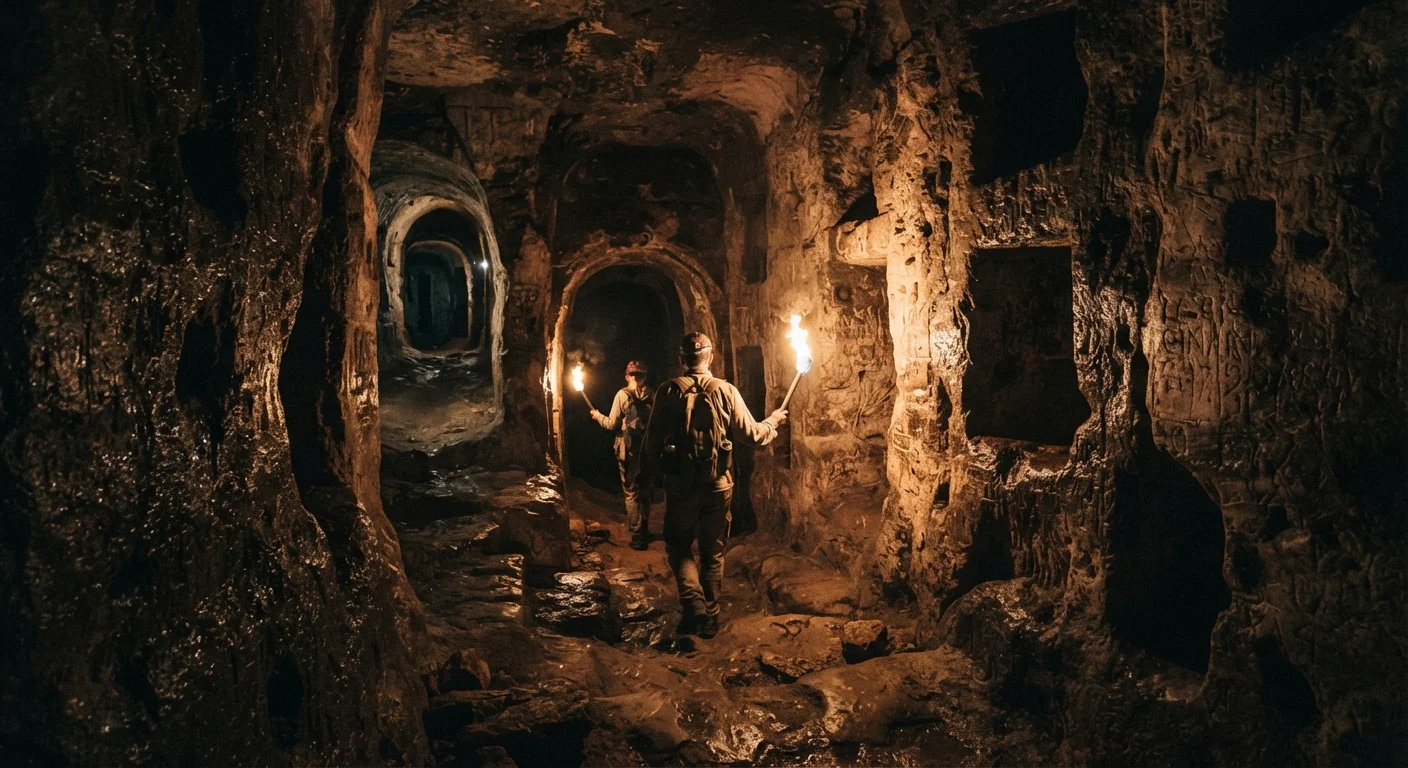
Photo credit: ExploreRoute.net | Travel Made Simple
Cave dwellings, buried streets, and ancient aqueducts hidden beneath modern cities reveal layers of human history that most travellers never see.
Key Takeaways
- Many major cities conceal entire historic streetscapes, aqueducts, or settlements beneath their modern foundations.
- Subterranean sites often offer richer, less crowded encounters with history than their above-ground counterparts.
- Access varies widely — some sites require guided permits, others are open to independent visitors year-round.
- Seasonal closures, structural preservation work, and local regulations can affect access; always verify before visiting.
- Exploring underground heritage responsibly means respecting site rules and avoiding any physical contact with ancient surfaces.
The World Beneath the World
There is a particular kind of silence that exists underground — not the absence of sound, but the presence of something older than noise. Beneath the cobblestones of Edinburgh, below the modern boulevards of Naples, under the dust of Cappadocia's volcanic plains, entire civilisations left their architecture intact simply by being buried. These are not ruins in the conventional sense. They are rooms. Streets. Aqueducts still faintly channeling the logic of their engineers.
For the frequent traveller who has already walked the Colosseum's upper tiers or photographed Machu Picchu at sunrise, subterranean historic sites offer something genuinely different: intimacy with the past that no amount of foot traffic has yet eroded. The lost cities that history almost erased are remarkable above ground — but some of their most compelling chapters are written in the rock below. What follows is a curated collection of underground sites that reward curiosity, patience, and a willingness to step off every well-lit path.
Derinkuyu Underground City, Cappadocia, Turkey
Carved into the soft volcanic tuff of central Anatolia, Derinkuyu is not a cellar or a catacomb — it is an entire city dropped eleven stories into the earth. Believed to have sheltered tens of thousands of residents at various points between the early Byzantine period and the 14th century, the complex includes ventilation shafts, wine cellars, stables, churches, and a cruciform chapel cut with remarkable precision into stone that was soft enough to carve by hand yet stable enough to hold for millennia.
What distinguishes Derinkuyu from other underground sites is its engineered logic. Circular stone doors — some weighing hundreds of kilograms — could be rolled from the inside to seal individual floors in the event of attack. The ventilation system, which draws fresh air down to the deepest levels, still functions. Standing on the lowest accessible floor and looking up through the central shaft is one of those genuinely disorienting travel experiences: the ceiling is a city.
Derinkuyu is open to visitors, though the narrower lower passages require some physical flexibility. The differences between cave systems and open karst landscapes provide useful context for understanding how the geology of the region made this kind of excavation not just possible, but practical.
Circular stone doors weighing hundreds of kilograms once sealed individual floors against attack from inside.
Edinburgh's South Bridge Vaults, Scotland
When Edinburgh's South Bridge was completed in 1788, its nineteen arches concealed a warren of chambers that were originally intended as workshops and storage. Within a decade, the vaults had become something darker — home to the city's poorest residents, body-snatchers, and illicit trades that the city preferred not to examine too closely. Then, around 1820, they were sealed and forgotten beneath the bridge's flagstones for the better part of two centuries.
Rediscovered in 1985, the vaults now offer one of Edinburgh's most layered historic experiences. The stonework preserves the physical evidence of lives lived in desperate circumstances: hearths cut directly into the rock, graffiti scratched by people whose names were never recorded, the spatial compression of rooms that housed entire families. This is not heritage dressed for comfort — it is history preserved at its most candid.
Guided tours operate regularly, and the vaults connect naturally to Edinburgh's Old Town, which itself functions as a kind of vertical archaeology of the geographic factors that keep places wonderfully uncrowded. The city above is famous; the city below remains genuinely surprising.
The vaults were sealed around 1820 and remained forgotten beneath the bridge's flagstones for over 150 years.
Napoli Sotterranea (Underground Naples), Italy
Naples is already one of Europe's most geologically improbable cities — built on volcanic rock, prone to bradyseism (the slow rise and fall of the ground caused by magmatic activity), and layered with two thousand years of continuous habitation. Beneath its chaotic streets, a network of Greek-era tunnels, Roman aqueducts, and wartime air-raid shelters has been partially excavated and opened to the public through a non-profit organisation that has worked to map and preserve the system since the 1990s.
The ancient aqueduct sections are particularly striking. Cut into the yellow Neapolitan tuff by Greek settlers around the 3rd century BCE and later expanded by Roman engineers, the channels once supplied the entire city with water drawn from the Serino River. During World War II, the same passages sheltered tens of thousands of Neapolitans during Allied bombing raids, and the guides — many of them local volunteers with genuine archaeological enthusiasm — move fluidly between ancient and modern history within the same passage.
Naples rewards travellers willing to look past its surface intensity. The hill towns of southern Italy beyond Cinque Terre share this quality — the most revealing experiences consistently require turning away from the obvious.
Greek settlers cut the first aqueduct channels beneath Naples around the 3rd century BCE; Romans later expanded the entire system.
Catacombs of Kom El Shoqafa, Alexandria, Egypt
Discovered in 1900 when a donkey accidentally fell through the ground into the uppermost chamber, the Catacombs of Kom El Shoqafa represent one of the most extraordinary instances of cultural synthesis in the ancient world. Carved during the 1st and 2nd centuries CE, the three-level burial complex blends Egyptian, Greek, and Roman funerary iconography in ways that defy easy categorisation — Anubis appears wearing Roman armour; Egyptian deities are rendered in Hellenistic sculptural style; Roman architectural orders frame the entrances to chambers decorated with pharaonic motifs.
The site receives a fraction of the attention directed at the Egyptian Museum in Cairo or the temples of Upper Egypt, yet its scholarly significance is comparable. The main tomb chamber — reached by a spiral staircase cut through solid rock — contains banquet niches where mourners would gather to share a ceremonial meal with the deceased, a practice documented across multiple ancient cultures but rarely preserved with this clarity.
Alexandria's broader archaeological legacy is itself largely submerged or lost. The cities that history almost erased examines how Alexandria's famous Library and Pharos fit into this wider pattern of civilisational disappearance.
Anubis wearing Roman armour — the catacombs visualise three civilisations negotiating identity in a single underground room.
Wieliczka Salt Mine, Lesser Poland
UNESCO-listed and genuinely unlike anything else on the European heritage circuit, the Wieliczka Salt Mine outside Kraków has been continuously worked since the 13th century. What makes it extraordinary is not its age or industrial history but what the miners did within it: over centuries, workers carved chapels, sculptures, bas-reliefs, and eventually a full cathedral — the Chapel of St. Kinga — entirely from rock salt, 101 meters underground.
The chandeliers are salt. The altarpieces are salt. The sculpted figures of biblical scenes lining the nave are salt that has been shaped with the same patience and craft that a stonemason would bring to limestone. The acoustics in the main chamber are exceptional, and concerts have been held there regularly for decades.
Beyond the famous chapel, the mine's deeper passages reveal the working conditions, engineering solutions, and economic logic that made Wieliczka one of Poland's primary sources of royal revenue for several centuries. Travellers who have spent time above ground in pre-colonial urban sites across Africa and elsewhere will recognise here the same impulse: communities transforming their material environment into something that outlasts utility.
The Chapel of St. Kinga — chandeliers, altarpieces, and all — was carved entirely from rock salt 101 meters underground.
Coober Pedy's Dugout Homes, South Australia
Coober Pedy is the world's primary source of opal, a remote outback town roughly 850 kilometers north of Adelaide. What makes it genuinely strange — and quietly fascinating — is that much of it lives underground. Faced with surface temperatures that regularly exceed 50°C (122°F) in summer and with an abundant supply of excavation equipment already on hand for mining, Coober Pedy's residents began carving their homes, churches, hotels, and shops directly into the sandstone hillsides. These dugouts maintain a stable interior temperature of around 23°C year-round without air conditioning.
The underground spaces here are not ancient — the town was founded in 1915 — but they represent a living adaptive tradition that continues today. Several dugout homes operate as guesthouses, and the Serbian Orthodox Church, carved from a single hillside, holds regular services. The Aboriginal Anangu people have lived in the broader region for tens of thousands of years, and the area carries deep cultural significance that goes well beyond opal mining; responsible visitors take time to learn about that context before arriving.
For those who find themselves drawn to overlooked places with a complicated relationship between surface and underground life, the case for visiting forgotten historic sites before they're discovered addresses both the rewards and the ethical weight of that kind of travel.
Coober Pedy's dugout homes maintain a year-round temperature of around 23°C with no mechanical cooling whatsoever.
Going Deeper: How to Approach These Sites
Underground heritage sites demand a different kind of preparation than open-air ruins. Temperatures inside cave dwellings and buried Roman streets rarely match the surface, so layering is essential regardless of season. Guided access is mandatory at many of these sites — not as a bureaucratic inconvenience, but because knowledgeable local custodians genuinely transform what you see. If you want to build the interpretive skills to read a site independently, the guide to reading ancient ruins without a tour guide offers a practical framework that applies just as well underground as above.
Bring Layers — Even in Summer
Underground temperatures at historic sites are typically stable year-round, often hovering between 12°C and 18°C (54°F–64°F) regardless of the season above ground. A light jacket or mid-layer is worth packing even on the hottest travel days. Comfortable, closed-toe footwear with grip is also strongly recommended — stone passages and carved steps can be uneven and occasionally damp.
Entry policies, seasonal closures, and permit requirements change regularly — particularly at sites undergoing active conservation. Before any trip, verify access conditions directly with the managing institution or relevant national heritage authority. Visa and entry requirements for the countries involved should be confirmed through official government channels well in advance of travel.
For travellers drawn to the broader spectrum of what lies beneath — including settlements lost not to burial but to water — the drowned settlements that still exist below waterlines tells a parallel story of preservation by submersion. The underground and the underwater share more than darkness; they share the strange luck of being hidden.

Author
Hidden Destinations Editorial Team
Hidden Destinations Editorial Team is the collective byline for our editorial team and contributor network. Articles published under this byline or an editorial pen name are researched, written, and reviewed according to our editorial standards for clarity, consistency, and independence before publication.
View all articles →