
Why 'Undiscovered' Natural Wonders Are Never Truly Undiscovered
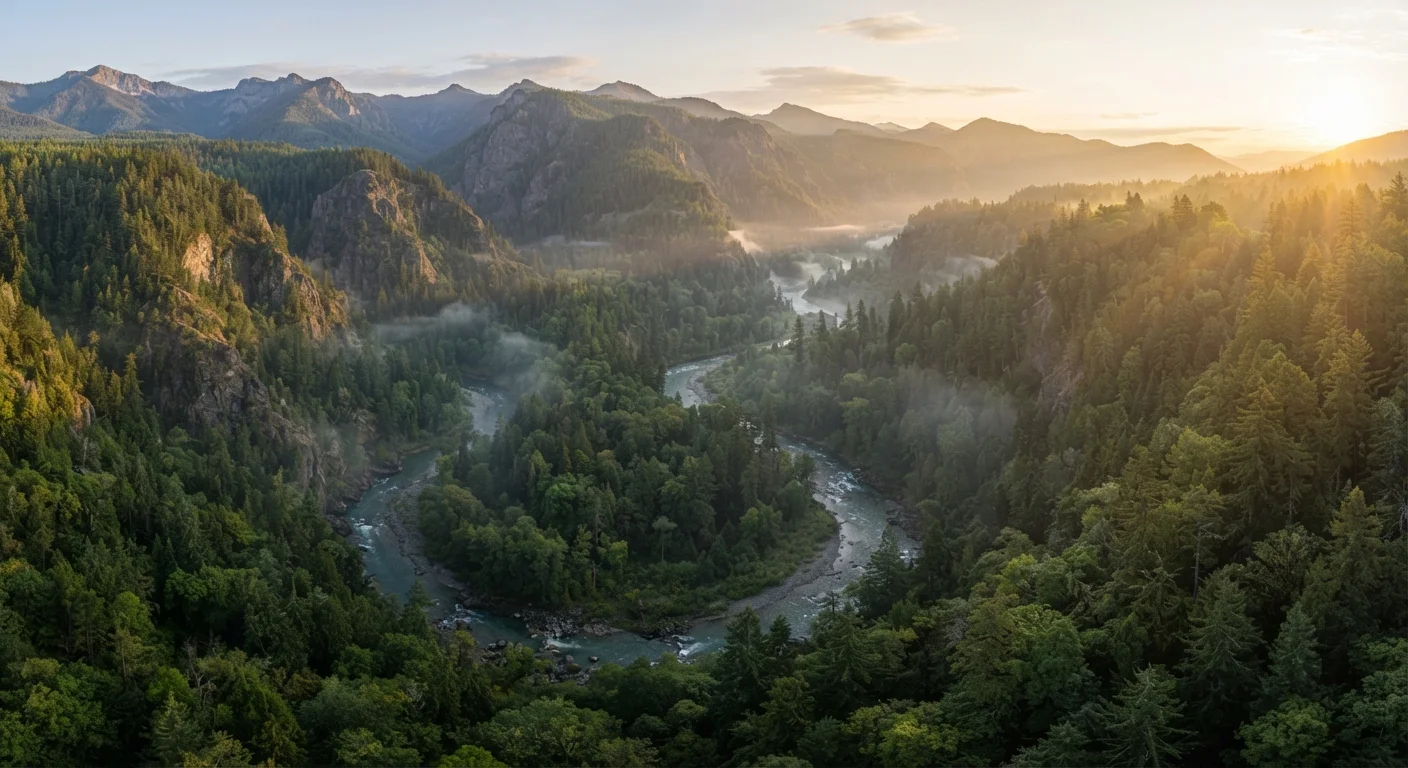
Photo credit: ExploreRoute.net | Travel Made Simple
In this article
The myth of the untouched wilderness ignores Indigenous knowledge and local presence. What responsible travellers should understand before they go.
Key Takeaways
- No natural landscape on Earth lacks a human history — Indigenous and local communities have always been present.
- The 'undiscovered' label erases existing knowledge systems and can cause real harm to communities and ecosystems.
- Responsible travelers seek out context, not just coordinates, before visiting remote or sensitive natural sites.
- Low visitor numbers protect ecosystems, but ethical presence requires engaging with local custodianship.
- Travel media language shapes how places are perceived and how tourism pressure develops over time.
The Language of Discovery and What It Leaves Out
Every few months, a travel feature announces that someone has "discovered" a turquoise lake in a highland plateau, a canyon tucked behind a desert escarpment, or a coastal grotto accessible only at low tide. The photography is breathtaking. The prose thrums with the excitement of first contact. And almost always, the framing is wrong.
The idea of the undiscovered natural wonder depends on a quiet but consequential omission: the people who were already there. Indigenous communities, rural residents, herders, fishers, and farmers have known these landscapes intimately for generations — often for millennia. Their ecological knowledge, their seasonal routes, their oral traditions, and in many cases their legal land rights are bound up in the very places that outside travelers are now calling "untouched."
This isn't a minor semantic quibble. When travelers arrive at a place framed as undiscovered, they often arrive without context — unaware of protocols for visiting sacred sites, unaware of which areas are off-limits, and unaware that their presence is not neutral. As we explore in our look at what actually makes a natural wonder secret, the barriers keeping a place uncrowded are rarely about absence of knowledge — they're about access, geography, and the deliberate choices of the communities who live nearby.
Myth
A place called 'undiscovered' hasn't been meaningfully explored or inhabited before outside travelers arrived.
Fact
Virtually every landscape on Earth has been known, named, and actively used by Indigenous or local communities long before appearing in travel media.
The concept of terra nullius — the legal fiction that land is empty until a colonising power claims it — has been formally repudiated in law in many countries, yet it persists informally in travel language. When a canyon, lake, or forest is described as undiscovered, the implicit reference point is Western or mainstream tourism, not human history. Many of the world's most dramatic landscapes carry thousands of years of continuous habitation, spiritual significance, and ecological stewardship. Erasing that history, even casually, perpetuates a framework that has historically been used to dispossess communities of their land.
Myth
Remote and pristine landscapes are pristine because no humans have interfered with them.
Fact
Many ecologically rich wild areas owe their health partly to long-term, active management by Indigenous communities using traditional land stewardship practices.
Ecological science has increasingly recognised that many landscapes once described as "pristine wilderness" are in fact the product of sustained human management — controlled burning, seasonal harvesting, deliberate habitat shaping — practiced over centuries or millennia. The Amazon basin, vast stretches of Australian savanna, and numerous Pacific Island ecosystems all carry evidence of this kind of stewardship. Framing these places as untouched by human hands not only misrepresents their ecology; it also devalues the knowledge systems that have kept them biodiverse and resilient.
Myth
Visiting a lesser-known natural site before it becomes popular is an inherently low-impact act.
Fact
Early visitors to sensitive sites can cause disproportionate damage and set patterns of access that are difficult to reverse once more travelers follow.
There is a widespread assumption that being among the first non-local visitors to a place confers a kind of ecological virtue — that small numbers mean small impact. In reality, the first wave of outside visitors often causes the most lasting change: informal trails get established, vegetation gets trampled before it can recover, and the very act of publicising a place accelerates the visitor growth that follows. Early-adopter travel carries genuine risks alongside its rewards, and honesty about that tension is the starting point for responsible behaviour.
Myth
If a natural site has no formal protected status, it's fair game for any kind of visitor access.
Fact
Absence of official designation doesn't mean absence of custodianship — many communities manage access to sensitive lands through customary law and informal agreements.
National park boundaries and UNESCO listings represent one legal framework for land protection, but they are far from the only one. Across much of the world, customary land tenure systems govern who may enter particular areas, when, and for what purpose. Travelers who rely solely on the absence of a posted sign or a fence as permission to enter are often unknowingly crossing boundaries that carry real significance. Understanding the local factors that shape a place's relationship to outside visitors is an essential part of pre-trip research, not an optional extra.
What Responsible Presence Actually Looks Like
Understanding that no landscape is truly undiscovered reshapes how a thoughtful traveler prepares. Rather than arriving with a spirit of conquest — the first footprint, the unfiltered Instagram moment — the more honest and ultimately richer approach is one of guest-ship. That means researching who manages or traditionally stewards the land before you go, understanding whether visitor access is welcomed or merely tolerated, and asking how your presence contributes to or detracts from the community that calls the area home.
Research Access Before You Arrive
Before visiting any remote or culturally significant natural site, verify whether the land is under Indigenous, community, or private custodianship and whether visitor access is openly permitted. Entry without appropriate permission — even to seemingly open wilderness — can be illegal under customary or national law, and is always a matter of respect. Check with local tourism bodies and official government sources for current access conditions, and never assume silence means consent.
Environmental stewardship and cultural respect are not separate concerns. The ecological health of remote landscapes is often directly tied to the land management practices of Indigenous and local communities. Low visitor numbers help keep wild areas ecologically intact, but that isolation is rarely accidental — it frequently reflects active decisions by communities to limit outside access. When travelers bypass those decisions, ecological damage and cultural harm tend to follow together.
Genuine off-the-beaten-path travel, done well, means engaging with this complexity rather than flattening it. The regions that truly reward curious travelers are those where visitors arrive informed, tread lightly, and leave having learned something that no travel feature could have prepared them for.
476M+
Hectares of Indigenous-managed land globally
Research published in journals including Nature Sustainability has estimated that Indigenous peoples manage or hold tenure over roughly a quarter of Earth's land surface, often with higher biodiversity outcomes than formally protected areas.
~80%
Of global biodiversity found in Indigenous territories
The United Nations Environment Programme and related bodies have noted that while Indigenous peoples occupy a relatively small fraction of Earth's land, their territories are home to an estimated 80 percent of remaining biodiversity.
If the framing of discovery has always been selective, it's worth asking what alternative language might look like. Words like "rarely visited," "little-known to outside travelers," or "uncrowded" are more honest — they acknowledge a place's relationship to mainstream tourism without erasing everyone else. That shift in language is small, but it changes the posture a traveler brings to a destination, and posture matters enormously once you arrive.

Author
Hidden Destinations Editorial Team
Hidden Destinations Editorial Team is the collective byline for our editorial team and contributor network. Articles published under this byline or an editorial pen name are researched, written, and reviewed according to our editorial standards for clarity, consistency, and independence before publication.
View all articles →