
The Ecology of Isolation: Why Uncrowded Landscapes Stay Pristine
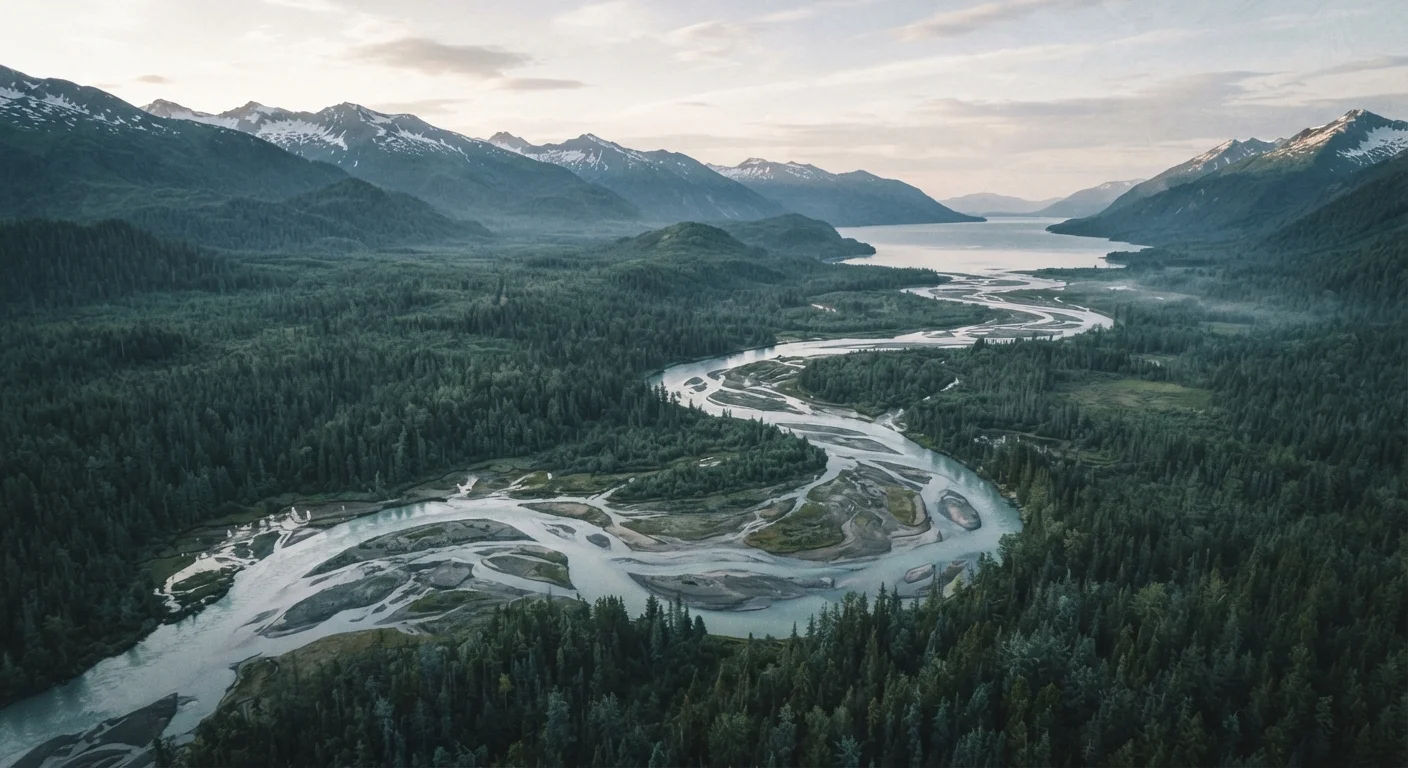
Photo credit: ExploreRoute.net | Travel Made Simple
In this article
Low visitor numbers aren't just a travel perk—they're a conservation lifeline. Explore the science behind why remote wild areas remain healthier.
Key Takeaways
- Low visitor numbers reduce soil compaction, noise pollution, and wildlife stress, allowing ecosystems to self-regulate.
- Remote wild areas benefit from intact trophic cascades — predator-prey relationships that shape entire landscapes.
- Physical access barriers, not just legal protection, are often the primary reason some places stay pristine.
- Visitation itself is not inherently damaging; how and how often people visit determines ecological impact.
- Travelers who understand these dynamics can make choices that preserve what makes isolation valuable.
What Isolation Actually Does to a Landscape
There is a common assumption among travelers that a place looks wild because it has simply been left alone — that pristine means untouched. The ecological reality is more dynamic than that. Landscapes that receive few visitors aren't just resting; they're actively functioning. Nutrient cycles run uninterrupted. Predator-prey relationships shape vegetation patterns. Fungi break down deadfall without interference. The absence of sustained human pressure doesn't create stillness — it creates complexity.
Ecologists refer to this self-organizing capacity as ecological integrity. When it's intact, you can read it in the landscape: rivers run clear because riparian vegetation holds banks in place; bird calls layer in depth because no single species has been crowded out; soil compaction — one of the first measurable signs of heavy foot traffic — is absent, so water infiltrates rather than sheeting off.
Understanding how different biomes function helps clarify why isolation affects ecosystems differently depending on where you are. A boreal forest recovers from disturbance on a timescale of centuries; a desert cryptobiotic soil crust, once crushed underfoot, may take decades to re-establish.
2–3×
Higher species richness in low-footprint landscapes
Research in conservation biology consistently finds that areas with minimal human footprint support significantly greater biodiversity compared to adjacent disturbed zones.
~26%
Of Earth's land remains low human footprint
A landmark global analysis published in the journal Current Biology estimated that roughly a quarter of terrestrial land retains a low human footprint — and these areas hold a disproportionate share of the world's remaining wilderness species.
Decades
Recovery time for cryptobiotic desert soil crust
Biological soil crusts found in desert ecosystems — critical for preventing erosion and fixing nitrogen — can take 50–250 years to recover from a single footprint, according to research from the U.S. Geological Survey.
The Mechanics of Human Disturbance
Visitor impact on wild places is rarely dramatic. It accumulates. A single hiker crossing a meadow compacts roughly the top two centimeters of soil and may displace a ground-nesting bird temporarily. A hundred hikers per day over a season compact deeper soil layers, alter drainage, and may cause permanent nest abandonment. The distinction matters because it means the damage threshold is not binary — it's a gradient that responds to frequency and concentration.
Noise is a less visible but equally documented stressor. Studies in peer-reviewed ecology journals have found that bird species richness drops measurably in areas with elevated recreational noise, even in the absence of physical disturbance. The mechanism is communicative interference: birds rely on acoustic signaling for mating and territory defense, and when human sound overwhelms those signals, breeding success declines.
Wildlife behavior shifts more subtly still. Ungulates — deer, elk, bison — alter their foraging ranges in response to regular human presence, sometimes abandoning highly nutritious areas near trails. This behavioral displacement has downstream effects on vegetation and, in turn, on the predators that depend on these herbivores. The whole web trembles.
“The challenge for conservation is that the places most worth protecting are often most worth visiting — and the act of visiting, aggregated across thousands of people, becomes the threat.”
— E.O. Wilson, Biologist and author of 'The Diversity of Life'
This is the logic behind what separates a genuinely secret natural wonder from a merely underrated one: physical access barriers do conservation work that legal protection alone cannot replicate.
Why Access Barriers Are Conservation Tools
The most intact wild places on Earth share a defining characteristic: getting there is difficult. Whether that difficulty comes from extreme altitude, roadless terrain, seasonal ice, or sheer distance from population centers, the effect is the same — visitor numbers stay low by default, not by enforcement.
Before You Go: Check Access Conditions Officially
Remote landscapes can have restricted access during breeding seasons, fire closures, or following extreme weather events. Always verify current conditions with the relevant land management agency — national park services, forest services, or equivalent authorities — before traveling. Do not rely on travel blogs or social media for real-time regulatory information.
This has an important implication for travelers drawn to remote places. The very features that make a landscape logistically challenging — the absence of marked trails, the unpredictable weather, the physical demand — are the same features sustaining its ecological health. Difficulty isn't an obstacle to the experience; in many cases, it is the experience, and the mechanism of preservation simultaneously.
It also explains why, as infrastructure improves in previously remote regions, conservation urgency typically rises in parallel. A new road into a wilderness area doesn't just change who can visit — it changes the ecological trajectory of the entire surrounding landscape. This dynamic is explored in depth when considering the history of so-called undiscovered places, which are rarely without prior human relationship — and where new access often arrives at existing communities' expense.
For those inclined toward lesser-known backroads and scenic routes, this framing applies equally to vehicle-based travel: unpaved, unsigned, and seasonally impassable routes remain quieter precisely because most drivers don't attempt them.
How Travelers Can Work With Ecology, Not Against It
Understanding why isolated landscapes stay pristine doesn't mean treating them as destinations to be ticked off before they're "discovered." The trade-offs of off-season wilderness access offer a useful frame: visiting outside peak periods can distribute pressure, but it also introduces different ecological stressors — breeding season disturbance, frozen ground that seems hard but hides fragile root systems, animals under metabolic stress in winter.
The most effective principle is concentration management: keeping groups small, confining movement to durable surfaces, and resisting the urge to explore beyond established corridors in sensitive zones. It's less about personal ethics and more about cumulative arithmetic — the landscape doesn't register your intentions, only your footprint.
Contrast this with the pattern described in overcrowded heritage contexts, where overtourism is quietly pushing visitors toward lesser-known alternatives — a process that can simply redistribute ecological pressure rather than reduce it. The goal for ecologically aware travelers isn't just to find somewhere quiet; it's to visit in a way that allows that quiet to persist.
Frequently Asked Questions

Author
Hidden Destinations Editorial Team
Hidden Destinations Editorial Team is the collective byline for our editorial team and contributor network. Articles published under this byline or an editorial pen name are researched, written, and reviewed according to our editorial standards for clarity, consistency, and independence before publication.
View all articles →