
Overlooked Market Towns of West Africa and the Stories Behind Their Names
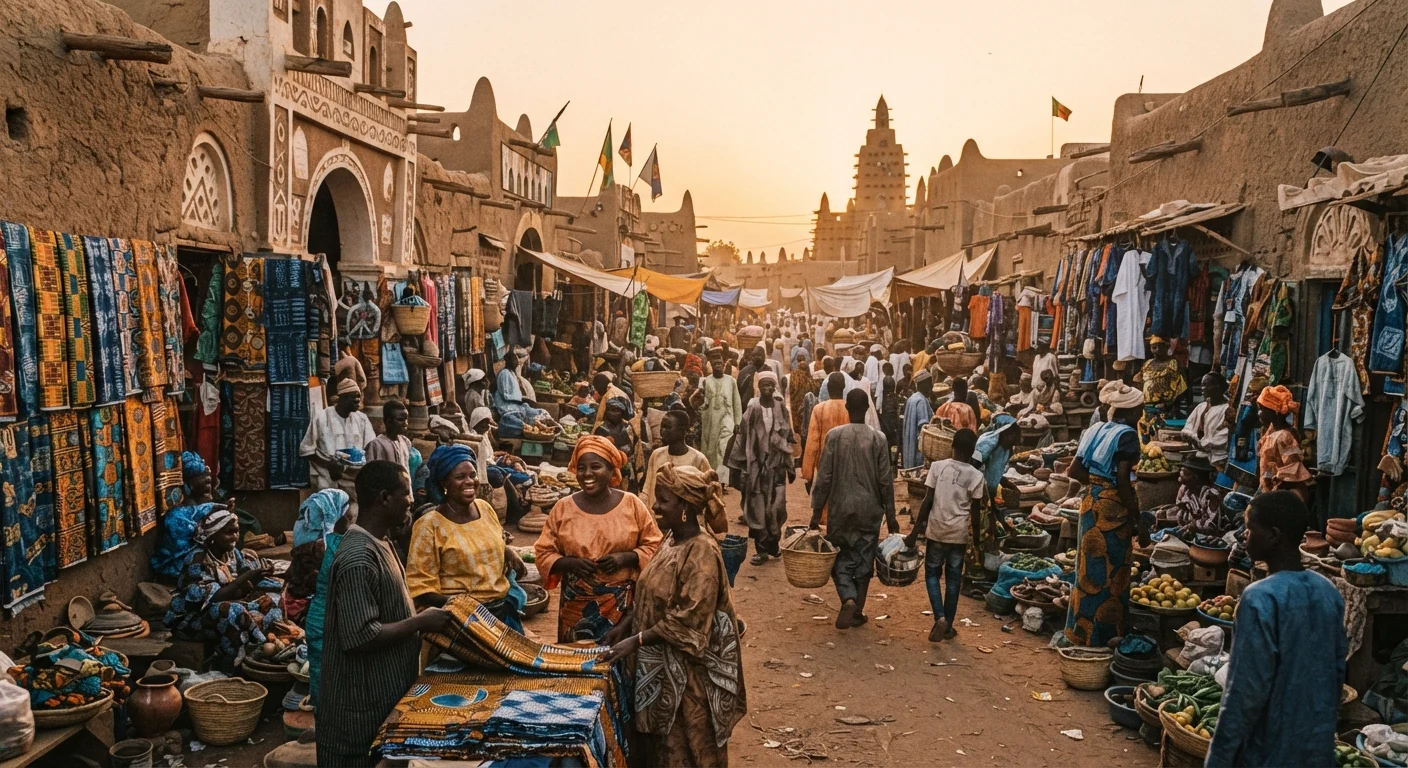
Photo credit: ExploreRoute.net | Travel Made Simple
Many of West Africa's most historically significant towns receive almost no tourist attention. This guide introduces their characters and cultural roots.
Why Names Matter in Market Towns
Across West Africa, a town's name is rarely arbitrary. It can encode a founding event, a geographic feature, a clan's migration route, or an old trading agreement — layers of meaning that most visitors never pause to unpack. For the frequent traveler already familiar with Dakar's Medina or the grand mosques of Djenné, the real reward lies in smaller towns where that naming logic still plays out in daily life.
Understanding what draws certain places into obscurity is itself illuminating. Factors ranging from road access to regional politics conspire to keep some of West Africa's richest market towns wonderfully uncrowded. That scarcity of outside attention, paradoxically, preserves the very character that makes them worth visiting.
| Region covered | West and Central West Africa (Mali, Burkina Faso, Cameroon, Senegal) |
| Market type | Periodic weekly or bi-weekly markets (not daily) |
| Primary languages at markets | Bambara, Dioula, Mooré, Wolof, French, and local clan languages |
| Entry requirements | Visa rules vary significantly by nationality and destination country (Verify with official government sources before travel) |
| Best general travel season | November to February (cooler, drier conditions across the Sahel) (Conditions vary; confirm locally before travel) |
Four Towns Worth Knowing by Name and Story
Kati, Mali — Situated roughly 15 kilometers northwest of Bamako, Kati functions as a garrison town but its Monday market draws traders from across the Koulikoro region. The name is believed to derive from a Bambara root meaning "junction," reflecting its longstanding role as a crossroads between the capital's orbit and the interior's agricultural belt. Vendors sell shea products processed in surrounding villages, and the market's layout — concentric rings of specialty goods — mirrors trade hierarchies that predate the colonial period.
Nouna, Burkina Faso — In the northwest of Burkina Faso, Nouna sits in the Kossi Province and serves communities of Bwaba, Marka, and Samo peoples. The town's name is thought to reference a local watercourse and the seasonal flooding that once defined the agricultural calendar here. Its Thursday market is one of the Sahel's more genuinely polyglot trading events, with transactions conducted in Dioula, Mooré, and French depending on which stall you approach.
Bafang, Cameroon — Though Cameroon sits at West Africa's eastern boundary, Bafang in the West Region exemplifies the pattern this article traces. The name translates roughly from the Bamiléké language as "where the water overflows" — a reference to the highland streams that made this plateau fertile enough to support dense settlement. The town's covered market remains one of the most visually arresting in the region, its corrugated iron roof sheltering a social fabric that mixes Bamiléké coffee farmers with traders from the coast.
Kébémer, Senegal — North of Thiès on the road toward Saint-Louis, Kébémer is a Wolof agricultural town whose name is often traced to the phrase for "land of the Kebe clan." Its weekly market specializes in groundnut oil, millet, and handwoven textiles produced in surrounding villages. The town receives only a fraction of the attention given to the UNESCO-listed island of Saint-Louis a few hours north, yet its market architecture and communal well-system tell an equally layered story about Sahelian resource management.
Dioula
A Mande trade language widely spoken across West Africa's market networks, distinct from but related to Bambara. It has historically served as a lingua franca among traders crossing ethnic and national boundaries.
Sahel
The semi-arid transitional zone between the Sahara Desert to the north and the savanna to the south. Many West African market towns developed along Sahel trade corridors connecting sub-Saharan agriculture with North African commerce.
Bamiléké
A cluster of related ethnic groups from the western highlands of Cameroon, historically known for dense agricultural settlement, complex chieftaincy systems, and long-distance trade networks.
Periodic market
A market that convenes on a fixed day of the week rather than operating daily. Periodic markets are characteristic of rural West Africa and often rotate across nearby towns to maximize reach for traders and buyers.
Travelers with an appetite for reading place through its spaces — how markets, public squares, and bus stops encode local history — will find these towns especially legible. And for those drawn to deeper time, the pre-colonial urban heritage of West Africa provides essential context for understanding why market towns like these emerged where they did.
Before You Travel: Verify Entry and Safety Information
Visa requirements, vaccination recommendations, and travel advisories for Mali, Burkina Faso, Cameroon, and Senegal can change with little notice. Travelers should consult their government's official travel advisory portal and the destination country's embassy before making plans. Some regions within these countries have elevated security risks not reflected in town-level descriptions; always review current advisories specific to the provinces you intend to visit.

Author
Hidden Destinations Editorial Team
Hidden Destinations Editorial Team is the collective byline for our editorial team and contributor network. Articles published under this byline or an editorial pen name are researched, written, and reviewed according to our editorial standards for clarity, consistency, and independence before publication.
View all articles →