
Africa's Pre-Colonial Urban Ruins: The Cities That Rewrote Archaeological Understanding
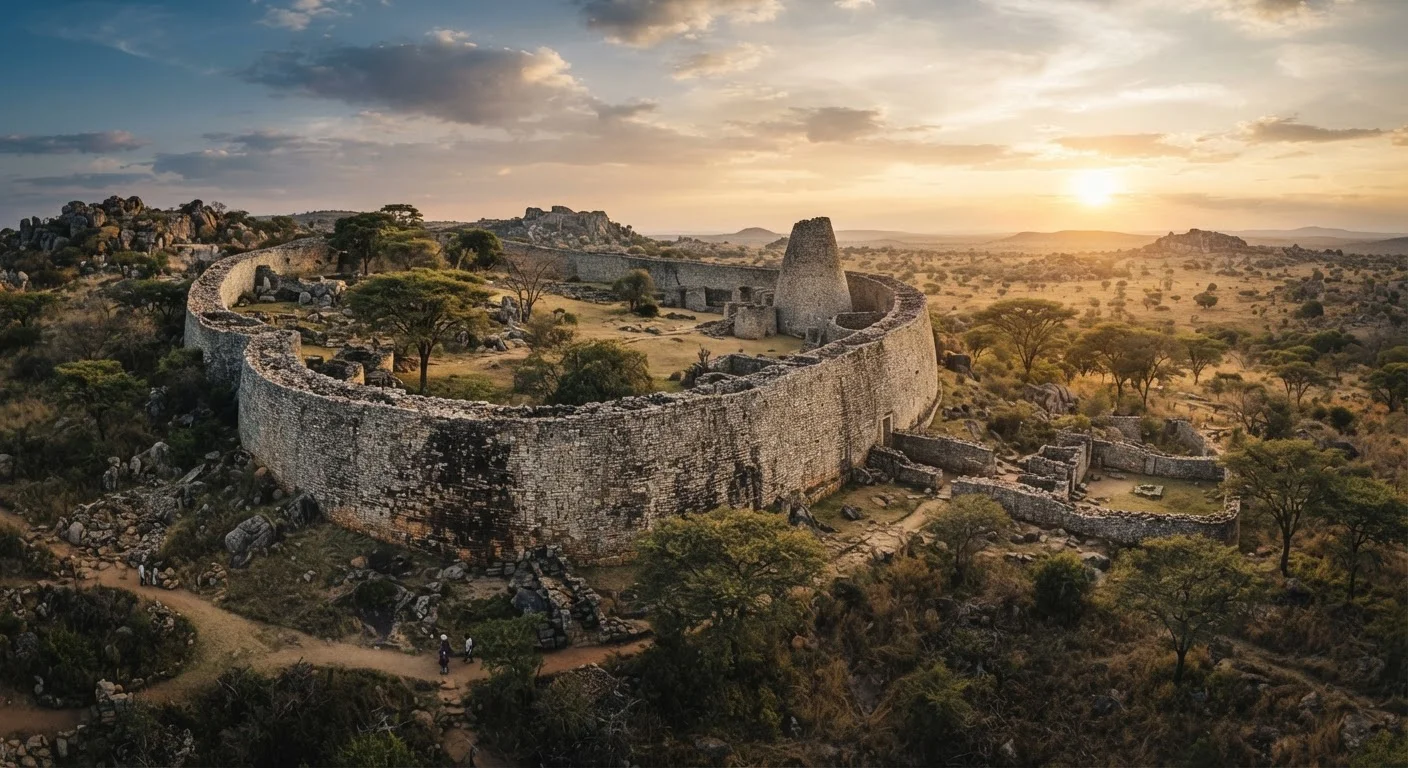
Photo credit: ExploreRoute.net | Travel Made Simple
Great Zimbabwe, Loropéni, and others challenged long-held assumptions about African history. These sites remain far less visited than their significance deserves.
Cities That Refused to Stay Forgotten
For much of the nineteenth and early twentieth centuries, a prevailing colonial narrative insisted that sub-Saharan Africa had no indigenous tradition of urban civilization. Then archaeologists began paying serious attention to the stonework that local communities had always known was there — and the narrative collapsed. Sites like Great Zimbabwe, the walled city of Loropéni, and the earthwork complexes of Benin rewrote entire chapters of world history. They remain, astonishingly, among the least-visited significant archaeological sites on earth.
What makes these ruins so intellectually arresting is not just their scale but their sophistication. Great Zimbabwe's Great Enclosure — constructed from an estimated 900,000 granite blocks fitted without a single drop of mortar — enclosed a royal court that may have housed a population of up to 18,000 people at its height between the 11th and 15th centuries. The precision of the dry-stone technique, called dhaka construction, was achieved without metal tools. When European colonizers first encountered the ruins, many refused to attribute them to the Shona people whose descendants lived nearby. The archaeology has since settled the question definitively.
| Great Zimbabwe UNESCO inscription | 1986 (UNESCO World Heritage List) |
| Estimated population at Great Zimbabwe's peak | Up to 18,000 people (Archaeological consensus, range varies by study) |
| Loropéni UNESCO inscription | 2009 (UNESCO World Heritage List) |
| Loropéni wall height | Up to 6 meters (UNESCO site documentation) |
| Great Zimbabwe construction period | 11th–15th centuries CE (Archaeological dating consensus) |
| Granite blocks in Great Enclosure (estimated) | ~900,000 (Archaeological estimates; figures vary by source) |
These sites deserve to be on any serious traveler's radar, and the forgotten urban centres that shaped civilisations provides broader context for understanding how such places slip from mainstream awareness.
The Key Sites and What Sets Each Apart
Great Zimbabwe (Zimbabwe) — A UNESCO World Heritage Site since 1986, the ruins sprawl across roughly 800 hectares in southeastern Zimbabwe. Three distinct architectural zones — the Hill Complex, the Valley Ruins, and the Great Enclosure — speak to a city that controlled interior gold and ivory trade routes stretching to the Swahili Coast and beyond. Visiting independently is feasible; the on-site museum contextualizes the political history of how the site was misattributed for decades. If you want to read the stonework itself before arriving, learning to interpret architectural remains can transform what might look like a pile of rocks into a legible urban grammar.
Loropéni (Burkina Faso) — Inscribed as a UNESCO World Heritage Site in 2009, Loropéni is the best-preserved of a cluster of stone-walled settlements in the Sahel-savanna transition zone. Built by Lobi ancestors likely between the 11th and 14th centuries, its walls reach up to six meters in height. Tourism infrastructure is minimal — this is genuinely off the radar — and the surrounding region's market towns carry their own layered stories, as explored in overlooked market towns of West Africa.
Benin City Earthworks (Nigeria) — The defensive system surrounding the Kingdom of Benin's capital — a network of moats and ramparts extending an estimated 16,000 kilometers — was described by some researchers as one of the largest earthwork systems in the world. Much of it has been absorbed by modern Benin City, but remnant sections remain visible and are increasingly recognized by Nigerian cultural bodies.
Dry-stone construction
A building technique in which stone is stacked and fitted without the use of mortar or binding agents. Structural integrity depends entirely on the precision of stone selection and placement.
Dhaka construction
The specific dry-stone walling technique associated with Great Zimbabwe's builders, notable for interlocking granite blocks shaped to fit without cutting tools or mortar.
Earthwork
A large-scale landscape modification — typically a raised embankment, mound, or ditch — constructed for defensive, ceremonial, or agricultural purposes. The Benin City system is one of the most extensive documented examples.
UNESCO World Heritage Site
A location recognized by the United Nations Educational, Scientific and Cultural Organization as having outstanding universal cultural, historical, or natural value. Inscription provides international visibility and, ideally, conservation support.
Swahili Coast trade network
A centuries-long Indian Ocean commercial system linking East African port cities — including Kilwa and Mombasa — with interior kingdoms and overseas markets as far as the Persian Gulf, India, and China.
Before visiting any of these sites, review the ethical and practical framework outlined in visiting a forgotten ruin responsibly — fragility, access permissions, and local community relationships all matter here.

Author
Hidden Destinations Editorial Team
Hidden Destinations Editorial Team is the collective byline for our editorial team and contributor network. Articles published under this byline or an editorial pen name are researched, written, and reviewed according to our editorial standards for clarity, consistency, and independence before publication.
View all articles →