
Airside vs. Landside: The Invisible Line That Shapes Your Entire Airport Experience
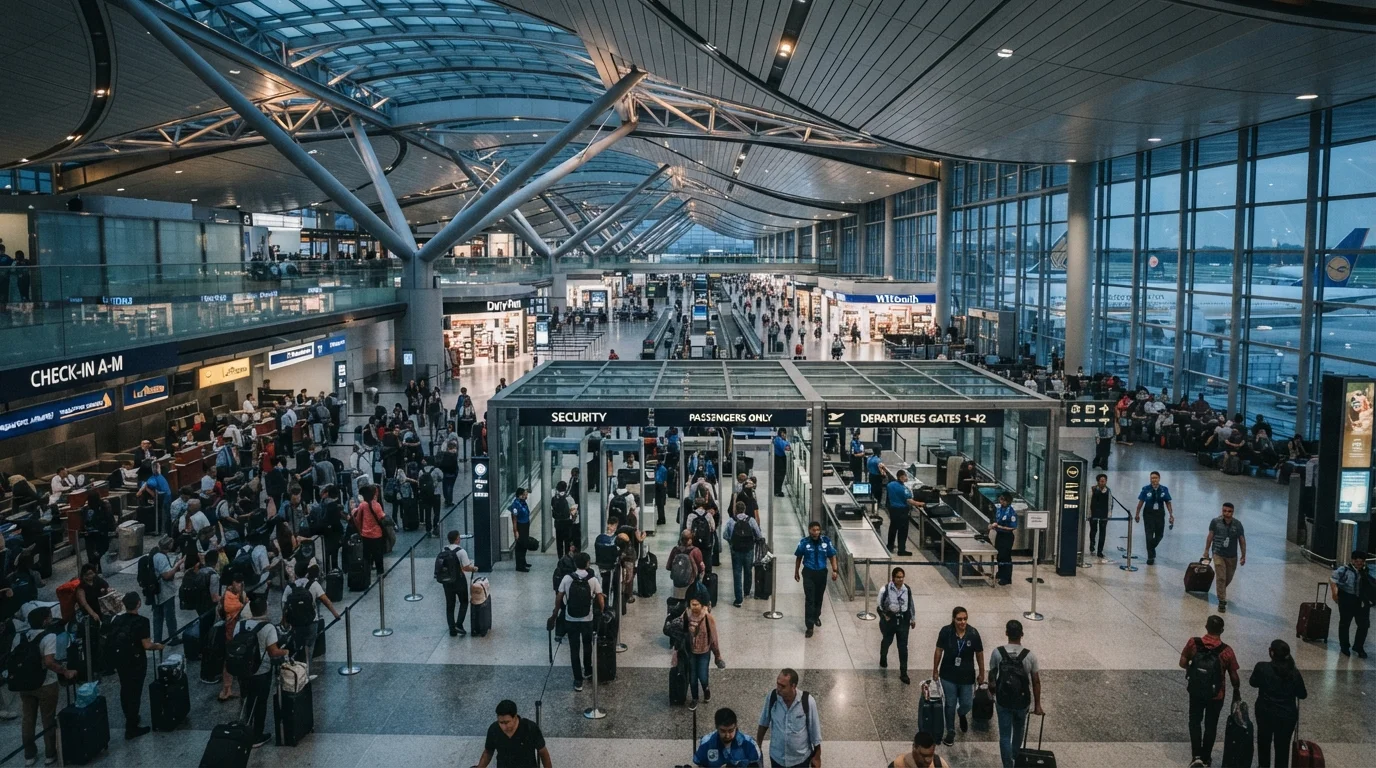
Photo credit: ExploreRoute.net | Travel Made Simple
In this article
The distinction between airside and landside zones affects everything from where you can eat to whether you can re-enter. Here's what the boundary means in practice.
Key Takeaways
- Landside is accessible to anyone; airside requires a valid boarding pass and successful security screening.
- Once you cross into airside, re-entering landside means going through security again — time that adds up.
- Duty-free shops, most departure lounges, and all boarding gates are located exclusively in airside.
- International airports often have additional airside sub-zones, such as post-immigration areas for departing international passengers.
- Understanding this boundary helps you plan meeting points, dining stops, and connection times more accurately.
- Some airports offer airside transit hotels and rest facilities, but only accessible without clearing immigration in certain configurations.
What the Airside–Landside Boundary Actually Means
Every commercial airport is divided into two fundamental zones separated by a security checkpoint. Landside encompasses everything passengers and visitors can access before clearing security: check-in desks, baggage drop counters, ticketing offices, arrivals halls, and any public-facing retail or dining in the main terminal building. Airside begins the moment you pass through the security screening point and is restricted to passengers holding valid boarding passes — or, at international airports, to those who have also cleared passport control.
This boundary is not merely administrative. It is a physical and legal demarcation enforced by aviation regulators including the Transportation Security Administration (TSA) in the United States. The rules governing who can be where, and what can be brought across the line, underpin the entire security architecture of modern air travel.
For a fuller picture of how terminals, concourses, and gates fit together around this boundary, see how airport layouts are structured.
| Criterion | Landside | Airside |
|---|---|---|
| Access requirement | Open to all — no boarding pass needed | Valid boarding pass + security screening |
| Key functions | Check-in, baggage drop, arrivals hall | Gates, lounges, duty-free, boarding |
| Retail & dining | Limited; varies by airport | Extensive; most departure-side options |
| Re-entry after exit | Immediate; no screening required | Full security re-screening required |
| International sub-zones | Arrivals customs and immigration | Pre-immigration and post-immigration areas |
| Who can be present | Passengers, meeters, greeters, staff | Ticketed passengers and credentialed staff only |
How Each Zone Functions Day to Day
Landside handles the logistics of getting passengers to their flight. This is where you print boarding passes, hand over checked luggage, and receive inbound travelers at arrivals. It is also where ground transportation links — taxis, rideshares, rail connections — converge. Non-ticketed visitors, such as those dropping off passengers or picking up arrivals, are confined here.
Airside, by contrast, is engineered around the departing passenger's final hours before boarding. Gates, jet bridges, departure lounges, and most duty-free retail operate exclusively in this zone. At larger international hubs, airside itself is subdivided: a domestic departure area may be separated from an international departure area by a further passport-control checkpoint, meaning travelers on connecting international itineraries may occupy a different airside sub-zone than domestic passengers.
~30–60 min
Typical security re-screening time lost at peak hours
TSA wait-time data and airport passenger-flow studies consistently show peak-period screening taking 30 to 60 minutes at major US hubs.
100%
US international arrivals that must clear customs landside
Under US Customs and Border Protection policy, all passengers on international flights arriving in the United States must clear customs and baggage claim in landside before any domestic connection.
One practical implication that catches travelers off guard: if you exit airside — say, to retrieve forgotten baggage or meet someone at arrivals — you must re-clear security. At busy airports during peak hours, that can cost 30 to 60 minutes or more. Plan accordingly before leaving the secured zone.
Connections, Transits, and the Boundary's Hidden Complexity
Where the airside–landside distinction becomes genuinely complex is during connections. On a domestic-to-domestic connection within the same terminal, you typically remain airside throughout, bypassing security entirely. On an international arrival followed by a domestic departure, however, you will almost always exit airside into landside to clear customs and baggage claim, then re-enter security for your onward flight. This is a mandatory process in the United States under Customs and Border Protection (CBP) rules for international arrivals.
Some airports operate dedicated international transit facilities — sometimes called sterile transit zones — that allow connecting international passengers to remain airside without formally entering the country. Availability varies significantly by airport and national immigration policy; travelers should verify this directly with their airline and the relevant customs authority before assuming a connection is possible without clearing immigration.
For a detailed walkthrough of what happens after an international flight lands, see the step-by-step international arrivals breakdown.
Sterile Transit: Not Available at US Airports
Unlike some European and Asian hubs, US airports do not operate sterile international transit zones. Any passenger arriving on an international flight must clear CBP immigration and customs — a landside process — regardless of their onward destination. This is a consistent feature of US airport design and should factor into minimum connection time calculations. Always verify transit rules with your airline and CBP before travel, as policies are subject to change.
Making the Boundary Work for You
Knowing where the line falls translates directly into smarter airport planning. Arrive early enough to complete landside tasks — check-in, baggage drop, any airport-specific paperwork — before security queues build. Once airside, resist the urge to return to landside unless absolutely necessary; the time cost is rarely worth it.
If you are meeting someone at the airport, identify in advance whether your rendezvous point is in the landside arrivals hall or an airside concourse. Non-passengers cannot accompany you beyond security regardless of circumstance. Some airports offer observation or greeting areas in landside specifically designed for this purpose.
For a comprehensive view of everything that happens between booking confirmation and baggage reclaim — including how the airside–landside split fits into the broader journey — the end-to-end airport experience guide covers it in full detail.

Author
Smart Air Travel Editorial Team
Smart Air Travel Editorial Team is the collective byline for our editorial team and contributor network. Articles published under this byline or an editorial pen name are researched, written, and reviewed according to our editorial standards for clarity, consistency, and independence before publication.
View all articles →