
The Anatomy of a Modern Airport: What All Those Terminals, Concourses, and Gates Actually Mean
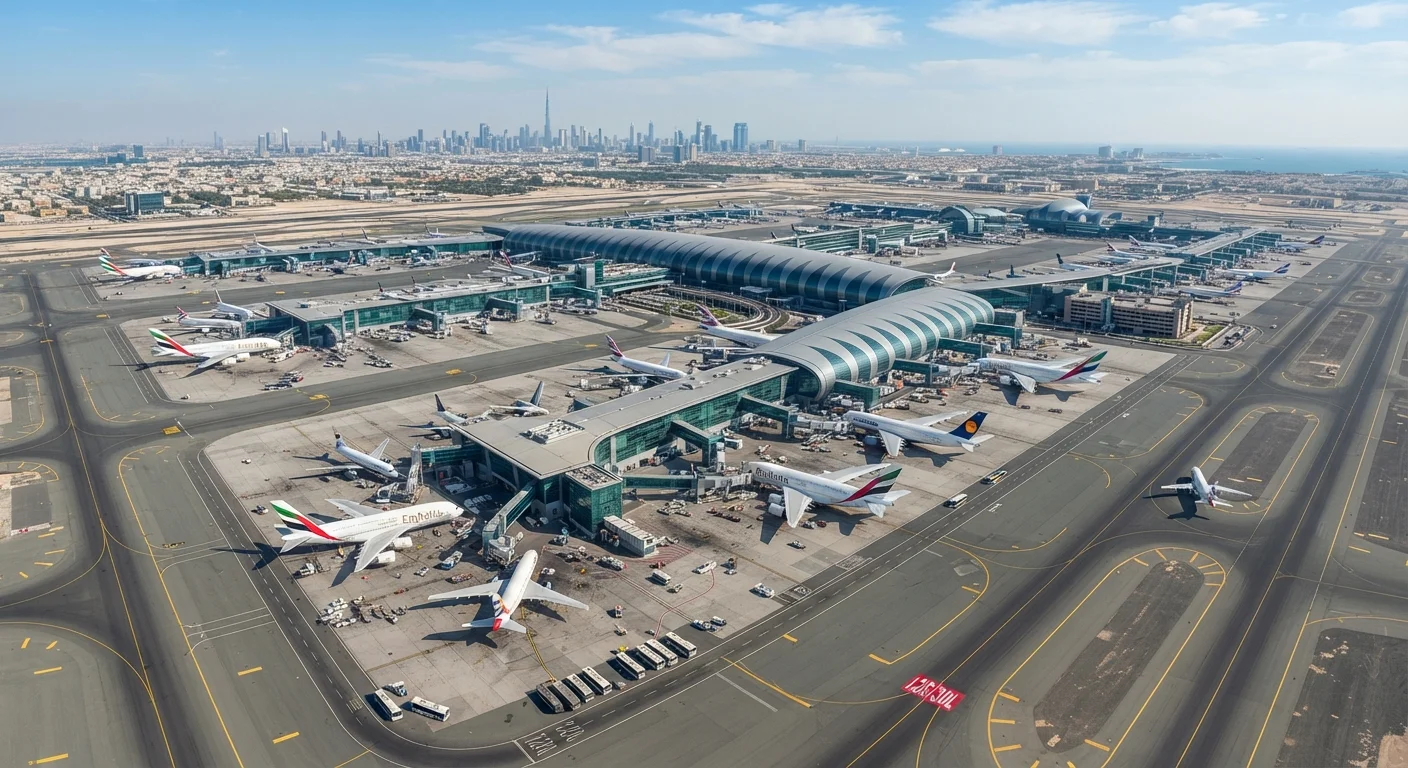
Photo credit: ExploreRoute.net | Travel Made Simple
In this article
Terminals, concourses, satellites, and gates can confuse even seasoned flyers. Here's how airport layouts are structured and why it matters for your journey.
Key Takeaways
- Terminals are separate buildings; concourses are wings or extensions within or connected to them.
- Gates are individual boarding positions numbered within concourses — not interchangeable with terminals.
- Inter-terminal transfers often require exiting security and re-screening — factor in significant extra time.
- Satellite concourses connected by underground or above-ground trains are common at hub airports.
- Your boarding pass gate code tells you which terminal and concourse to head for — decode it before you arrive.
- Airport layouts directly affect connection times, lounge access, and where you can eat or shop.
Why Airport Vocabulary Matters Before You Travel
Arriving at a large hub airport without understanding its layout is like navigating a city without knowing the difference between a neighborhood, a street, and a building. The terminology airports use — terminal, concourse, pier, satellite, gate — describes a physical hierarchy that directly shapes how long your walk is, whether you'll make a connection, and where you can access a lounge or grab a meal.
Misreading that hierarchy is one of the most common causes of missed connections and unnecessary stress. A traveler who assumes all gates in an airport are equally accessible from one security checkpoint is working from a flawed mental model. Understanding the actual structure lets you plan arrivals, layovers, and transfers with far greater precision. For a broader view of how the entire airport journey fits together, see this end-to-end airport guide.
900+
Commercial airports in the United States
According to the FAA, the U.S. national airspace system includes over 900 commercial service airports, each with its own layout and terminology conventions.
110M+
Annual passengers at the world's busiest airport
Hartsfield-Jackson Atlanta International Airport has consistently ranked among the world's busiest airports, underscoring why structured navigation knowledge is essential at major hubs.
~30 min
Average inter-terminal transfer time at large hubs
Travel industry guidance and airport operational data suggest passengers should allow a minimum of 30 minutes for same-airport terminal transfers, excluding security re-screening queues.
Terminals: The Top Level of the Hierarchy
A terminal is the foundational unit of airport infrastructure — a self-contained building with its own check-in counters, security checkpoints, baggage claim carousels, and passenger amenities. Smaller airports have a single terminal; major hubs like Chicago O'Hare, Heathrow, or Dallas/Fort Worth operate multiple terminals, each functioning almost like a separate mini-airport.
Terminals are typically organized around airline alliances, airline groups, or flight type (domestic vs. international). Moving between terminals at the same airport may require a shuttle bus, an automated people mover, or — at some airports — exiting to the public roadway and re-entering through a different building. This distinction is critical: inter-terminal transfers often mean repeating the full security screening process. The airside vs. landside distinction is central to understanding why inter-terminal movement can be so time-consuming.
Check Terminal Assignments the Day Before
Airlines occasionally reassign flights to different terminals ahead of departure, especially at hub airports undergoing construction or seasonal operations changes. Verify your terminal on the airline's website or app the evening before travel — not just at booking time. This single habit can prevent the stress of arriving at the wrong building.
Concourses, Piers, and Satellites: The Middle Layer
Within — or connected to — a terminal sits the concourse, variously called a pier, finger, or satellite depending on the airport and country. Concourses are the long corridors lined with gates that extend toward the airfield. Their shape is designed to maximize the number of aircraft that can park simultaneously while keeping walking distances manageable.
A satellite concourse is a variation that sits entirely separate from the main terminal building, connected by an underground tunnel, elevated walkway, or a short automated train ride. Passengers clear security in the main terminal, then transit to the satellite to reach their gate. At airports like Atlanta Hartsfield-Jackson — the world's busiest by passenger volume — an underground train connects multiple concourses and is part of the standard boarding routine.
Concourse lettering (A, B, C) or naming conventions (North, South, International) helps passengers orient themselves quickly. Your boarding pass gate code is built on this structure: the letter identifies the concourse, the number pinpoints the gate within it.
Gates: Where the Flight Actually Happens
A gate is an individual boarding position — a numbered door connected, via a jetway (also called a jet bridge or airbridge), directly to the aircraft cabin. At smaller or less-equipped airports, a gate may simply be a door leading to the tarmac, where passengers board via steps. The gate number on your boarding pass is the final, most specific piece of location data the airport gives you.
Gate assignments can and do change, sometimes within hours of departure due to aircraft substitutions, delays, or operational reshuffling. Relying solely on the gate printed on your boarding pass without checking the departures board is a known source of missed flights — particularly at large hubs. Reading airport signage and status boards fluently is a practical skill that pays dividends at every step of the journey.
Gate Numbers Are Not Always Sequential
Airport concourses were often built in phases, and gates may have been renumbered, removed, or added over time. Gate B5 is not necessarily near Gate B6 in every airport — some concourses loop, branch, or skip numbers entirely. Always use the airport's official map app or terminal guides rather than assuming proximity from gate numbers alone.
Putting It Together: Navigating a Connection
Understanding the hierarchy pays off most when you're connecting between flights. Suppose your itinerary reads: arrive Terminal 2, Gate D14 — depart Terminal 4, Gate F37. That signals a terminal change, which at most airports means exiting the secure area and re-clearing security. Add realistic buffer time of at least 90 minutes for such a transfer; many experienced travelers build in more.
If both flights use the same terminal, check whether your arrival and departure concourses share an airside connection. At hub airports, this is common and allows transfers without re-screening. For first-time navigators of a major hub, a structured checklist approach — knowing your arrival gate, transfer route, and departure gate before you land — removes almost all guesswork. The hub airport navigation checklist provides exactly that framework. For international arrivals, the post-landing sequence adds further steps — immigration, customs, and baggage claim — covered in detail in this step-by-step breakdown.
“The best-designed airports make the physical hierarchy invisible to passengers — you simply follow clear signage and arrive on time. Understanding the underlying structure is what separates confident navigators from confused ones when the signs aren't perfect.”
— Airport Design and Operations Research Group, Academic collective specializing in airport passenger flow and terminal planning
Frequently Asked Questions

Author
Smart Air Travel Editorial Team
Smart Air Travel Editorial Team is the collective byline for our editorial team and contributor network. Articles published under this byline or an editorial pen name are researched, written, and reviewed according to our editorial standards for clarity, consistency, and independence before publication.
View all articles →