
TSA PreCheck, Global Entry, and CLEAR: Which Trusted Traveler Program Actually Suits You?
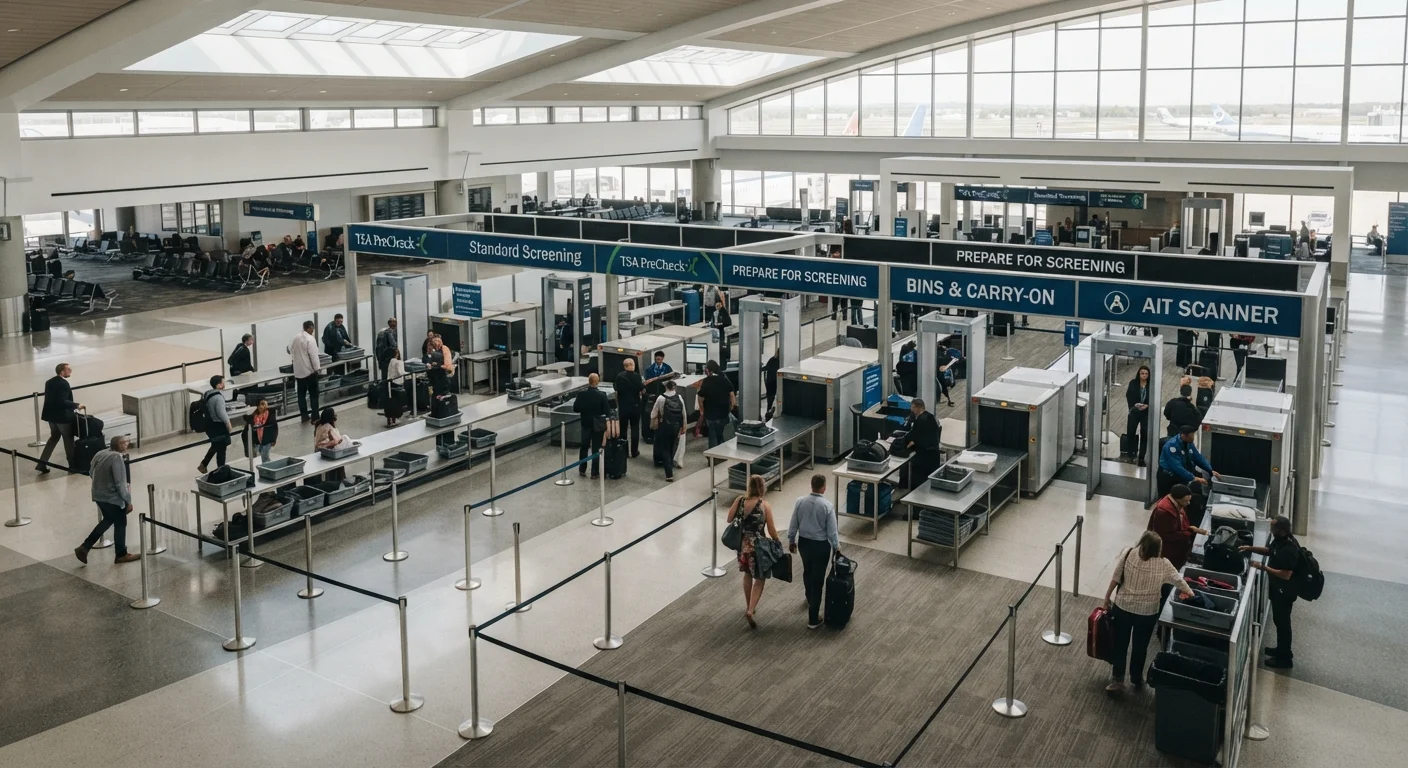
Photo credit: ExploreRoute.net | Travel Made Simple
In this article
TSA PreCheck, Global Entry, and CLEAR each speed up different parts of the airport experience. Understand what each covers before deciding which fits your travel habits.
Key Takeaways
- TSA PreCheck expedites domestic security screening but does not assist with customs or immigration.
- Global Entry includes TSA PreCheck and adds expedited U.S. customs re-entry for international travelers.
- CLEAR uses biometrics to verify identity at the checkpoint but does not reduce the screening itself.
- Combining CLEAR with PreCheck or Global Entry delivers the most comprehensive checkpoint efficiency.
- Each program has distinct eligibility requirements, enrollment processes, and annual or multi-year fees.
What Each Program Actually Does
Frequent travelers often treat these three programs as interchangeable, but they address entirely different friction points in the airport experience. Understanding those distinctions is the starting point for a rational decision.
TSA PreCheck is a Transportation Security Administration program that grants access to expedited screening lanes at participating U.S. airports. Members keep shoes, belts, and light jackets on, leave laptops and compliant liquids in their bags, and pass through a standard metal detector rather than a full-body scanner. It covers domestic flights and many international departures from U.S. airports on participating airlines.
Global Entry is a U.S. Customs and Border Protection program that automates the customs and immigration process when re-entering the United States from abroad. Members use dedicated kiosks to verify identity and declare goods, bypassing the standard customs officer queue. Critically, Global Entry membership automatically includes TSA PreCheck — making it the more comprehensive option for anyone who travels internationally even occasionally.
CLEAR is a privately operated biometric identity service. Rather than speeding up the screening process itself, CLEAR replaces the document-check portion of the checkpoint queue. A CLEAR agent verifies your identity using fingerprints or iris scans, then escorts you to the front of the document-check line before you proceed through standard or PreCheck screening. CLEAR does not change what happens at the X-ray belt. See our breakdown of what airport screening actually involves for context on where real delays typically occur.
| TSA PreCheck | Global Entry | CLEAR | |
|---|---|---|---|
| What it speeds up | Domestic security screening | U.S. customs re-entry + security screening | Identity document verification queue |
| Includes TSA PreCheck | Yes (primary benefit) | Yes (automatically included) | No |
| Covers international re-entry | No | Yes | No |
| Government program | Yes (TSA) | Yes (CBP) | No (private) |
| Background check required | Yes | Yes (more extensive) | No |
| Membership duration | 5 years | 5 years | Annual renewal |
| In-person appointment needed | Yes | Yes (interview) | No |
| Airport coverage | ~200+ U.S. airports | Major international U.S. airports | Select airports and venues |
Fees, Eligibility, and Enrollment
Each program carries its own eligibility criteria, application process, and cost structure. These are not trivial differences.
TSA PreCheck requires an in-person appointment at an enrollment center for a background check and fingerprinting. The program is open to U.S. citizens, U.S. nationals, and lawful permanent residents. Membership is valid for five years.
Global Entry requires a more rigorous application process through CBP's Trusted Traveler Programs online portal, including a background check and an in-person interview at a Global Entry Enrollment Center — often located at major international airports. It is available to U.S. citizens, U.S. nationals, lawful permanent residents, and citizens of several partner countries. Conditional approval can be granted before the interview, and some airports allow enrollment-on-arrival interviews when re-entering from an international trip. Membership lasts five years.
CLEAR does not require a government background check. Enrollment can be completed at airport CLEAR lanes directly, using a valid government-issued ID and biometric data. It is not a government program and carries no security vetting component. Availability is limited to airports and venues where CLEAR has installed its equipment — coverage has expanded considerably but is not universal. Verify current participating locations before relying on it for a specific route.
Global Entry Interview Timing Tip
If you have conditional Global Entry approval but haven't completed your interview, check whether your arrival airport offers enrollment-on-arrival when you return from an international trip. This approach allows you to complete the interview immediately after clearing the standard customs queue — eliminating a separate appointment entirely. Confirm current availability at your specific airport through the CBP Trusted Traveler Programs portal before travel.
How to Match the Program to Your Travel Pattern
The decision framework is straightforward once you map each program's benefits against your actual travel habits.
If you fly domestically several times a year and rarely leave the country, TSA PreCheck delivers meaningful time savings at a modest cost. The expedited lane and relaxed screening protocol reduce both the physical process and the cognitive load of preparing for the checkpoint. How you pack your carry-on also affects throughput — PreCheck works best alongside disciplined bag organization.
If you take at least one international trip annually, Global Entry is almost always the stronger investment. The incremental fee above PreCheck-only pricing is modest, and the customs kiosk benefit can save a significant amount of time after a long-haul flight when customs queues tend to be at their longest. The built-in PreCheck coverage means no separate enrollment is needed. Review our pre-trip international research checklist for the broader preparation context around international departures.
If your primary frustration is the document-check queue — not the screening itself — CLEAR addresses exactly that bottleneck. It pairs especially well with PreCheck or Global Entry: CLEAR moves you past the ID verification line, while PreCheck then processes you through a faster, less intensive screening lane. The combination is what most high-frequency travelers who use CLEAR actually rely on.
For travelers integrating airport efficiency into a broader journey — including cruise departures or multi-leg itineraries — having these programs in place supports the end-to-end airport experience that reduces overall travel stress.
200+
U.S. airports with TSA PreCheck lanes
According to the Transportation Security Administration, TSA PreCheck lanes are available at more than 200 airports across the United States.
5 min
Average PreCheck screening wait time
The TSA has reported that the vast majority of PreCheck passengers wait under five minutes at dedicated lanes, compared to significantly longer standard lane waits during peak periods.

Author
Smart Air Travel Editorial Team
Smart Air Travel Editorial Team is the collective byline for our editorial team and contributor network. Articles published under this byline or an editorial pen name are researched, written, and reviewed according to our editorial standards for clarity, consistency, and independence before publication.
View all articles →