
What Airport Lounges Actually Offer — and When Access Is Worth Pursuing
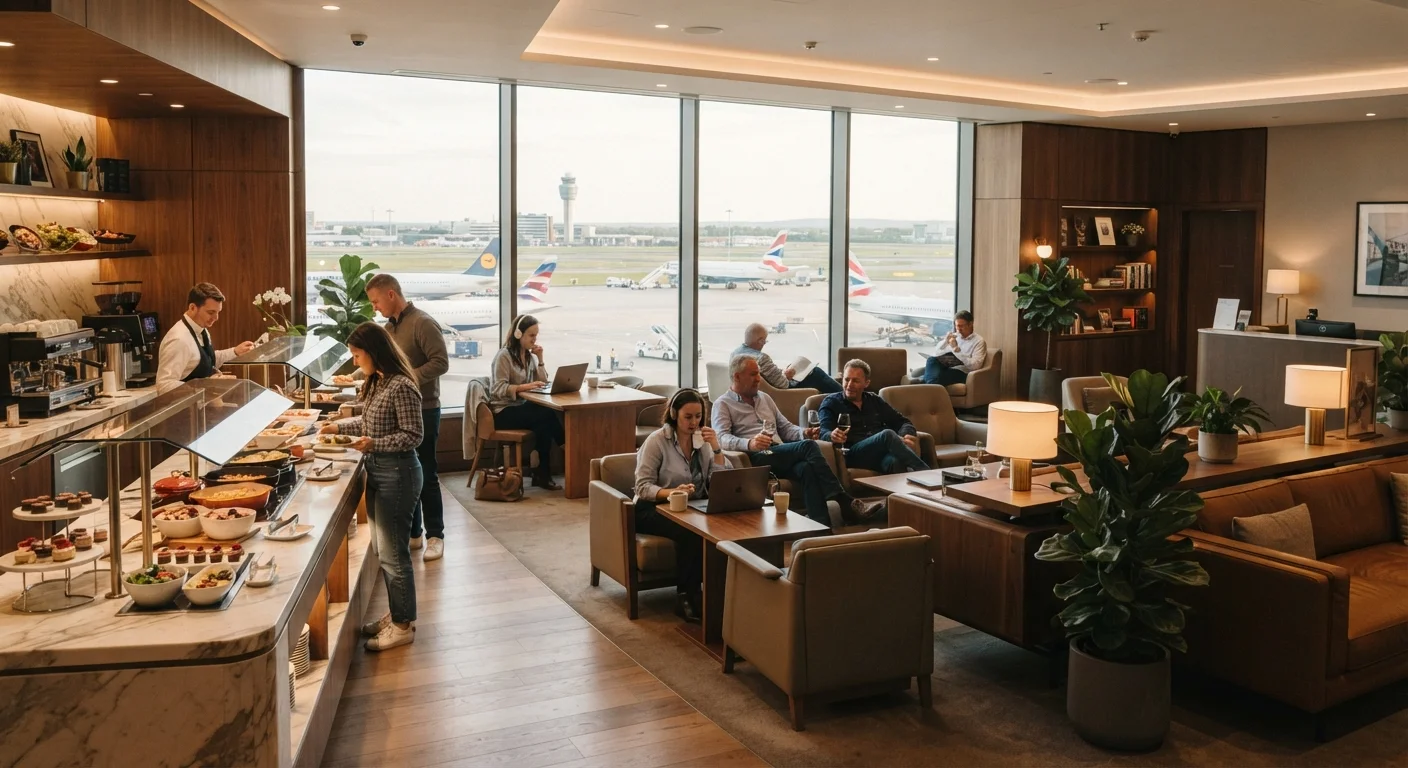
Photo credit: ExploreRoute.net | Travel Made Simple
In this article
Quiet seating, showers, food, and Wi-Fi — airport lounges vary widely. Learn what to realistically expect and when lounge access genuinely improves your travel day.
Key Takeaways
- Lounge quality varies widely — from full hot meals to little more than packaged snacks and a quieter chair.
- Access routes include airline elite status, premium tickets, credit card benefits, and day passes.
- Lounges deliver the most value during long layovers, delays, or early-morning departures.
- Crowding at popular hub lounges can erode the comfort advantage significantly.
- Independent lounge networks expand access but often offer a more standardized, less premium experience.
- Always verify lounge eligibility for your specific ticket and terminal before counting on access.
What Lounges Actually Contain — Setting Realistic Expectations
The word "lounge" spans an enormous range. At one end sit flagship international lounges with à la carte dining, spa treatments, and private sleep pods. At the other end are compact domestic clubs with a coffee machine, packaged snacks, and marginally softer chairs than the gate area. Most travelers encounter something in between.
Core amenities found across the majority of mid-tier and premium lounges include:
- Seating: More abundant and comfortable than gate areas, though popular hub lounges can still fill up during peak hours.
- Food and beverages: Ranges from self-serve continental spreads and bar snacks to hot buffets and, in higher-tier spaces, full table service.
- Wi-Fi: Standard, though speeds vary — a lounge in a major US hub may still struggle during peak usage.
- Restrooms: Consistently cleaner and less crowded than terminal facilities.
- Showers: Available in many international and flagship lounges; uncommon in domestic clubs.
- Quiet zones and workspaces: Increasingly standard, though layout quality differs significantly.
Understanding the specific lounge you'll access — not the category in general — is essential. Misplaced assumptions about airport facilities are one of the most consistent sources of travel-day friction.
1,400+
Airport lounges in major independent networks
Some of the largest independent lounge access programs report access to over 1,400 locations globally, though amenity standards vary widely across participating lounges.
$50–$60
Typical walk-in day pass cost (USD)
Walk-in day pass pricing at major US hub lounges commonly falls in this range, though prices differ by network, airport, and booking method.
3 hrs
Typical maximum early lounge entry window
Most airline and independent lounges permit entry up to three hours before a scheduled departure, with some international flagship lounges offering longer windows.
How Lounge Access Actually Works
Access routes broadly fall into four categories, each with different coverage and conditions:
- Airline elite status: Mid- and top-tier frequent flyer status typically grants access to that carrier's own lounges on same-day travel. Alliance Gold status (Star Alliance, oneworld, SkyTeam) extends this to partner lounges globally — a meaningful benefit on international itineraries.
- Premium cabin tickets: Business and first class tickets on many international carriers include lounge access as a standard part of the fare. Domestic first class rarely carries the same guarantee — check before assuming.
- Credit card memberships: Several card programs provide access to independent lounge networks or specific airline clubs. Read the fine print carefully: visit caps, guest fees, and blackout conditions are common.
- Day passes: Many lounges sell walk-in access, typically ranging from $30 to $60 depending on the network and airport. Some independent networks allow day pass purchases through third-party platforms.
Because lounge networks are structured differently — airline-operated, alliance-affiliated, or independent — your credentials for one lounge do not automatically transfer to another. Terminal and concourse layouts also matter: a lounge in one terminal may be inaccessible once you've cleared security for a different concourse.
Check the Specific Lounge, Not Just the Network
Lounge amenities listed on a network's website reflect general standards, not what you'll find at every location. A lounge in a smaller regional airport affiliated with the same network as a major hub club may offer a fraction of the amenities. Look up reviews of the specific lounge at your departure airport to set accurate expectations.
When Lounge Access Genuinely Improves Your Travel Day
Lounge access isn't uniformly valuable — context shapes its worth considerably.
High-value scenarios:
- Long layovers: A four- or five-hour connection becomes substantially more manageable with a lounge. See the strategies in the long-layover playbook for how to structure extended waits effectively.
- Flight delays: When a two-hour wait becomes five, having a calm space with real food and comfortable seating has disproportionate value.
- Early-morning or red-eye connections: Shower access before a morning flight, or a quiet place to rest after an overnight, can meaningfully affect how you arrive.
- Intensive work travel: Reliable Wi-Fi, quiet seating, and a proper meal in place of gate-area noise and fast food represents a genuine productivity and wellbeing advantage.
Lower-value scenarios:
- Short domestic connections under 90 minutes, where time in the lounge is minimal.
- Overcrowded flagship lounges during peak hours — the comfort differential shrinks when seating is scarce.
- Situations where the lounge is in a different terminal from your gate, requiring extra movement and security re-entry.
Pairing lounge rest with thoughtful in-flight comfort choices — explored in our look at essential comfort accessories — tends to produce better overall travel days than either approach alone.
What to Verify Before You Count on a Lounge
Several lounge access assumptions frequently fail in practice. Before building a lounge stop into your travel-day plan, confirm the following:
- Eligibility for your specific ticket: A premium credit card may grant access to Lounge Network A but not Lounge Network B, which is what's available at your airport.
- Terminal location: Whether the lounge is post-security and in the same concourse as your gate. Backtracking through security for a lounge is rarely worth it.
- Guest policy: If you're traveling with others, verify guest fees or companion access limits in advance.
- Opening hours: Some lounges close overnight or have restricted hours on weekends.
- Capacity and crowding: Major hub lounges at peak times can resemble the gate areas you were hoping to escape. Reading recent traveler accounts of specific lounges gives a more accurate picture than official amenity lists.
For a broader view of how the entire airport experience fits together — from check-in through to baggage reclaim — the end-to-end airport mastery guide provides a comprehensive framework. Lounges are one tool among many; knowing when and how to use them is what turns an ordinary airport day into a more manageable one.
Lounge Access Rules Change Frequently
Credit card lounge benefits, elite status tier requirements, and day pass pricing are subject to change by the issuing bank, airline, or lounge operator. Always confirm current access terms directly with your card provider or the lounge operator before your travel date. Relying on outdated information is one of the more avoidable sources of airport-day disappointment.
Frequently Asked Questions

Author
Smart Air Travel Editorial Team
Smart Air Travel Editorial Team is the collective byline for our editorial team and contributor network. Articles published under this byline or an editorial pen name are researched, written, and reviewed according to our editorial standards for clarity, consistency, and independence before publication.
View all articles →