
Seat Selection Strategies for Long-Haul Flights
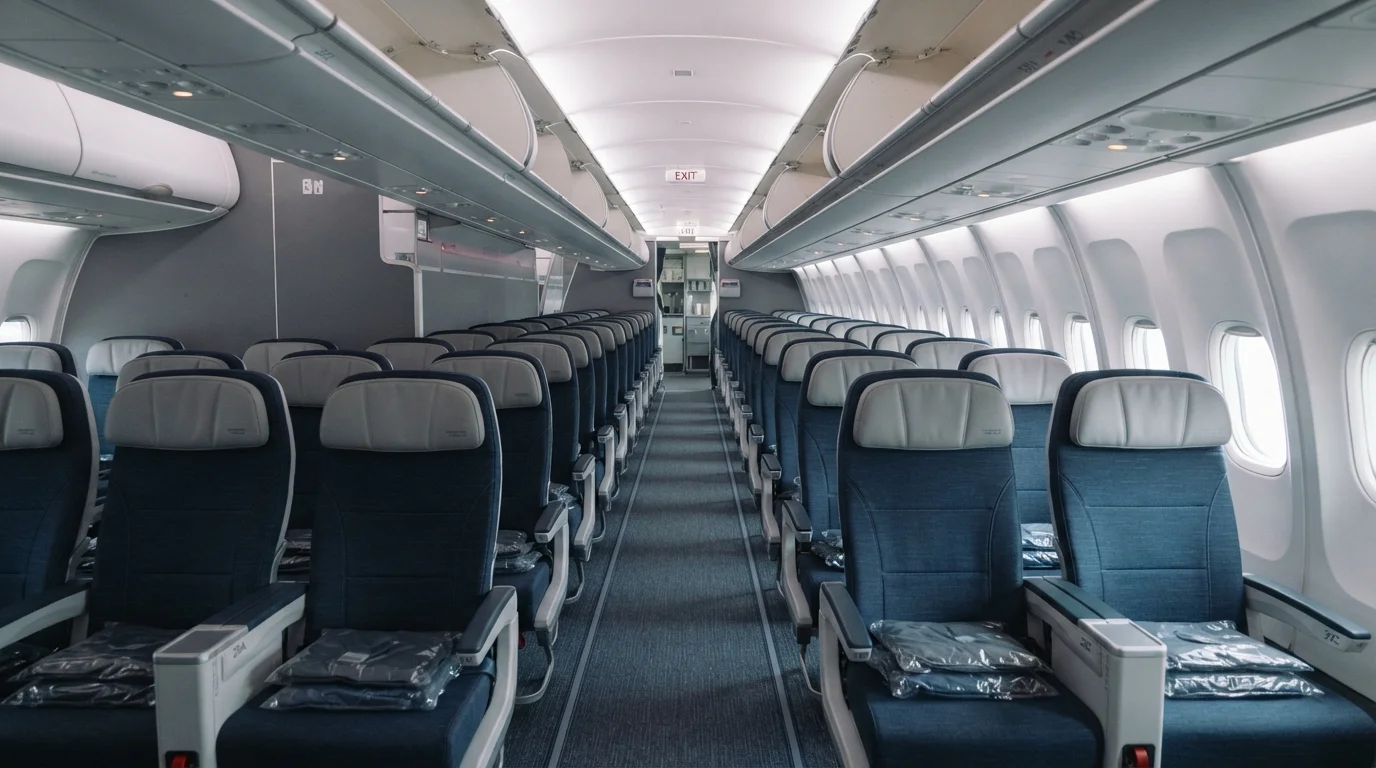
Photo credit: ExploreRoute.net | Travel Made Simple
In this article
Window, aisle, or middle? Bulkhead or exit row? How you choose your seat shapes your entire flight experience — here's how to think it through.
Key Takeaways
- Window seats offer more control over light and a wall to lean against, but limit mobility.
- Aisle seats provide easier bathroom access and stretch opportunities at the cost of disruptions.
- Bulkhead and exit row seats offer extra legroom but come with meaningful trade-offs.
- Your sleep style, body size, and travel purpose should drive your seat decision.
- Seat position matters more on overnight or ultra-long-haul flights than short hops.
Why Seat Selection Deserves More Strategic Thought
On a 10- or 14-hour flight, your seat is effectively your home. The difference between a window and an aisle isn't just preference — it shapes how well you sleep, how stiff you feel on arrival, and how much you'll disrupt or be disrupted by those around you. Seat selection is one of the few controllable variables in long-haul flying, yet most travelers treat it as an afterthought.
This is especially true if you're building a consistent approach to air travel. As part of a personal flight strategy, knowing your seat preferences in advance — and booking accordingly — is a repeatable habit that pays off every trip. The core decision tree splits into position (window, middle, aisle) and zone (bulkhead, exit row, standard mid-cabin, rear cabin).
Window vs. Aisle vs. Middle: The Core Trade-offs
Each position in a row serves a different traveler profile. Here's how they compare across the criteria that matter most on long-haul routes.
| Window Seat | Aisle Seat | Middle Seat | |
|---|---|---|---|
| Sleep quality | High — wall support, light control | Moderate — no lean surface | Low — disrupted from both sides |
| Bathroom access | Requires disturbing neighbors | Step out freely anytime | Must cross one neighbor |
| Disruption from others | Low — you control movement | Moderate — neighbors step over you | High — boxed in on both sides |
| Stretch / movement | Limited without disturbing others | Easy — stand or walk anytime | Minimal |
| Light and view control | Full control of window shade | No window access | No window access |
| Armrest access | One dedicated armrest | One dedicated armrest | Typically both armrests by convention |
The middle seat is almost never the strategic choice for a solo traveler on a long-haul flight — the only scenario where it makes sense is when booking as a couple or trio to keep a group together. For a focused breakdown of the overnight-specific dynamics between window and aisle, see window seat vs. aisle seat on overnight flights.
Check the Seat Map Before You Commit
Seat maps on airline websites or third-party tools like SeatGuru provide row-by-row detail on proximity to lavatories, galleys, and bulkheads. A row labeled 'extra legroom' may sit directly beside the rear galley, which means noise and light through the night. Always cross-reference your seat number against the aircraft-specific layout before finalizing your selection.
Bulkhead and Exit Row Seats: Premium Legroom Without the Premium Price
Bulkhead seats — positioned at the front of a cabin section, facing a dividing wall — and exit row seats are the two ways to gain meaningful legroom in economy. Both are worth understanding in detail.
Bulkhead Seats
The appeal is straightforward: no seat reclined into your face and generally more floor space ahead of you. However, bulkheads often lack under-seat storage (your bag goes overhead for the entire flight), tray tables fold out from the armrest rather than the seat ahead, and in-flight entertainment screens are sometimes fixed on the wall at a less comfortable viewing angle. Airlines also frequently assign bulkhead rows to families traveling with infants, given the bassinet attachment points — which may affect noise levels.
Exit Row Seats
Exit rows offer the most legroom available in economy on most aircraft, often comparable to premium economy on narrowbody jets. The trade-offs: you must meet airline fitness-to-assist criteria (typically meaning you must be able to open the emergency door and follow crew instructions), seats may not recline, and window exit rows sometimes have an obscured or missing window. Airlines commonly charge a fee for these seats. Always confirm the specific configuration on your aircraft type before selecting — seat maps vary significantly between a Boeing 777 and an Airbus A350.
Exit Row Eligibility Rules Are Strictly Enforced
Airlines reserve the right to move passengers from exit row seats if crew determine they do not meet the criteria to assist in an emergency — including age restrictions, mobility limitations, or language barriers. Selecting an exit row for the legroom and then being relocated at the gate leaves you with a standard seat at no refund. Confirm eligibility requirements with your carrier before paying any seat selection fee.
How Your Travel Context Should Guide the Decision
Beyond the physical specs, your itinerary and personal needs should anchor the final call:
- Solo overnight flight: Window seat, ideally in a row near the front of the cabin for a faster exit and quieter experience away from galley noise.
- Traveling with a partner: Aisle and window in a two-seat configuration (common on widebody jets) gives both of you a non-middle seat while keeping you adjacent.
- Tall travelers: Exit row is the priority; if unavailable, bulkhead. Avoid the last row before a galley or exit door — seats there sometimes don't recline.
- Frequent bathroom visits (hydration, medical): Aisle, no further than mid-cabin to avoid galley traffic near the rear.
- Trying to work during the flight: Window seat reduces interruptions; ensure your row has accessible power outlets before booking.
Clothing can also affect how comfortable a given seat feels — particularly in terms of circulation on long flights. A practical read on that dimension is what to wear on a long flight. And if you're new to extended flying altogether, everything first-time long-haul flyers should know covers the broader preparation picture beyond seat selection.

Author
Smart Air Travel Editorial Team
Smart Air Travel Editorial Team is the collective byline for our editorial team and contributor network. Articles published under this byline or an editorial pen name are researched, written, and reviewed according to our editorial standards for clarity, consistency, and independence before publication.
View all articles →