
What to Wear on a Long Flight
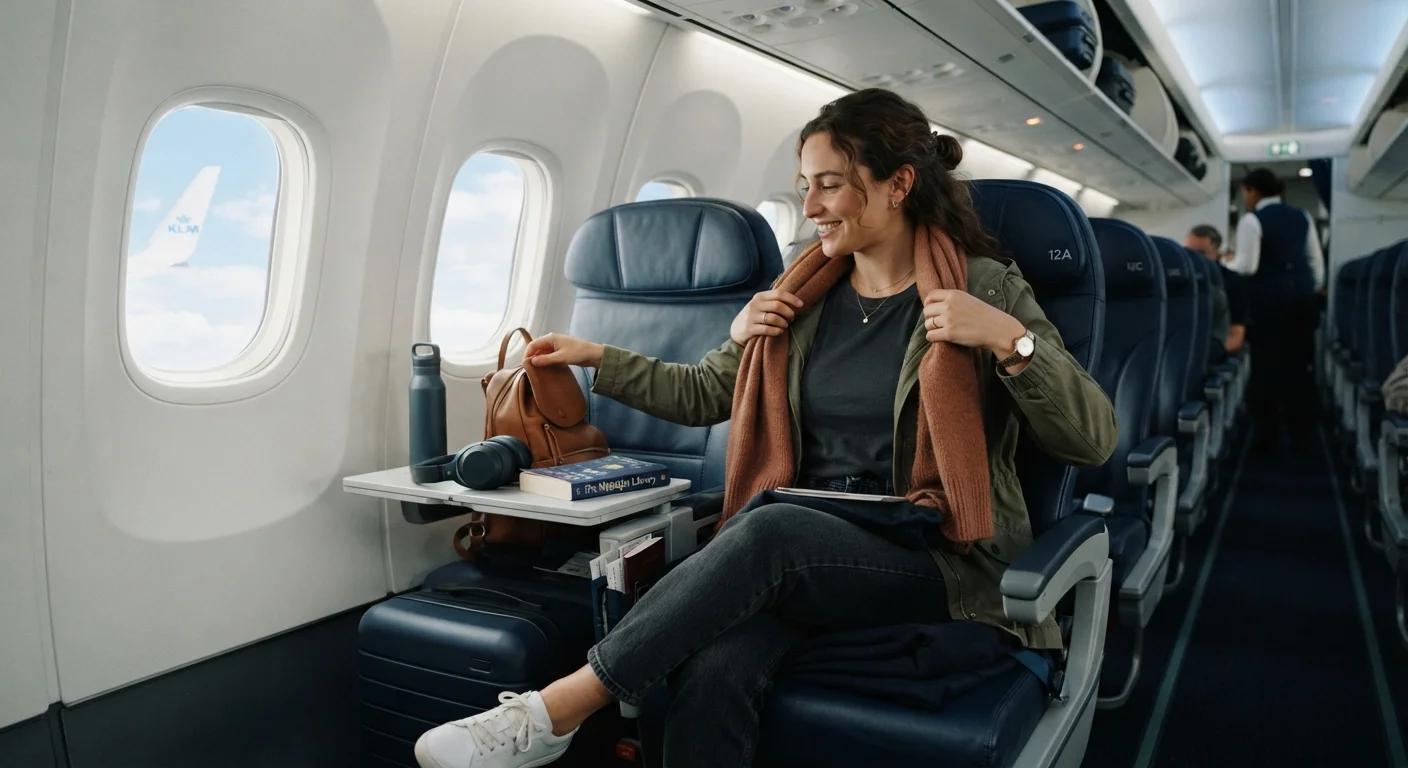
Photo credit: ExploreRoute.net | Travel Made Simple
In this article
Layering logic, fabric choices, compression socks, and footwear — the clothing decisions that genuinely affect how comfortable you feel on arrival.
Key Takeaways
- Layering is more effective than wearing a single heavy garment because cabin temperatures fluctuate unpredictably.
- Natural and performance fabrics breathe better than denim or stiff synthetics, reducing discomfort on long flights.
- Compression socks help maintain healthy circulation during extended periods of immobility at altitude.
- Slip-on footwear speeds up security and makes removing shoes mid-flight far easier.
- Loose-fitting clothing around the waist and ankles reduces pressure as mild in-flight swelling occurs.
Why What You Wear Actually Matters
Aircraft cabins are controlled environments with one major variable: you cannot predict exactly how warm or cold your seat will feel. Cabin temperature is typically set between 71°F and 75°F, but airflow, proximity to vents, and individual metabolism mean your experience can swing significantly from that baseline. Add in low humidity — often below 20% — and reduced air pressure equivalent to altitudes around 6,000–8,000 feet, and the physical demands on your body are real. Understanding what's actually happening to your body at altitude helps clarify why clothing choices are a practical comfort decision, not a style preference.
Mild ankle and foot swelling is common on flights over four hours, driven by reduced cabin pressure and prolonged sitting. Tight waistbands, rigid fabrics, and restrictive footwear amplify that discomfort. Dressing deliberately before you board is one of the few things entirely within your control.
The Layering Principle
Layering gives you flexibility without bulk. A practical three-layer approach works well for most long-haul passengers:
- Base layer: A breathable, moisture-wicking top — merino wool or a performance-fabric tee both work well. Merino regulates temperature naturally and resists odor, making it especially useful on overnight flights.
- Mid layer: A lightweight fleece, zip-up hoodie, or long-sleeve shirt. This is your primary warmth adjustment — easy to put on or remove without disturbing fellow passengers.
- Outer layer: A packable jacket or cardigan that compresses into your carry-on. This doubles as a blanket if needed and protects against overly aggressive overhead air vents.
Avoid heavy sweaters or down coats as your boarding layer — they're difficult to manage in a tight cabin and create unnecessary bulk. For bottoms, loose-fitting joggers, travel pants with stretch fabric, or wide-leg trousers outperform jeans on every comfort metric. Denim restricts movement, does not breathe, and becomes increasingly uncomfortable as mild swelling progresses over a long flight.
Merino Wool: A Reliable Long-Haul Default
Merino wool regulates body temperature across a wide range, wicks moisture effectively, and resists odor — making it particularly useful for overnight or multi-leg journeys. Lightweight merino base layers and mid-layers pack down small and can often be worn across multiple travel days without needing a wash, reducing overall luggage volume.
Footwear and Compression Socks
Footwear is where many travelers make an avoidable mistake. Lace-up shoes that take time to remove at security, and even longer to put back on mid-flight, add low-grade friction to the entire journey. Slip-on shoes or loafers are significantly more practical. Opt for something with light cushioning and a relaxed fit — your feet may swell by up to half a size over a long-haul flight, so tight shoes become genuinely uncomfortable.
Compression socks are among the most evidence-supported pieces of travel clothing available. Graduated compression — typically 15–30 mmHg for travel use — helps counteract the reduced venous return that occurs when legs are stationary for extended periods. This is particularly relevant on flights over six hours. Most frequent long-haul travelers incorporate compression socks as a default, not an afterthought. Paired with periodic movement, they meaningfully support circulation. See our practical in-flight movement routine for complementary strategies.
< 20%
Typical aircraft cabin relative humidity
Aircraft cabins routinely operate at humidity levels well below typical indoor environments, contributing to dry skin, mild dehydration, and discomfort over extended flights.
6,000–8,000 ft
Equivalent cabin pressure altitude
Most commercial aircraft maintain cabin pressure equivalent to altitudes between 6,000 and 8,000 feet, which measurably affects circulation and the body's physiological responses during flight.
Fabric, Fit, and Final Checks Before You Board
The fabric question simplifies to breathability and structure. Natural fibers like cotton and merino wool, and technical synthetics engineered for athletic use, handle moisture and temperature better than standard polyester blends or stiff materials. Avoid anything dry-clean only or prone to wrinkling if you're wearing the same outfit to a meeting or hotel check-in on arrival.
Fit matters at the waist and ankles especially. An elasticated or adjustable waistband removes a significant source of discomfort as the hours accumulate. For passengers traveling with specific circulation concerns or chronic conditions, consulting a healthcare professional before a long flight — particularly regarding compression garment selection — is the appropriate step. This article provides general information, not medical guidance.
For a broader pre-departure checklist that integrates clothing, carry-on packing, and seat setup, the In-Flight Comfort Checklist covers all dimensions in one place. And for first-time long-haul passengers, everything first-timers should know before boarding offers essential grounding before your first extended flight.

Author
Smart Air Travel Editorial Team
Smart Air Travel Editorial Team is the collective byline for our editorial team and contributor network. Articles published under this byline or an editorial pen name are researched, written, and reviewed according to our editorial standards for clarity, consistency, and independence before publication.
View all articles →