
Everything First-Time Long-Haul Flyers Should Know Before Boarding
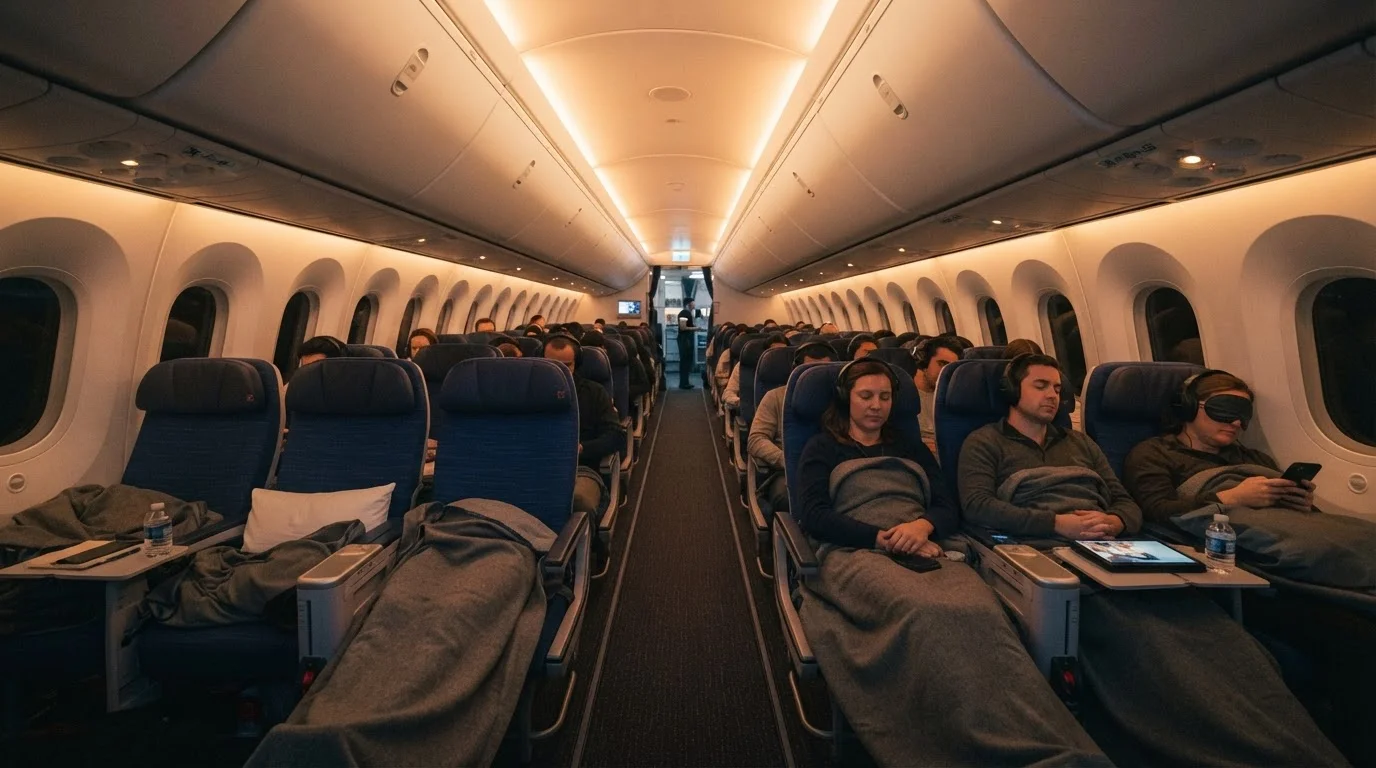
Photo credit: ExploreRoute.net | Travel Made Simple
In this article
From what to pack to how to manage time zones, a grounded introduction to surviving — and even enjoying — your first extended flight.
Key Takeaways
- Long-haul flights lasting over six hours place distinct physical and logistical demands on passengers.
- Preparation before boarding — from clothing to hydration — has a direct impact on how you feel on arrival.
- Strategic light exposure and sleep timing are the most effective tools for managing jet lag.
- Connecting through major hub airports requires extra time buffers and awareness of terminal layouts.
- Staying hydrated and moving regularly in the cabin reduces fatigue and circulation risks.
What Makes Long-Haul Different
A long-haul flight is not simply a short flight that goes on longer. Flights exceeding six hours create a different physiological and logistical environment than domestic hops — one that rewards deliberate preparation and penalizes the habits that are harmless on a two-hour trip.
Cabin air pressure at cruising altitude is equivalent to being at roughly 6,000–8,000 feet above sea level. This means less oxygen, lower humidity (often under 20%), and conditions that quietly accelerate dehydration. Combined with extended immobility and significant time-zone crossings, these factors explain why many first-timers arrive feeling far worse than they expected.
Long-haul flight
A flight lasting six or more hours, typically crossing multiple time zones and placing extended physiological demands on passengers.
Jet lag
Temporary fatigue and disorientation caused when your body's internal clock is out of sync with local time after crossing several time zones rapidly.
Cabin humidity
The moisture level inside an aircraft cabin, which is typically much lower than in everyday environments, contributing to dryness and dehydration during flight.
Circadian rhythm
Your body's internal 24-hour biological clock that regulates sleep, wakefulness, and other physiological processes based on light and time cues.
Minimum connection time
The shortest interval an airport officially designates between an arriving flight and a departing flight for a connection to be considered feasible.
The good news: most of the discomfort is manageable. The strategies in this guide address each variable systematically, so you can arrive functional — and ideally, rested.
Before You Board: The Preparation That Pays Off
The most impactful decisions happen before the plane door closes. Reviewing your booking details carefully — connection times, visa requirements, and fare conditions — is the first layer of preparation. Once booked, your pre-flight routine matters just as much.
- Sleep: Arrive well-rested. Starting a 14-hour flight already fatigued removes your body's only real recovery buffer.
- Hydration: Begin drinking water the day before departure. Boarding already dehydrated means you're playing catch-up from the moment you sit down.
- Carry-on essentials: Noise-cancelling headphones, an eye mask, a light layer for temperature changes, and any medications you might need mid-flight belong in your personal bag — not checked luggage. See the full in-flight comfort checklist for a complete breakdown.
Pack Your Carry-On Like a Pro
Think of your carry-on as your survival kit for the next 10–14 hours. Anything that affects sleep, hydration, comfort, or health should be accessible without digging through an overhead bin. Keep your most-used items — lip balm, headphones, water bottle, snacks — in the seat pocket or a small personal bag under the seat in front of you.
Managing Your Body in the Air
Extended immobility is one of the primary physical risks of long-haul travel. Prolonged sitting reduces circulation in the legs, which is why movement and compression are both worth taking seriously.
Clothing choices have a measurable effect here: compression socks reduce swelling and support venous return during extended sitting. Simple in-seat exercises — ankle circles, calf raises, and periodic aisle walks every 90 minutes or so — are among the most commonly recommended practices by aviation health guidance.
What you eat and drink also matters more than most first-timers expect. Alcohol and carbonated drinks amplify dehydration; heavy meals can worsen bloating at altitude due to gas expansion in the digestive tract. Stick to water as your primary fluid and keep meals lighter than you might at home.
Alcohol Is More Potent at Altitude
Alcohol's dehydrating effects are amplified in the low-humidity cabin environment, and some travelers report feeling its effects more quickly at cruising altitude. Limiting or avoiding alcohol — particularly on overnight flights where you're trying to sleep — is a widely shared recommendation among frequent long-haul flyers. Prioritize water instead.
Time Zones, Sleep, and Jet Lag
Jet lag is the result of your internal body clock being out of sync with the local time at your destination. Crossing five or more time zones — common on transatlantic or transpacific routes — can produce fatigue, disorientation, and disrupted sleep for several days after arrival.
The most evidence-supported approach to minimizing jet lag involves two levers: light exposure and sleep timing. Before departure, gradually shifting your sleep schedule toward destination time helps prime your circadian system. During the flight, use your eye mask and earplugs strategically — sleep when it's night at your destination, stay alert when it's daytime there.
Light exposure after landing is powerful: spending time outdoors in natural daylight at your destination reinforces the time cue your body needs. Avoiding long naps on arrival day (however tempting) and pushing through to a local bedtime accelerates adaptation.
Eastward vs. Westward Travel
Jet lag tends to be more pronounced when flying eastward, because you're effectively shortening your day and your body finds it harder to advance its clock than delay it. If your first long-haul crosses many eastward time zones, budget an extra day of adjustment. Flying westward generally allows a slightly more gradual reset for most people.
Making the Hours Feel Shorter
A long-haul flight can be dead time or genuinely productive time — the difference is largely in how you set it up. Treating the flight as structured work time — with downloaded tasks, offline documents, and clear goals — is a strategy many frequent long-haul travelers use deliberately.
Alternatively, entertainment is an underrated lever. Most long-haul aircraft offer seat-back entertainment systems with films, music, and podcasts. Loading your personal device with downloaded content before departure provides a backup if the in-seat system disappoints.
Structuring the flight into mental phases — a meal period, a sleep window, a focus block, and a wind-down stretch — helps time feel less like an undifferentiated slog. See the complete overview of in-flight comfort for a deeper look at the full range of variables that shape how you feel throughout the journey.
In-Flight Comfort Checklist
A structured pre-boarding checklist covering what to pack, wear, eat, and do before you board, so nothing is left to chance on your first long-haul flight.
Hub Airport Navigation Checklist
A practical orientation tool for first-timers connecting through large international hub airports, covering terminal transfers, security re-checks, and gate strategy.
Connecting Flights and Hub Airports
Many long-haul itineraries involve at least one connection through a major hub — airports like Dubai International, London Heathrow, or Chicago O'Hare. First-timers often underestimate both the physical scale of these airports and the time required to navigate them.
When booking, always check the minimum connection time for your specific airport pair and build in more buffer than you think you need. Navigating a large hub for the first time involves terminal transfers, security re-checks in some countries, and potentially long walks between gates.
If you have a layover of five hours or more, using that time strategically — resting, eating a proper meal, or in some airports, showering — can reset your body for the next leg. And arriving at the airport earlier than feels necessary is a habit experienced long-haul travelers adopt for exactly this type of itinerary.
Travel entry requirements, visa rules, and health regulations vary by destination and change frequently. Always verify current requirements with official government sources and your airline before travel.
Frequently Asked Questions

Author
Smart Air Travel Editorial Team
Smart Air Travel Editorial Team is the collective byline for our editorial team and contributor network. Articles published under this byline or an editorial pen name are researched, written, and reviewed according to our editorial standards for clarity, consistency, and independence before publication.
View all articles →