
In-Flight Comfort From Gate to Landing: The Complete Overview
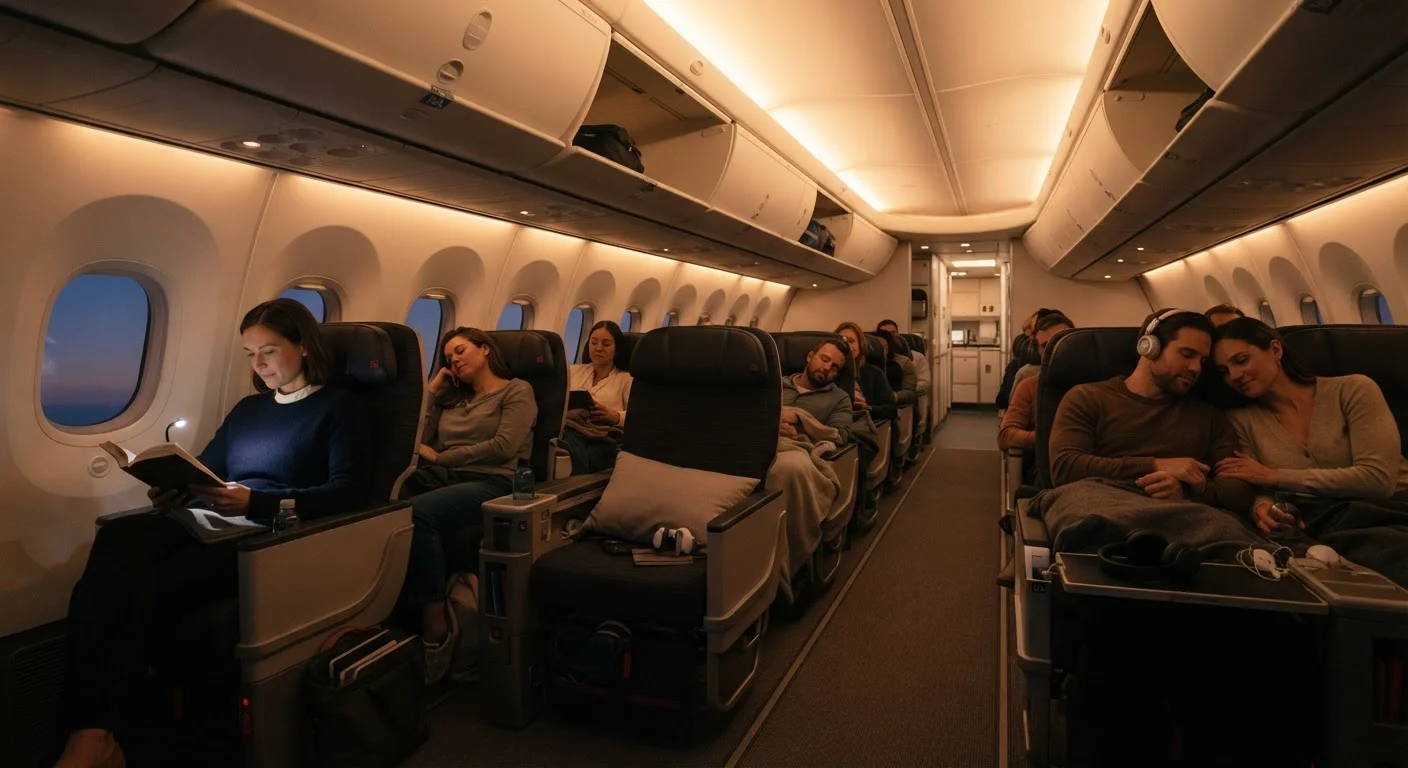
Photo credit: ExploreRoute.net | Travel Made Simple
In this article
Everything that shapes how you feel on a flight — physiology, environment, equipment, food, movement, and mindset — covered in one authoritative resource.
Key Takeaways
- Cabin air is low-humidity and low-pressure — proactive hydration counters most discomfort.
- Clothing and physical positioning have a direct, measurable impact on circulation and fatigue.
- Strategic movement every 60–90 minutes reduces stiffness and supports healthy blood flow.
- Managing light and noise exposure before and during flight meaningfully improves sleep quality.
- Preparation done before boarding determines most of your comfort once airborne.
Why In-Flight Comfort Deserves a Strategy
Most discomfort experienced during a flight — swollen ankles, dry eyes, headaches, restless fatigue — is not inevitable. It results from a predictable set of environmental and physiological stressors that respond well to preparation. Frequent flyers who treat comfort as a system, rather than a matter of luck or seat class, consistently arrive in better shape than those who leave it to chance.
This guide covers every layer of that system: the cabin environment, what you wear, how you sit, what you eat and drink, how you move, and how you manage your mental state across long stretches in the air. For a structured pre-flight action list, see the in-flight comfort checklist that covers what to pack, wear, and do before you board.
The Cabin Environment: What's Working Against You
Commercial aircraft cabins are pressurized to an equivalent altitude of roughly 6,000–8,000 feet above sea level. At that pressure, blood oxygen saturation drops modestly, contributing to fatigue and mild cognitive dullness. Humidity levels typically fall between 10–20%, far lower than most indoor environments, which accelerates moisture loss through respiration and skin.
Cabin temperature is rarely consistent — it varies by zone, time of flight, and passenger load. Noise levels hover around 75–85 decibels during cruise, enough to cause listener fatigue over many hours.
Cabin Conditions Vary by Aircraft and Route
Newer wide-body aircraft are pressurized to lower effective altitudes and maintain slightly higher humidity than older narrow-body jets. If you fly frequently on a specific aircraft type, you may notice meaningful differences in how you feel post-flight. This is not coincidence — it reflects genuine engineering differences in cabin management systems.
Understanding these stressors is the foundation of a good comfort strategy. Every other decision — what you drink, what you wear, whether you use earplugs — is a direct response to one or more of these environmental factors.
Clothing, Seat Setup, and Physical Positioning
Clothing is the most underestimated comfort variable on a long flight. Breathable, loose-fitting layers allow you to respond to temperature changes without disturbing your neighbor or rummaging through overhead bins. Avoid tight waistbands and non-stretch fabrics, which become genuinely uncomfortable after two hours of sitting.
For specific guidance on layering logic and fabric choices, the what to wear on a long flight article covers compression socks, footwear, and the clothing decisions that affect how you feel on arrival.
Seat setup matters equally. A lumbar pillow or rolled jacket placed at the small of your back reduces spinal compression. Keeping feet flat (not crossed at the ankle) supports circulation. If you use a neck pillow, position it to support the cervical spine without forcing your head forward.
Before choosing your seat, check the aircraft type and cross-reference it with a seat map tool — seats near the wing experience less turbulence, and bulkhead rows offer legroom but often no under-seat storage.
Seat selection before boarding is one of the highest-leverage comfort decisions available to economy passengers, yet it's often made without reference to aircraft-specific data.
Pack a small, flat inflatable lumbar cushion rather than a bulky neck pillow — it weighs almost nothing, fits in a laptop bag, and addresses the spinal compression that causes lower back pain far more directly.
Lower back discomfort is the most commonly reported physical complaint on long flights, and its root cause is unsupported lumbar curvature in seats designed for short-haul travel.
Hydration, Food, and Digestion in the Air
Low cabin humidity means you lose water faster than your thirst signals indicate. A commonly cited rule of thumb among aviation medicine practitioners is to drink approximately 250 ml (8 oz) of water per hour of flight — though individual needs vary. Avoid using thirst alone as your guide; by the time you feel thirsty at altitude, you're already behind.
Alcohol and caffeine are diuretics and amplify the dehydrating effect of the cabin environment. Consuming them in moderation — or avoiding them on very long flights — is a practical choice, not a deprivation.
Cabin pressure changes affect the digestive tract: gas expands at altitude, making heavy, gas-producing foods (beans, carbonated drinks, cruciferous vegetables) notably more uncomfortable mid-flight. Lighter meals, eaten earlier in the flight, tend to produce better outcomes.
Don't Rely on Thirst at Altitude
The low humidity and pressure in a cabin suppress thirst signals, meaning you can be meaningfully dehydrated before feeling it. Drinking water consistently throughout the flight — rather than waiting until you're thirsty — is the practical standard. Alcohol and caffeine increase fluid loss and should be moderated on long journeys.
Movement, Circulation, and Managing Fatigue
Prolonged sitting restricts blood flow in the lower extremities. On flights beyond three hours, this is worth actively managing. Standing, stretching, and brief aisle walks every 60–90 minutes are practical, effective interventions.
The in-flight movement and circulation guide provides a doable routine adapted to the limited space of an aircraft cabin — including seated ankle rotations, calf raises, and shoulder rolls that work in economy.
Compression socks are widely recommended by travel medicine practitioners for passengers on flights over four hours, particularly those with existing circulatory concerns. They should be worn from boarding, not added mid-flight once swelling has begun. Always consult a healthcare professional if you have specific circulatory health concerns before flying.
6,000–8,000 ft
Effective cabin pressure altitude during cruise
Most commercial aircraft are pressurized to an equivalent altitude well above sea level, which measurably affects oxygen availability and energy levels.
10–20%
Typical cabin relative humidity
This is significantly drier than most indoor environments, which average 30–50% humidity, explaining accelerated dehydration during flight.
75–85 dB
Average cabin noise level at cruise
Sustained exposure at this level contributes to listener fatigue over several hours, making noise management a practical comfort strategy.
Sleep, Noise, and Light Management
Sleep on a long flight requires managing two sensory inputs: sound and light. Noise-canceling or passive-isolation earplugs reduce the cognitive load imposed by sustained cabin noise, making it easier to fall and stay asleep. An eye mask blocks the disruptive overhead lighting that flight attendants and other passengers control independently of your schedule.
Aligning your sleep window to your destination's nighttime — rather than your departure city's — reduces jet lag upon arrival. This requires treating the flight as a deliberate transition, not simply a period of waiting.
For those new to long-haul travel, the first-time long-haul flyer guide explains time zone management and sleep strategy in accessible, practical terms.
“The cabin environment is unlike any other space humans spend extended time in — low oxygen, low humidity, sustained noise, and immobility all compound. Treating it as a neutral environment is the first mistake most long-haul travelers make.”
— Aviation Medicine Research Perspective, General principle cited across travel medicine literature
Mindset and In-Flight Routines That Hold Up
Comfort is partly physical and partly attentional. Passengers who board with a clear plan — when to eat, when to sleep, when to move, what to watch or read — experience less cabin restlessness than those who improvise. The act of structuring the flight in advance reduces decision fatigue and creates small anchors of predictability.
Anxiety about flying, turbulence, or the sheer duration of a journey is common and manageable. Controlled breathing, grounding techniques, and pre-loaded entertainment that genuinely engages you are practical tools. If flight anxiety significantly affects your travel, discussing it with a healthcare or mental health professional before you fly is appropriate.
In-flight comfort is also part of a broader airport and travel strategy. The end-to-end airport mastery guide covers how what happens before boarding — from check-in through lounge time — shapes the state you're in when you finally sit down.
Approach each flight as a controlled environment you can deliberately shape. The travelers who arrive refreshed don't have better luck; they have better systems.

Author
Smart Air Travel Editorial Team
Smart Air Travel Editorial Team is the collective byline for our editorial team and contributor network. Articles published under this byline or an editorial pen name are researched, written, and reviewed according to our editorial standards for clarity, consistency, and independence before publication.
View all articles →