
In-Flight Movement and Circulation: A Practical Routine for Long Journeys
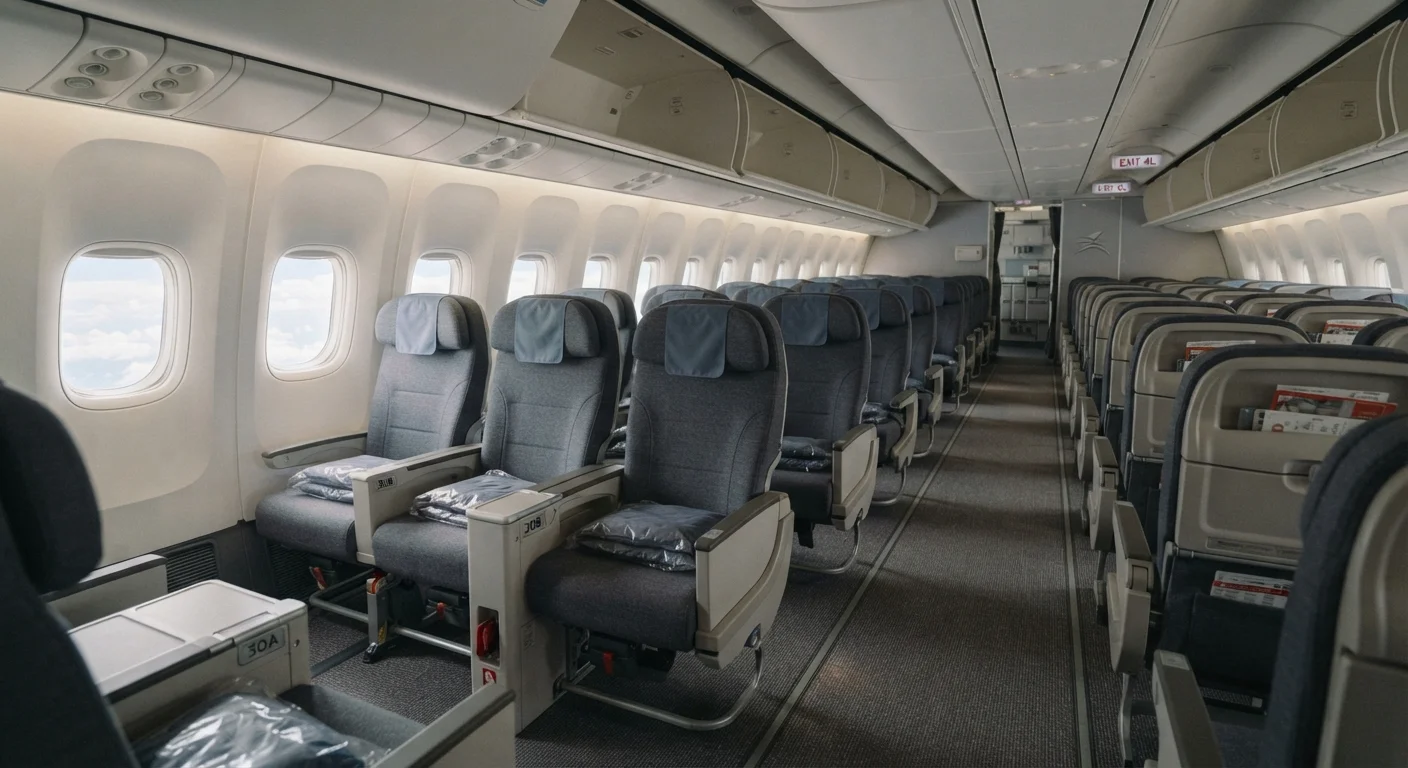
Photo credit: ExploreRoute.net | Travel Made Simple
In this article
Sitting still for hours has real physiological effects. Here's a sensible, doable movement routine you can follow in the limited space of an aircraft cabin.
Key Takeaways
- Prolonged sitting in a pressurized cabin reduces blood flow and increases the risk of deep vein thrombosis.
- A simple routine of seat exercises, ankle circles, and aisle walks addresses the main circulation risks.
- Compression socks worn throughout the flight meaningfully support venous return in the lower legs.
- Movement works best when paired with consistent hydration — dehydration compounds circulatory sluggishness.
- Most seat exercises can be performed without disturbing neighbors or requiring extra cabin space.
Why Cabin Immobility Is a Physiological Problem
Economy class seats are designed for efficient space use, not prolonged physical comfort. Seated for four, ten, or sixteen hours, the body faces a compounding set of stressors: reduced cabin pressure equivalent to an altitude of roughly 6,000 to 8,000 feet, low humidity, limited movement, and sustained hip flexion that restricts blood flow through the major vessels of the lower limbs.
The principal concern is venous blood return. Skeletal muscle contraction — particularly in the calves — is a key driver of blood moving back toward the heart. When you sit still, that pump is largely inactive. Blood pools in the lower legs, contributing to swelling, discomfort, and in higher-risk individuals, an elevated risk of deep vein thrombosis (DVT), a condition where clots form in the deep veins. DVT is a recognized risk on long-haul flights, and most aviation medicine guidance addresses it specifically.
Beyond clot risk, sustained immobility leads to stiff joints, compressed spinal discs, tight hip flexors, and general fatigue that compounds across time zones. Movement is not optional comfort — it is a basic physiological need. For a fuller picture of how cabin conditions affect the body overall, see the complete in-flight comfort overview.
Consult Your Doctor Before Flying
This article provides general information about in-flight movement, not medical advice. If you have a history of blood clots, deep vein thrombosis, cardiovascular conditions, recent surgery, or are pregnant, speak with a qualified healthcare professional before a long-haul flight. They can advise on specific precautions or interventions appropriate for your situation.
What You Need Before You Begin
Effective in-flight movement requires almost no equipment, but a few choices made before boarding will meaningfully amplify the routine's benefits.
What you will need
Compression socks or stockings
Apply graduated pressure to the lower legs, supporting venous return and reducing ankle swelling during prolonged sitting.
Comfortable, non-restrictive clothing
Allows full range of motion for seat exercises without constricting circulation at the hips or knees.
Slip-on footwear
Easy to remove and replace during the flight, which is important if feet swell, and keeps aisle walks safe.
Refillable water bottle
Supports consistent hydration throughout the flight, which complements the circulatory benefits of movement.
Clothing matters more than most passengers realize. Restrictive waistbands, stiff denim, or tight knee areas limit the range of motion that makes seated exercises effective. See what to wear on a long flight for fabric and fit guidance that directly supports in-flight movement.
Set a Movement Reminder
On flights over six hours, set a silent phone or watch alarm every 60 to 90 minutes as a movement prompt. It is easy to lose track of time during a film or sleep cycle. A gentle reminder removes the decision-fatigue that causes most passengers to stay seated far longer than intended.
The Step-by-Step Movement Routine
The following routine is structured to work within the constraints of a standard economy cabin — no props, no extra space, and no disruption to seatmates for the majority of exercises. Follow the steps in order, repeating the seated exercises at each movement interval throughout the flight.
Put on compression socks before boarding
Compression socks work by applying graduated pressure that is greatest at the ankle and diminishes toward the calf. This pressure supports the veins' ability to return blood toward the heart against gravity — a mechanism that becomes especially important once you are seated for hours with reduced muscle activity. Put them on before you board, ideally at home or in the airport, when your legs are not yet swollen.
Perform ankle circles and foot pumps during the first hour
Shortly after takeoff — once the seatbelt sign is off — begin with seated ankle exercises. Lift both feet slightly off the floor and rotate your ankles in slow circles, ten rotations in each direction. Follow this with foot pumps: flex your feet by pulling your toes toward your shins, then point them away, repeating 15 to 20 times per foot. These movements activate the calf muscle pump, which plays a primary role in moving blood from the lower extremities back to the heart.
Add knee lifts and seated marching every 60–90 minutes
At each movement interval, alternate between ankle work and knee-lift exercises. Sitting upright, lift one knee toward your chest, hold for two seconds, then lower it. Alternate legs for 12 to 15 repetitions each. Follow with seated marching — a slow, controlled alternating foot lift — for 30 seconds. These movements engage larger muscle groups in the thighs and hips, further promoting blood circulation through the lower body.
Stand and walk the aisle at least twice on long flights
When the fasten seatbelt sign is off and conditions allow, take at least two aisle walks per flight segment on any journey lasting six hours or more. Walk the full length of the aircraft cabin at a measured pace — one complete pass takes approximately 60 to 90 seconds. These walks engage the full lower-body muscle pump far more effectively than seated exercises alone, and the change in posture relieves pressure on the lumbar spine and hip flexors.
An aisle seat makes this considerably easier without disturbing seatmates. See our comparison of window versus aisle seats if you are deciding between the two for a long overnight journey.
Perform a standing stretch at the rear galley
If crew confirm the rear galley area is available, use a brief aisle walk as an opportunity to stand and stretch for 60 to 90 seconds. A standing calf raise — rising slowly onto the balls of your feet and lowering back down, repeated 10 to 15 times — is particularly effective for lower-leg circulation. A gentle standing hip flexor stretch, holding each side for 20 seconds, can also relieve the tightening that develops from hours of seated hip flexion.
Hydrate consistently throughout the routine
Movement and hydration are complementary strategies. Aircraft cabin air is notably low in humidity — typically below 20% — and dehydration thickens the blood, which compounds the circulatory risks of prolonged sitting. Aim to drink water consistently across the flight rather than in large, infrequent amounts. For more on managing fluid intake in a dry cabin environment, see our in-flight hydration guide.
Be Aware of Turbulence and Safety Signals
Never walk the aisle or perform standing exercises when the fasten seatbelt sign is illuminated. Return to your seat immediately when the sign activates. Turbulence can occur without warning, and cabin injuries most often happen to standing or moving passengers.
Arriving in Better Shape
A consistent movement routine does not eliminate the effects of a fourteen-hour flight, but it meaningfully reduces the physiological cost of prolonged cabin immobility. Passengers who move regularly typically report less ankle swelling, less lower-back stiffness, and a faster return to normal energy levels after landing.
Movement also interacts positively with other in-flight strategies. If you are planning to work during the flight, brief physical breaks are associated with improved sustained attention — an observation well-established in general ergonomics literature. See staying focused and productive in the air for how to structure a productive long-haul flight.
For those managing post-flight fatigue, understanding whether your exhaustion is circadian disruption or general physical tiredness shapes how you recover. The guide to jet lag versus general travel fatigue covers this distinction in practical terms.
This article is for general informational purposes only and does not constitute medical advice. Consult a qualified healthcare professional for guidance specific to your health history before undertaking any exercise routine or long-haul travel.

Author
Smart Air Travel Editorial Team
Smart Air Travel Editorial Team is the collective byline for our editorial team and contributor network. Articles published under this byline or an editorial pen name are researched, written, and reviewed according to our editorial standards for clarity, consistency, and independence before publication.
View all articles →