
Mountain Lodge vs. Valley Hotel: Which Base Camp Fits Your Alpine Trip
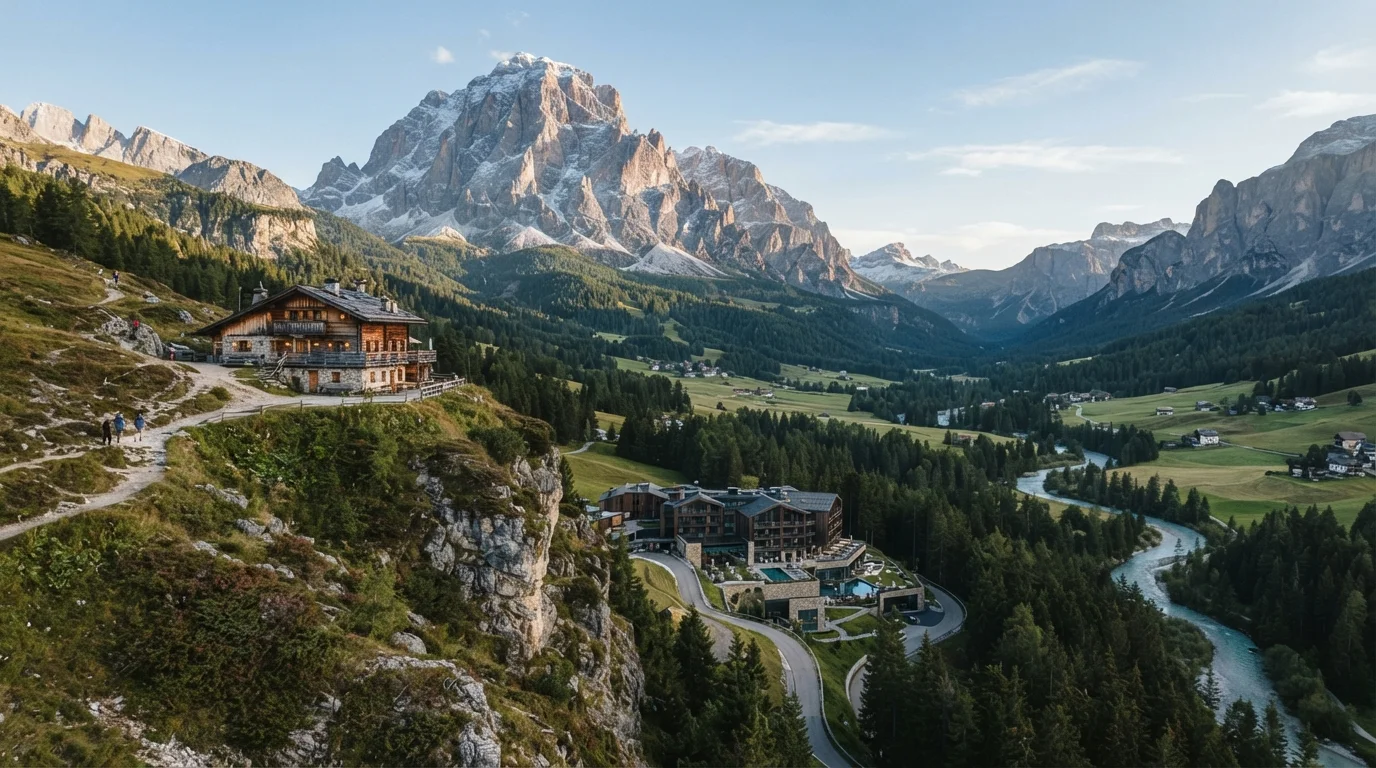
Photo credit: ExploreRoute.net | Travel Made Simple
In this article
High-altitude lodges and valley hotels offer very different experiences. Understand the trade-offs before choosing your mountain base.
Key Takeaways
- Mountain lodges place you closer to trailheads and summit routes but often with fewer amenities and stricter weather constraints.
- Valley hotels offer greater comfort, connectivity, and acclimatization advantages, particularly important for first-time high-altitude visitors.
- The elevation gap between the two options can meaningfully affect sleep quality, physical performance, and overall trip safety.
- Your activity itinerary — not just aesthetics — should drive the accommodation decision.
- Some alpine regions offer hybrid options, such as mid-mountain huts with limited lodging, worth considering for multi-day itineraries.
What Actually Separates These Two Options
The choice between a mountain lodge and a valley hotel isn't primarily about aesthetics — it's a practical decision with real consequences for your health, daily logistics, and the type of trip you'll actually have. The core variable is elevation, and elevation affects nearly everything: air pressure, temperature swings, sleep depth, physical exertion, and access to services.
Mountain lodges typically sit at or above the treeline, anywhere from 7,000 to 12,000 feet depending on the range. They're built to serve the mountain itself — proximity to trails, climbs, and backcountry access is their fundamental purpose. Valley hotels, by contrast, anchor themselves in the towns and resort communities that form the human infrastructure around alpine terrain. They're easier to reach, easier to leave, and built to a broader definition of comfort.
For travelers already familiar with mainstream mountain destinations, this comparison often comes down to a more nuanced question: what kind of alpine experience do you actually want? See our guide to high-altitude accommodation and acclimatization for a detailed look at how elevation choices affect your body over the course of a trip.
| Criterion | Mountain Lodge | Valley Hotel |
|---|---|---|
| Typical elevation | 7,000–12,000+ ft | 3,000–6,500 ft |
| Trailhead / summit access | Immediate, on-site | Requires drive or transit |
| Amenities | Limited; rustic by design | Full service; modern facilities |
| Acclimatization suitability | Challenging for newcomers | Gradual; generally safer |
| Weather vulnerability | High; access can close | Low; sheltered and stable |
| Connectivity (Wi-Fi / cell) | Often minimal or none | Reliable in most locations |
| Season of operation | Often limited to summer or winter specific | Typically year-round |
| Immersive landscape experience | Exceptional; inside the terrain | Scenic but more removed |
The Case for Sleeping at Elevation
For serious hikers, ski mountaineers, and alpinists, a mountain lodge isn't a luxury — it's a strategic choice. Starting each day at or near your operating altitude means no 90-minute approach drive before a summit attempt, and no losing precious acclimatization overnight by descending to valley level. In alpine environments where weather windows are narrow, that proximity can be the difference between a successful day and a missed objective.
There's also a qualitative dimension that's difficult to overstate. Waking to silence, thin air, and unobstructed peaks outside the window creates a sense of place that valley hotels, however comfortable, cannot replicate. This is particularly true in ranges like the Dolomites, the Rockies, or the Swiss Alps, where the visual drama is vertical — and the view from mid-mountain bears little resemblance to what you see from the valley floor.
The trade-offs are real, though. Mountain lodges often operate on limited seasons, can be inaccessible during weather events, and frequently offer simpler menus, shared bathrooms, and no reliable cell or Wi-Fi signal. Power generation may be solar or generator-based. These conditions are features, not bugs, for the right traveler — but they require honest self-assessment before booking. For those drawn to terrain-specific immersive stays more broadly, our overview of landscape-matched lodging styles offers useful comparative context.
~8,000 ft
Elevation threshold where altitude effects become notable
The U.S. Centers for Disease Control and Prevention notes that altitude-related symptoms commonly begin around 8,000 feet for unacclimatized travelers.
20–30%
Reduction in oxygen availability at 8,000 ft vs. sea level
Atmospheric oxygen partial pressure drops substantially with elevation, affecting exertion capacity and sleep quality according to general altitude physiology literature.
1–3 days
Typical acclimatization time for moderate elevations
Most healthy adults require one to three days to meaningfully adapt to elevations between 7,000 and 10,000 feet, though this varies considerably by individual.
Why Valley Hotels Suit More Travelers Than They Might Expect
Valley hotels carry an unfair reputation among serious mountain travelers as the cautious, compromised option. In practice, they suit a much wider range of alpine itineraries than most people initially assume — and not just because of comfort.
Physiologically, sleeping lower and ascending higher is the most conservative and often the most effective acclimatization strategy. Your body recovers at lower elevation overnight, then performs at altitude during the day. For trips spanning only a few days, this pattern can actually yield better performance on the trail than the altitude hangover that sometimes accompanies an abrupt high-altitude sleep. This is especially relevant for travelers arriving from sea-level cities — the elevation jump to a mountain lodge can feel severe in the first 48 hours.
Valley towns also concentrate services that matter when things go sideways: pharmacies, medical clinics, equipment rental shops, transport hubs, and restaurants accommodating dietary needs. For group travel with varied ability levels, or for trips that interweave mountain days with cultural exploration, the valley base provides flexibility that no lodge above the treeline can match. If you're weighing this against other setting-based decisions, our comparison of resort stays and city hotels covers the broader infrastructure trade-off in depth.
Making the Right Call for Your Trip
The honest answer is that neither option is universally superior. The right base camp depends on three factors: your itinerary's physical demands, your altitude tolerance (especially if untested at the elevations in question), and what you want the ambient experience of the trip to feel like day-to-day.
If your schedule revolves around summit days, early starts, or multi-stage trekking routes, a mountain lodge pays dividends that outweigh its limitations. If you're building a trip that combines outdoor days with rest, recovery, or cultural depth, the valley hotel is not a concession — it's the smarter architecture for that trip. Travelers considering more demanding high-altitude objectives should also consult our breakdown of alpine climbing versus high-altitude trekking before finalizing either accommodation type.
One often-overlooked option: a split-base strategy. Many experienced alpine travelers begin a trip in the valley to acclimatize and use logistics efficiently, then move up to a lodge mid-trip for their most demanding days. It requires more planning but can offer the genuine advantages of both settings without the full drawbacks of either.
Altitude affects sleep, health, and physical performance in ways that vary significantly between individuals. If you have cardiovascular concerns, respiratory conditions, or have experienced altitude sickness previously, consult a qualified healthcare professional before planning a stay at high elevation.

Author
Where to Stay Editorial Team
Where to Stay Editorial Team is the collective byline for our editorial team and contributor network. Articles published under this byline or an editorial pen name are researched, written, and reviewed according to our editorial standards for clarity, consistency, and independence before publication.
View all articles →