
The Adventure Travel Packing Checklist Serious Outdoors Travelers Actually Use
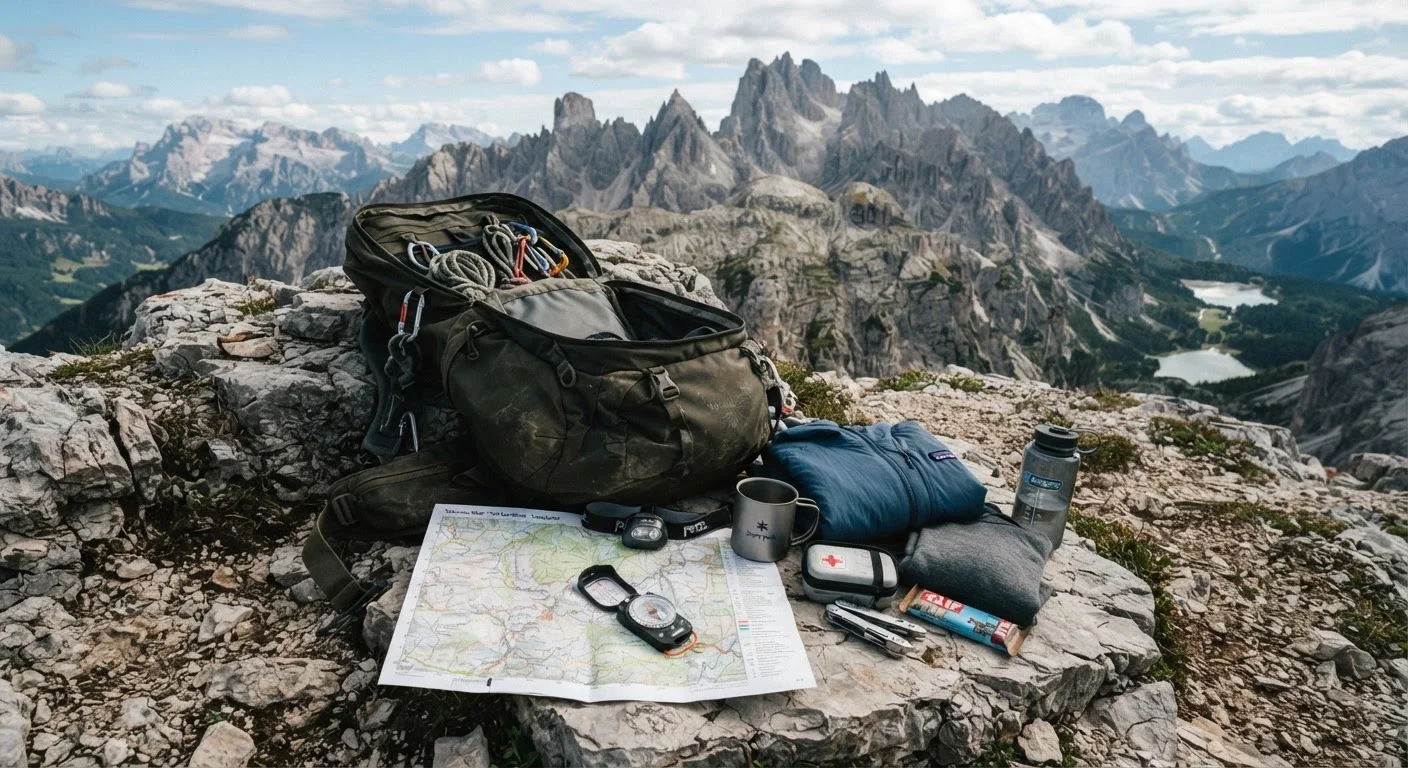
Photo credit: ExploreRoute.net | Travel Made Simple
In this article
A practical, terrain-tested checklist covering navigation, safety, shelter, and layering — built for multi-environment adventure trips.
Key Takeaways
- Navigation redundancy — map, compass, and GPS — is non-negotiable in remote terrain.
- Layering systems outperform single heavy garments across variable mountain and coastal environments.
- Emergency shelter and signaling tools belong in every pack regardless of trip length.
- Water treatment capacity should exceed your daily estimate by at least one backup method.
- Weight discipline matters: audit every item against its function before the final pack.
Why Serious Adventure Packers Think Differently
Most packing lists are written for comfort. This one is written for competence. The gap between a recreational day hiker and a serious adventure traveler shows up most clearly in what they choose to carry — and more importantly, why they carry it.
Adventure travel spans an enormous range of environments: high-altitude trekking in the Andes, multi-day desert crossings in Namibia, off-trail jungle navigation in Borneo, and technical coasteering in Iceland. No single kit covers all of these perfectly, but a disciplined, modular system gets you close. The checklist below is organized by function rather than by category, because that's how experienced field travelers actually think — not "what do I need to bring" but "what does this terrain demand of me?"
If your trip takes you into genuinely unmarked wild territory, pair this checklist with the pre-trip checklist for unmarked natural areas to confirm your readiness before you step off the grid.
Navigation
Shelter and Sleep
Layering and Clothing
Water and Nutrition
Safety and First Aid
Sun, Wind, and Environmental Protection
Pack and Load Management
Documents and Logistics
Tools, Gear, and What Each Item Actually Does
Carrying a piece of equipment you don't know how to use is dead weight — literally and strategically. Before you finalize your kit, cross-reference every technical tool against your actual skill level. A satellite communicator is only useful if you've registered it, tested it, and know the protocol for activating a distress signal in your destination country. A topo map is only useful if you can orient it to terrain.
Topographic Map (printed, waterproofed)
Provides reliable route-finding in areas with no signal or when electronic devices fail.
Baseplate Compass
Enables accurate bearing-taking and terrain orientation independent of batteries or connectivity.
Satellite Communicator
Maintains two-way contact and SOS capability in remote terrain beyond cellular range.
Water Filter or Purifier
Treats natural water sources to make them safe for drinking throughout multi-day field travel.
Headlamp with spare batteries
Provides reliable hands-free lighting for night navigation, campsite tasks, and emergency signaling.
Lightweight Multi-Tool or Knife
Supports field repairs, food prep, and general camp tasks across variable environments.
Emergency Bivy or Space Blanket
Acts as a standalone emergency shelter system that fits in a jacket pocket.
Offline GPS App (device or phone)
Provides digital route tracking and waypoint marking as a complement to paper navigation.
For cold-environment expeditions, your layering system deserves its own preparation session. The cold-weather expedition layering guide goes deep on base, mid, and shell layer science — knowledge that directly determines how you pack for sub-zero conditions.
Gear Familiarity Is Not Optional
Arriving at a remote trailhead with unfamiliar equipment is one of the most preventable causes of backcountry emergencies. Test your shelter in your backyard, practice using your water filter, and activate your satellite communicator before your trip so you know the device is registered and functional. Gear that remains in its packaging until the field is gear you cannot trust when conditions deteriorate.
Permits, Regulations, and Leave No Trace
Many high-demand wilderness areas require advance permits that fill quickly. Research permit systems for your destination well before your departure window. Always verify current fire regulations, camping zone restrictions, and waste disposal requirements — rules change seasonally and by jurisdiction. Ignoring them can result in fines, forced evacuation, or damage to the environments that make these places worth visiting.
Once your pack is finalized, don't overlook the journey to your trailhead. Transit logistics — particularly long-haul flights — benefit from their own preparation discipline. The in-flight comfort checklist is a useful complement, ensuring you arrive at your launch point rested rather than depleted.
Verify Entry and Health Requirements Before Travel
Visa requirements, vaccination documentation, and entry rules vary significantly by destination and can change with little advance notice. Always confirm current requirements directly with official government sources — both your home country's foreign travel advisory and the destination country's immigration authority. Do not rely on third-party travel sites as your sole source for legal entry requirements.

Author
Specialty Travel Editorial Team
Specialty Travel Editorial Team is the collective byline for our editorial team and contributor network. Articles published under this byline or an editorial pen name are researched, written, and reviewed according to our editorial standards for clarity, consistency, and independence before publication.
View all articles →