
Why 'Authentic Food' Is More Complicated Than Travelers Often Assume
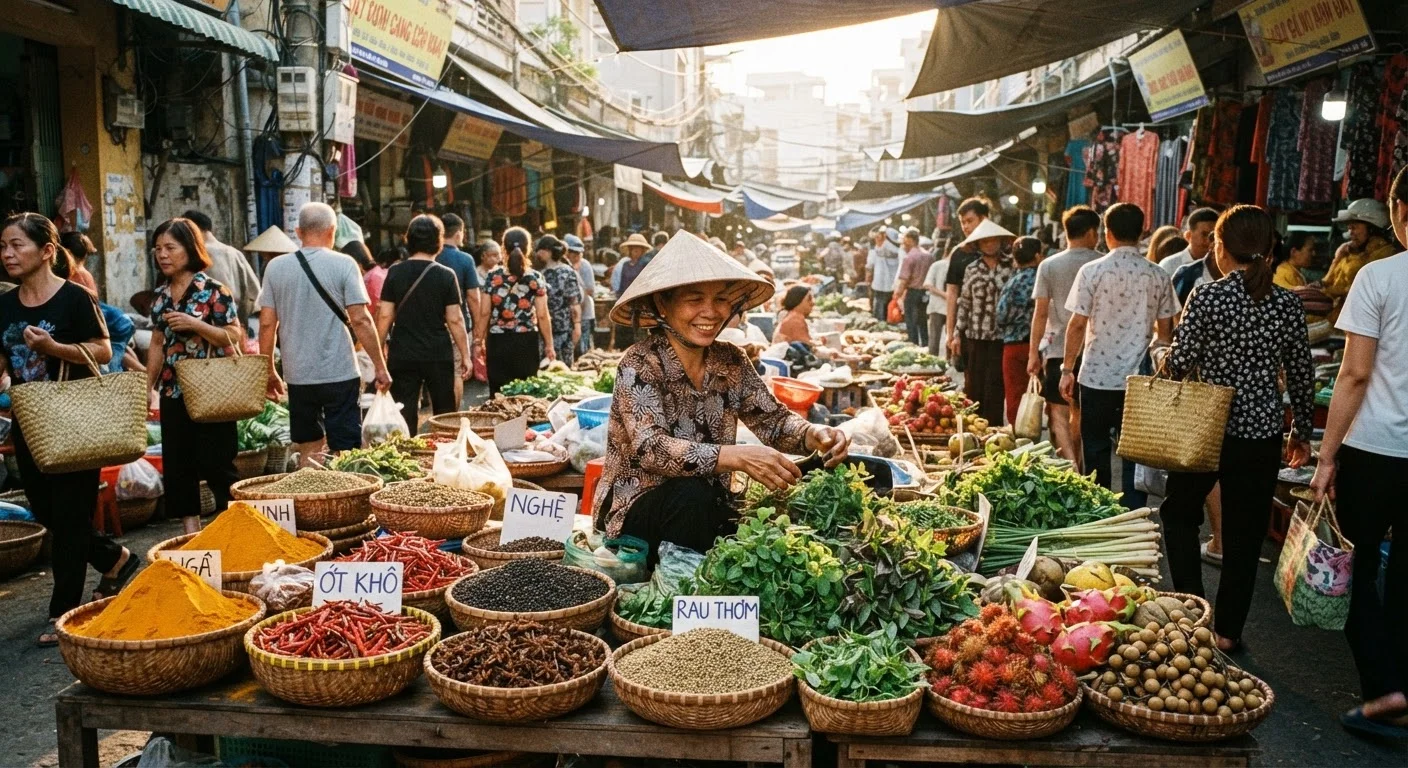
Photo credit: ExploreRoute.net | Travel Made Simple
In this article
The idea of 'authentic' cuisine is layered with history and politics. Unpack the myths that shape how travelers think about local food.
Key Takeaways
- No cuisine is static — every food culture evolves through trade, migration, and colonial history.
- Tourist-facing menus are not automatically inauthentic; local eating habits are far more complex than travelers often expect.
- Searching for a single 'original' version of a dish often ignores the rich regional variation that defines real food culture.
- Foreign ingredients have shaped celebrated 'traditional' dishes for centuries — the tomato in Italian cuisine is a prime example.
- Authentic culinary experiences are found through curiosity and context, not a checklist of rustic or unfamiliar settings.
The Authenticity Trap
Ask most food-curious travelers what they're after and the word authentic surfaces almost instantly. They want the real bowl of pho, the true mole negro, the dish no tourist is supposed to know about. The impulse is understandable — even admirable. But the framing quietly sets a trap, because it presumes that a single, unchanging version of any dish exists and that travelers can locate it if they just dig far enough beneath the tourist surface.
Food culture doesn't work that way. Cuisines are living systems shaped by geography, economics, trade, migration, and conquest. What gets called "traditional" is almost always a snapshot of a moment in a much longer, messier story. Understanding that complexity doesn't diminish the pleasure of eating well abroad — it deepens it considerably. As culinary travel scholars and practitioners alike note, food is most powerful as a lens for understanding culture, not a souvenir to be authenticated.
Common Myths About Food Authenticity — Corrected
These paired myths and facts reflect some of the most persistent assumptions food travelers carry — and why letting go of them leads to richer, more honest experiences abroad.
Myth
The most authentic food is always found in small, hidden, local-only spots far from tourist areas.
Fact
Location and tourist traffic are poor proxies for culinary integrity. Many excellent, deeply traditional food operations exist in plain sight.
The idea that authenticity hides in proportion to how hard it is to find reflects tourism fantasy more than culinary reality. In cities like Istanbul, Marrakech, or Mexico City, landmark food institutions that attract visitors and locals alike have maintained rigorous, multigenerational culinary standards precisely because their reputation demands it. Conversely, a remote location guarantees nothing about food quality or cultural depth. What matters is the knowledge, sourcing, and intention behind the cooking — not the difficulty of getting there.
Myth
Traditional dishes have ancient, unchanging recipes that represent a pure cultural origin.
Fact
Most celebrated traditional dishes are the product of centuries of ingredient exchange, adaptation, and regional variation.
The tomato — central to Italian, Spanish, and Greek cooking — arrived in Europe from the Americas only after the late 15th century. Chili peppers, now inseparable from Thai and Sichuan cuisine, followed similar colonial-era trade routes. Pasta shapes vary dramatically by Italian province. Mole negro differs from village to village in Oaxaca. The idea of a pure, fixed original recipe is largely a romantic construct. Real culinary traditions are defined by their adaptability and regional diversity, not a locked-in formula.
Myth
If a restaurant caters to tourists, the food is by definition inauthentic or dumbed down.
Fact
Many restaurants serving visitors maintain the same quality standards and recipes they use for any guest — and some have done so for generations.
Tourist traffic doesn't automatically degrade food quality, and local patronage doesn't automatically guarantee it. Some of the most technically accomplished and culturally significant restaurants in the world attract international visitors as a matter of course. What food travelers should actually look for is consistency — does the menu change with the season and what's available locally? Do the cooks have a long-standing connection to the cuisine? These are more reliable signals than counting how many foreign languages appear on the specials board.
Myth
Street food is always more authentic than restaurant food.
Fact
Street food and restaurant food exist on a continuum, with each offering different — not hierarchically ranked — expressions of food culture.
Street food is often extraordinary and genuinely representative of everyday eating — but romanticizing it as inherently more authentic can be its own form of exoticization. In many cultures, elaborate, technique-intensive dishes have historically been restaurant or household specialties, not street preparations. Equating informality with authenticity can cause travelers to overlook remarkable craft cooking simply because it occurs in a formal setting. The most complete picture of a food culture usually requires engaging with its full range, from market stalls to family kitchens to multi-course meals.
Myth
Eating locally means avoiding all foreign-influenced or fusion dishes.
Fact
Cross-cultural culinary influence is itself a defining feature of almost every major food tradition in the world.
Culinary exchange is as old as human movement. Japanese ramen draws on Chinese noodle traditions. Peruvian Nikkei cuisine fuses Japanese and Andean influences — and is considered a proud national culinary identity. Lebanese food bears the imprint of Ottoman, French, and older Levantine layers simultaneously. Treating fusion or outside influence as a mark against authenticity misreads how food cultures actually develop. In many cases, the dishes that most powerfully express a place's identity are precisely those that absorbed outside influences and made them entirely their own.
Why the Stakes Are Higher Than They Seem
40+
UNESCO-recognized intangible culinary heritages
UNESCO's Intangible Cultural Heritage list includes more than 40 food-related traditions, from Mexican cuisine as a whole to the Mediterranean diet and Georgian bread-baking.
~1 in 5
International trips primarily motivated by food
The World Food Travel Association has reported that a significant share of international travelers identify food and beverage experiences as a primary motivation for travel.
The authenticity obsession doesn't just mislead individual travelers — it can reshape entire food economies. When culinary tourism concentrates around a handful of "approved" experiences deemed sufficiently traditional, it creates pressure on local producers, cooks, and communities. Demand for a particular aesthetic of rusticity can price out the very people who built those food cultures in the first place.
Food tourism carries real economic and social consequences for the communities it celebrates — consequences that well-meaning travelers often don't see. The traveler chasing a "hidden" family restaurant may be contributing to a dynamic that eventually makes that restaurant visible enough to be unaffordable for its original neighbors.
Equally, fixating on what looks or feels authentic can cause travelers to miss the actual texture of contemporary local eating. Travelers miss genuine food culture when they filter experience through an idealized image rather than staying open to what's actually in front of them — including the food stall with a plastic chair and a smartphone menu that feeds working locals every day.
Authenticity Framing Can Harm Communities
When travelers insist on a narrow, romanticized idea of authentic food, they can inadvertently pressure local communities to perform a version of their culture rather than live it. This dynamic — sometimes called "culinary museumification" — can erase contemporary local food innovation and divert economic benefit away from working producers. Approaching food with curiosity and humility, rather than a fixed checklist, is both more honest and more respectful to the people whose culture you're engaging with.
A More Useful Framework for Food Travelers
Rather than hunting for a fixed authentic original, experienced culinary travelers tend to ask different questions: Who cooks this food, and for whom? What does the ingredient sourcing reveal about local agriculture? How has this dish changed across regions — and why? These questions open up the geographic, historical, and social forces that shape regional cuisines in ways that no single "authentic" meal can deliver on its own.
Practical habits that support this approach include eating across price points rather than defaulting to either budget street food or upscale heritage restaurants, talking with market vendors about what's in season and why, and being willing to eat where you are — not where you imagined the destination would be. Culinary immersion is less about finding the right dish and more about developing the right quality of attention.
This article provides general travel and cultural information. Readers should verify local conditions, entry requirements, and any other practical details with official sources before traveling.

Author
Specialty Travel Editorial Team
Specialty Travel Editorial Team is the collective byline for our editorial team and contributor network. Articles published under this byline or an editorial pen name are researched, written, and reviewed according to our editorial standards for clarity, consistency, and independence before publication.
View all articles →