
When Culinary Tourism Harms the Communities It Celebrates
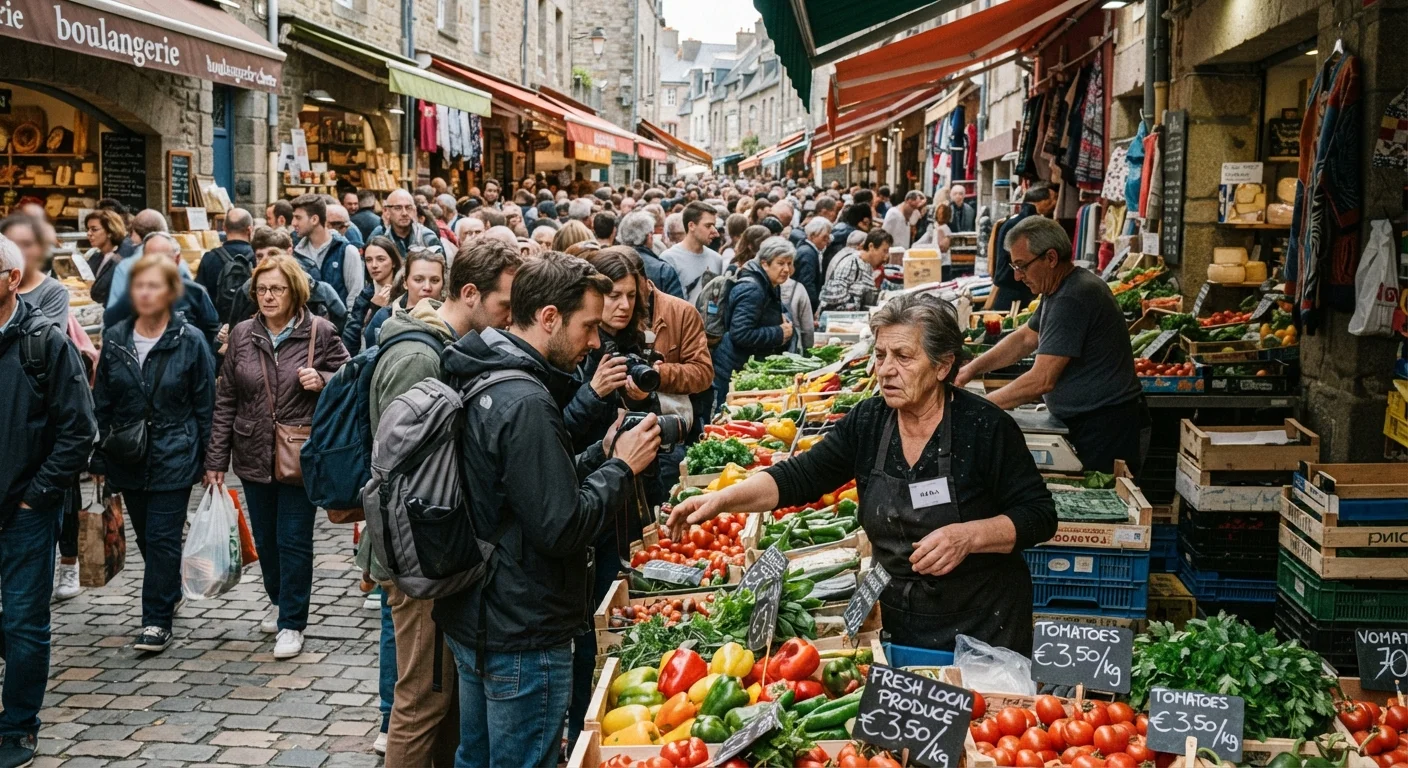
Photo credit: ExploreRoute.net | Travel Made Simple
In this article
Food tourism can uplift local producers — or price them out entirely. Understand the pressures so you can travel with greater awareness.
Key Takeaways
- Food tourism can simultaneously celebrate and economically displace the communities it spotlights.
- Rising rents and ingredient costs often price out local producers and longtime neighborhood residents.
- Demand for 'authentic' food experiences can inadvertently push cuisine toward performance rather than practice.
- Travelers who seek out markets, home cooks, and community vendors tend to distribute spending more equitably.
- Awareness of these pressures allows food-curious travelers to make choices that support rather than strain local culture.
The Paradox at the Heart of Food Travel
There is a familiar story in culinary travel: a neighborhood known for its vibrant, generations-old food culture attracts visitors drawn by that very vitality. Coverage follows. Demand rises. And gradually, the market stalls, family kitchens, and hole-in-the-wall spots that defined the place become harder for locals to access — either because prices have climbed, rents have pushed producers out, or the experience has been repackaged for outside consumption.
This is not a hypothetical. It's a pattern that food researchers, urban economists, and community advocates have observed across cities and rural food regions worldwide. The food curious traveler who arrives seeking something real can, without intending it, participate in a system that erodes what they came to find.
Understanding this paradox doesn't mean abandoning culinary travel. It means approaching it with clearer eyes. For more on how tourist assumptions shape the search for 'real' food, see why authentic food is more complicated than travelers often assume.
“When a cuisine becomes a commodity for export or tourism, the community that created it often loses control over how it is represented, who profits from it, and whether it remains accessible to those who need it most.”
— Krishnendu Ray, Food studies scholar and author of 'The Migrant's Table'
How Tourism Reshapes Local Food Systems
The mechanisms of harm are rarely dramatic — they accumulate quietly. When a neighborhood or dish gains tourist popularity, commercial pressure follows. Property owners raise rents on market stalls and restaurant spaces. Ingredient suppliers shift toward volume buyers serving the hospitality sector. Local producers who once sold directly to neighbors find themselves competing with tourism-facing operations that have more capital and marketing reach.
At the same time, demand shapes what gets made. When visitors consistently seek a particular dish or experience, producers rationally respond. Menus narrow. Preparations shift toward what photographs well or what visitors recognize from travel media. The living, evolving nature of a food culture — its arguments, its regional variations, its adaptation to what's in season or affordable — gets flattened into a legible, sellable version of itself.
~15–20%
Revenue reaching local producers from tourism spending
Research on tourism value chains consistently finds that a significant share of visitor spending leaks to outside operators, with estimates of local retention varying widely by destination and business model.
2–3x
Rent increase near popular food tourism zones
Urban researchers studying food market districts in gentrifying neighborhoods have documented commercial rent increases of two to three times over within five to ten years of a destination gaining significant tourist attention.
This dynamic is particularly visible in street food economies. Vendors who have operated informally for decades may face new licensing burdens as authorities formalize food zones to manage tourist traffic. The formalization benefits some vendors and squeezes others — often those with the least capital or social leverage.
Where Travelers Can Make a Difference
The most effective thing a food traveler can do is be deliberate about where money actually lands. Spending at vendor-owned market stalls, community cooperatives, and family-run kitchens keeps revenue closer to the people who built a food culture. Spending at tourism-facing aggregators — upscale food halls, branded culinary experiences, hotel-affiliated dining — often routes money toward investors and operators rather than producers.
Geography matters too. Concentrating in the same well-documented neighborhoods adds pressure to already-strained communities. Exploring the underrated towns and villages that food media hasn't yet saturated distributes the economic footprint more equitably and often yields more genuine encounters. For practical guidance on locating food where locals actually eat, see where authentic local food really lives.
Ask Who Benefits Before You Book
Before joining a food tour or booking a culinary experience, find out whether the operator is community-based and whether spending reaches individual vendors directly. A simple question — 'Who owns the businesses we'll visit?' — can reveal a lot about how a tourism experience is structured. Community-led tours and cooperatives generally distribute revenue more equitably than third-party aggregators.
It also helps to slow down. A traveler who spends three days in one neighborhood — buying produce at the same stall, returning to the same lunch spot — builds the kind of relationship that benefits vendors more than a rapid circuit of highlighted stops. Repeat patronage matters to small producers in a way that a single high-spend visit often doesn't.
Traveling with Awareness, Not Guilt
None of this is an argument for staying home. Culinary travel, at its best, builds cross-cultural understanding, creates real livelihoods, and honors the labor and knowledge embedded in food traditions. The problem is not the travel — it's the assumptions that often travel with it: that any food labeled 'local' or 'authentic' is automatically beneficial to the community, that tourist dollars are inherently positive, and that the experience on offer reflects the food culture as it actually exists for residents.
Travelers who interrogate those assumptions — who ask who owns this operation, who produced these ingredients, whether this neighborhood can absorb more visitor traffic — make better decisions, not perfect ones. For a fuller picture of how well-intentioned food travelers still miss the real story, see how travelers miss genuine food culture. And for those ready to plan with this awareness built in from the start, planning a food-focused trip offers a practical framework.
Food curiosity is a genuinely powerful form of travel motivation. Applied thoughtfully, it can support the communities it celebrates rather than accelerate their transformation into something designed primarily for outside consumption.
Economic Impact Varies Widely by Context
The relationship between food tourism and community harm is not uniform. In some communities, tourism has provided a critical economic lifeline for producers who would otherwise lose markets. In others, it has accelerated displacement. The difference often comes down to land ownership structures, local policy, and whether community members have meaningful control over how their food culture is represented and monetized. Blanket judgments in either direction miss this complexity.
Frequently Asked Questions

Author
Specialty Travel Editorial Team
Specialty Travel Editorial Team is the collective byline for our editorial team and contributor network. Articles published under this byline or an editorial pen name are researched, written, and reviewed according to our editorial standards for clarity, consistency, and independence before publication.
View all articles →