
Waterfront Stays in Cities vs. Nature Settings: Two Very Different Propositions
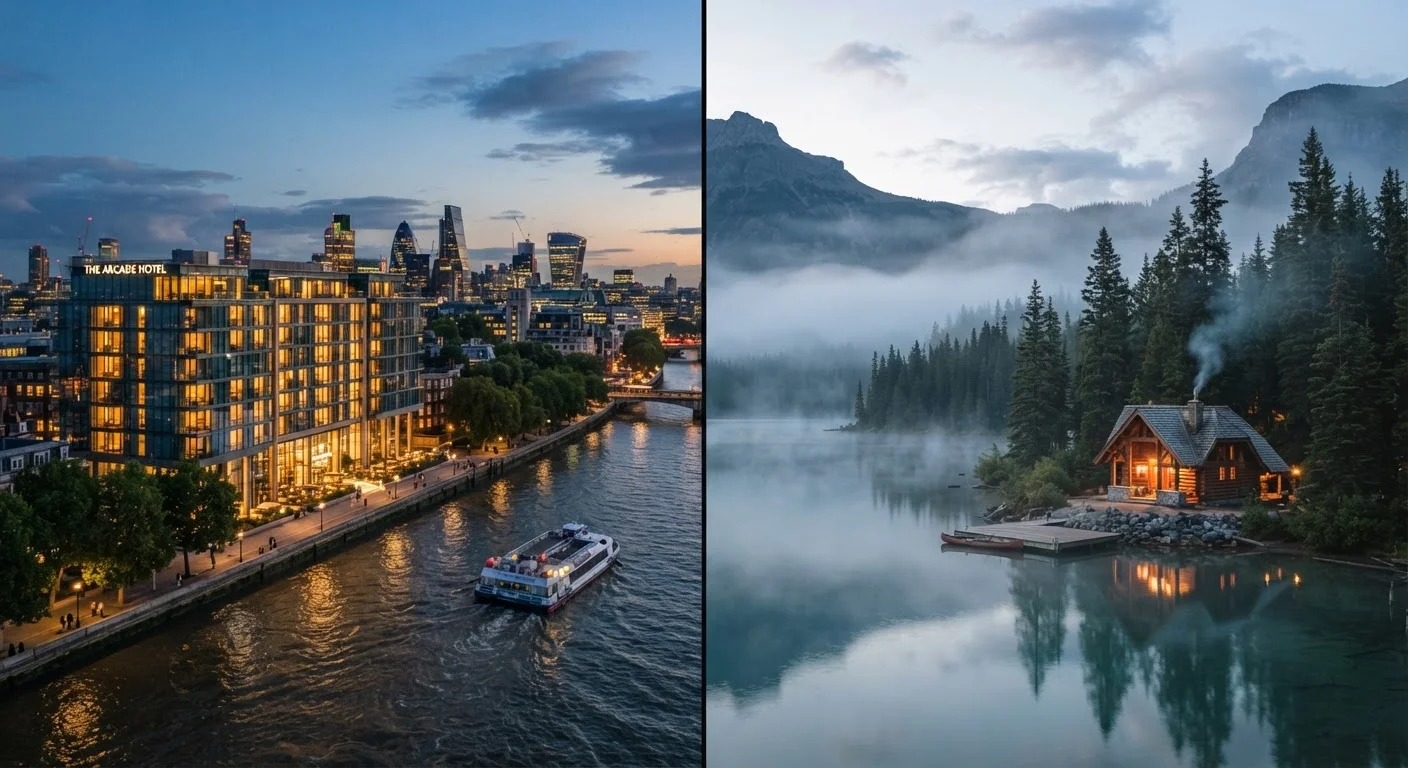
Photo credit: ExploreRoute.net | Travel Made Simple
In this article
A riverside city hotel and a lakeside wilderness cabin are both called 'waterfront.' Understanding what that means in each context matters.
Key Takeaways
- Urban waterfront hotels offer a water view as an aesthetic layer on top of a full city experience.
- Nature-setting waterfront stays make the water central to daily activities and the overall pace of the trip.
- Proximity to services, transportation, and dining differs dramatically between these two settings.
- Noise, light pollution, and foot traffic are significant factors in urban waterfront stays.
- Nature waterfront settings often require more planning for supplies, connectivity, and weather conditions.
- Choosing between them depends on whether you want water as backdrop or water as the core experience.
What 'Waterfront' Actually Means in Each Context
The word waterfront does real heavy lifting in travel marketing — and it means something fundamentally different depending on whether you're reading a city hotel listing or a wilderness lodge description. Understanding that distinction before you book can prevent a significant mismatch between expectation and experience.
In an urban setting, waterfront typically signals a view: a room or terrace overlooking a river, harbor, canal, or bay. The water is a visual amenity, often spectacular at golden hour, but the hotel itself is thoroughly embedded in the city. Behind you are traffic, restaurants, nightlife, and transit. The water is the foreground; the city is the context.
In a nature setting, waterfront means proximity and access. A lakeside cabin or riverside wilderness lodge is defined by its relationship to the water. The water isn't something you look at from a rooftop bar — it's where you start your morning swim, launch a canoe, or simply sit in uninterrupted quiet. The surrounding landscape shapes every logistical decision, from what you pack to how you plan your days.
This distinction matters because travelers often search for 'waterfront accommodation' expecting one experience and arriving to find the other. Resort stays vs. city hotels explores a related trade-off — and the same logic applies here: setting determines the entire character of a stay, not just the scenery.
| Criterion | Urban Waterfront Hotel | Nature-Setting Waterfront Stay |
|---|---|---|
| Role of water | Visual backdrop and ambiance | Central to daily activities |
| Surrounding environment | City streets, transit, crowds | Forest, mountains, open landscape |
| Noise level | Urban ambient noise common | Natural quiet; weather-dependent |
| Dining and services | Abundant and walkable | Limited; self-catering often needed |
| Connectivity | Reliable Wi-Fi, strong signal | Often limited or absent |
| Water activities | Typically scenic only | Swimming, kayaking, fishing accessible |
| Planning complexity | Low — standard urban logistics | Higher — supplies, access, weather |
| Best trip length | 2–5 nights alongside sightseeing | 3–7 nights for full immersion |
The Urban Waterfront: Ambiance with Infrastructure
City waterfront hotels have a genuine appeal that goes beyond marketing. Staying along a working harbor or historic river puts you in physical dialogue with a city's geography in a way that an inland hotel simply doesn't. Many of the world's great cities — from Chicago and Portland to Pittsburgh and San Antonio — are shaped by their rivers, and a well-positioned property lets you experience that relationship directly.
The trade-offs are real, however. Urban waterways generate noise: boat traffic, promenades, festival crowds, and the ambient hum of dense neighborhoods. Light pollution means you won't see stars from your balcony. And while the view may be lovely, you are not in nature — you are in a city hotel that happens to face water.
62%
Travelers prioritizing views when booking city hotels
According to hospitality research compiled by hotel analytics firms, a water or skyline view is among the top-cited factors influencing room selection in urban properties.
3–4×
Premium typically charged for direct waterfront rooms
Industry rate data consistently shows that rooms with unobstructed water views in urban hotels command a significant nightly premium over comparable inland-facing rooms in the same property.
What urban waterfront stays do exceptionally well is convenience. Room service, concierge access, walkable dining, and easy transit connections mean you can treat the stay as a base for intensive sightseeing while returning each evening to a scenic, calming view. For business travelers adding a weekend extension, or cultural tourists with full itineraries, this balance is often exactly right.
The Nature Waterfront: When Water Is the Destination
A lakeside cabin in the Adirondacks and a riverside glamping site in the Ozarks share one defining quality: the water is not incidental. It shapes the rhythm of your entire stay. You wake to it, you structure your day around it, and its conditions — weather, water temperature, wildlife — become part of your daily experience in a way that a hotel's harbor view never could.
This immersive quality is precisely what many experienced travelers are seeking. Nature waterfront stays offer access to activities — kayaking, fly fishing, wild swimming, shoreline hiking — that can't be approximated in an urban setting. For travelers whose pain point is finding genuine escape rather than scenery, this is the more honest proposition. Inland vs. coastal wilderness digs further into how the type of natural water body shapes the solitude and logistics of a trip.
The planning burden, though, is considerably higher. Many nature waterfront properties are remote — grocery runs may require a 45-minute drive, cell signal may be limited or absent, and weather can affect access. This isn't a drawback for the right traveler; it's part of the appeal. But it demands honest self-assessment before booking. For those curious about properties where the water is literally beneath you, the tradeoffs of staying on water covers an even more immersive category of waterfront accommodation.
Seasonality and Access Matter More in Nature Settings
Many nature waterfront stays are subject to seasonal closures, road conditions, or water-level changes that urban hotels simply aren't. A lakeside property that is idyllic in summer may be inaccessible or dramatically different in early spring. Always confirm access conditions directly with the property and check local weather forecasts before departure. If you're considering more unconventional water-based options, unique stays covers a broader range of distinctive lodging formats worth exploring.

Author
Where to Stay Editorial Team
Where to Stay Editorial Team is the collective byline for our editorial team and contributor network. Articles published under this byline or an editorial pen name are researched, written, and reviewed according to our editorial standards for clarity, consistency, and independence before publication.
View all articles →