
Overwater Bungalows, Floating Hotels, and Houseboats: The Tradeoffs of Staying on Water
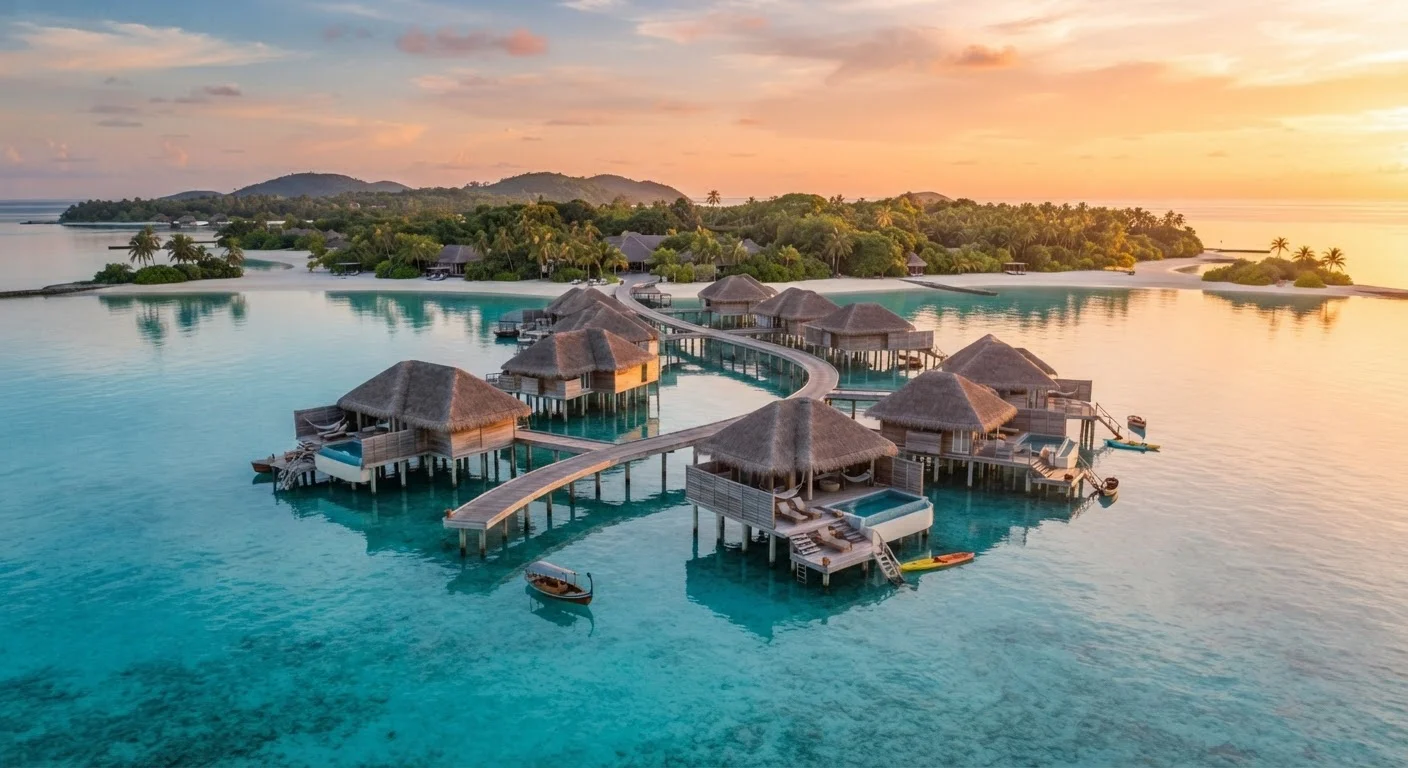
Photo credit: ExploreRoute.net | Travel Made Simple
In this article
Water-based accommodation is as varied as the bodies of water beneath them. Here's an honest look at comfort, access, and suitability.
Key Takeaways
- Overwater bungalows, floating hotels, and houseboats offer fundamentally different experiences despite all being 'on water.'
- Access limitations and motion sensitivity are practical concerns that affect many water-based stays.
- Floating accommodations vary widely in sustainability footprint depending on design and location.
- Weather, seasonality, and water conditions can significantly alter the quality of a water-based stay.
- Houseboats offer greater autonomy; overwater bungalows prioritize immersion and resort amenities.
Unmatched sensory immersion in the natural environment
Direct proximity to water — the sound, movement, and light — creates an ambient experience that shapes mood and memory in ways a standard hotel room cannot. Overwater bungalows in particular place guests at the center of the marine environment rather than adjacent to it.
Privacy and seclusion are structurally built in
Water acts as a natural buffer from foot traffic, road noise, and neighboring guests. Overwater structures and moored houseboats alike offer a degree of separation from the surrounding world that ground-based accommodation rarely achieves.
Immediate access to water activities
Snorkeling, kayaking, paddleboarding, or simply swimming can be done from the accommodation itself rather than via a shuttle or beach walk. For marine-focused travel, this proximity is a genuine practical advantage.
Memorable and distinctive travel narrative
Staying on water remains a genuinely unusual experience for most travelers, contributing to a sense of adventure and place that differentiates a trip. This is particularly relevant for experienced travelers seeking new experiential territory.
Panoramic light and views unobstructed by land structures
Open water positions deliver sunrise and sunset views, wide-sky horizons, and natural light quality that land-based properties — even luxurious ones — cannot easily replicate.
Access is often difficult and time-consuming
Many overwater resorts require seaplane or boat transfers from the nearest commercial airport, adding significant cost and time. Houseboats and floating hotels may have challenging boarding arrangements, including steep gangplanks or narrow passages.
Limited accessibility for guests with mobility needs
Ladder-access to water, uneven floating platforms, and lack of elevator infrastructure make many water-based stays unsuitable for guests with mobility impairments, balance concerns, or physical disabilities.
Motion and weather sensitivity affect comfort
Even anchored structures can move perceptibly in wind or swell. Guests with any susceptibility to motion sickness may find the experience uncomfortable, particularly during storms or in exposed locations.
Premium pricing with limited surrounding options
Overwater bungalows command some of the highest per-night rates in hospitality, and their island or lagoon settings often mean limited dining, activity, or transport alternatives outside the resort itself.
Environmental impact concerns in sensitive ecosystems
Floating structures above coral reefs or in mangrove-adjacent waters can disrupt marine habitats and create wastewater challenges. Not all operators handle this responsibly, and eco-claims should be verified rather than assumed.
Noise and humidity can be more pronounced
Water amplifies sounds — neighboring boats, wildlife, waves — and open-water environments often carry higher humidity and salt air exposure, which some guests find uncomfortable over multi-night stays.
Three Formats, Three Very Different Stays
The phrase "staying on water" obscures more than it reveals. An overwater bungalow in a Maldivian atoll, a converted barge moored on an Amsterdam canal, and a drifting houseboat on a Kentucky lake share the same basic premise but almost nothing else about the actual guest experience. Understanding the distinctions before booking is the difference between a transformative trip and an uncomfortable surprise.
Overwater bungalows are purpose-built resort structures elevated on stilts above a lagoon or reef. They're typically found in tropical destinations — the Maldives, Bora Bora, parts of Indonesia and the Caribbean — and are integrated into full resort ecosystems with dining, spa services, and staff. The experience is designed: glass floors revealing marine life below, direct ladder access to the water, unobstructed horizon views.
Floating hotels occupy the middle ground — purpose-built or converted vessels moored semi-permanently in urban or scenic waterways. Think heritage barges in Paris or purpose-built floating lodges on Norwegian fjords. They offer hotel-like services while delivering the novelty of a water setting. See our guide to heritage vessels as hotels for a deeper look at converted ships and barges specifically.
Houseboats are the most autonomous format — typically privately rented, often navigable, and found on rivers, lakes, and canals worldwide. They ask more of the guest: basic vessel literacy, comfort with closer quarters, and tolerance for variable conditions. The payoff is unmediated access to the water and a slower, more local rhythm.
For a broader orientation across unconventional lodging categories, our field guide to unconventional stays provides useful context.
The Real Advantages of Water-Based Accommodation
Beyond the obvious visual appeal, water-based stays offer a set of genuine experiential advantages that are difficult to replicate on land.
Unmatched sensory immersion in the natural environment
Direct proximity to water — the sound, movement, and light — creates an ambient experience that shapes mood and memory in ways a standard hotel room cannot. Overwater bungalows in particular place guests at the center of the marine environment rather than adjacent to it.
Privacy and seclusion are structurally built in
Water acts as a natural buffer from foot traffic, road noise, and neighboring guests. Overwater structures and moored houseboats alike offer a degree of separation from the surrounding world that ground-based accommodation rarely achieves.
Immediate access to water activities
Snorkeling, kayaking, paddleboarding, or simply swimming can be done from the accommodation itself rather than via a shuttle or beach walk. For marine-focused travel, this proximity is a genuine practical advantage.
Memorable and distinctive travel narrative
Staying on water remains a genuinely unusual experience for most travelers, contributing to a sense of adventure and place that differentiates a trip. This is particularly relevant for experienced travelers seeking new experiential territory.
Panoramic light and views unobstructed by land structures
Open water positions deliver sunrise and sunset views, wide-sky horizons, and natural light quality that land-based properties — even luxurious ones — cannot easily replicate.
70%+
Of overwater bungalows located in Indo-Pacific region
The Maldives and French Polynesia together account for the majority of the world's overwater bungalow inventory, reflecting the geographic concentration of this accommodation format.
2–4 hrs
Typical additional transfer time for remote overwater resorts
Many overwater resort destinations require domestic flights and boat transfers beyond the international gateway airport, a factor travelers frequently underestimate when planning itineraries.
The sensory experience is the most consistent advantage across all three formats. Falling asleep to the sound of water, waking to open-horizon light, and having the sea or river as an immediate presence — not a view from a distance — affects mood and perception of a place in ways that many travelers describe as irreplaceable. This is especially true for overwater bungalows, where the barrier between accommodation and environment is deliberately minimized.
Where the Tradeoffs Start to Bite
No format is without friction, and water-based stays carry a specific and sometimes underestimated set of drawbacks.
Access is often difficult and time-consuming
Many overwater resorts require seaplane or boat transfers from the nearest commercial airport, adding significant cost and time. Houseboats and floating hotels may have challenging boarding arrangements, including steep gangplanks or narrow passages.
Limited accessibility for guests with mobility needs
Ladder-access to water, uneven floating platforms, and lack of elevator infrastructure make many water-based stays unsuitable for guests with mobility impairments, balance concerns, or physical disabilities.
Motion and weather sensitivity affect comfort
Even anchored structures can move perceptibly in wind or swell. Guests with any susceptibility to motion sickness may find the experience uncomfortable, particularly during storms or in exposed locations.
Premium pricing with limited surrounding options
Overwater bungalows command some of the highest per-night rates in hospitality, and their island or lagoon settings often mean limited dining, activity, or transport alternatives outside the resort itself.
Environmental impact concerns in sensitive ecosystems
Floating structures above coral reefs or in mangrove-adjacent waters can disrupt marine habitats and create wastewater challenges. Not all operators handle this responsibly, and eco-claims should be verified rather than assumed.
Noise and humidity can be more pronounced
Water amplifies sounds — neighboring boats, wildlife, waves — and open-water environments often carry higher humidity and salt air exposure, which some guests find uncomfortable over multi-night stays.
Accessibility is perhaps the most significant and least discussed issue. Many overwater bungalows require boat or seaplane transfers from the nearest airport, adding hours and cost to arrival. Ladder access to the water — a selling point in brochures — is physically demanding and may not suit all travelers. Floating hotels and houseboats on navigable waterways often sit below street level, with steep gangplanks or uneven surfaces that can be difficult for guests with limited mobility. Anyone traveling with young children, elderly companions, or mobility considerations should investigate the specifics of a property carefully before booking.
Motion is another underestimated factor. While a moored houseboat in a sheltered canal moves very little, an overwater bungalow in exposed lagoon conditions or a floating lodge on a fjord can experience perceptible movement in adverse weather. Guests prone to motion sickness — even mildly — should factor this in. Similarly, the distinction between urban and nature waterfront settings affects how much environmental variability you'll encounter.
Verify Entry and Safety Requirements Independently
Some overwater bungalow destinations — particularly small island nations in the Pacific and Indian Ocean — have specific visa, vaccination, or entry requirements that can change. Always check with official government travel advisories and the destination country's immigration authority before booking or traveling. Property staff can advise on logistics, but they are not the authoritative source on entry compliance.
Sustainability is a growing concern for floating accommodations. Overwater bungalow developments in ecologically sensitive reef and lagoon environments have faced criticism for disrupting marine habitats and generating wastewater management challenges. Travelers with environmental priorities should research a property's certifications and waste practices before booking rather than assuming a water setting equals ecological sensitivity.
Matching Format to Traveler and Destination
Choosing between these formats should be driven by destination geography, travel style, and honest self-assessment rather than aesthetic appeal alone. Overwater bungalows make most sense in tropical island settings where the surrounding reef or lagoon is itself a destination — the accommodation becomes a platform for snorkeling, marine observation, and genuine immersion. They suit travelers who want a high-amenity experience and are comfortable with the premium pricing these formats typically command.
Floating hotels suit urban explorers and those who want novelty without logistical complexity. A floating hotel on the Seine or in a Scandinavian harbor offers the unique quality of a water stay with proximity to city infrastructure — restaurants, museums, transit. The water element is atmospheric rather than central.
Houseboats demand the most from a guest but offer the most in return for the right traveler. Navigating a narrowboat through English canals or a motor cruiser across Scottish lochs is a holiday activity in itself, not just a place to sleep. They're best suited to pairs or small groups comfortable with self-catering, flexible itineraries, and the occasional mechanical quirk. For those contrasting this with more conventional waterfront lodging options, our guide to lakeside lodging addresses the gap between expectation and reality at lake-based properties more broadly.
For travelers curious about how setting shapes experience across all accommodation types, the Unique Stays hub covers a wide range of formats worth considering alongside water-based options.

Author
Where to Stay Editorial Team
Where to Stay Editorial Team is the collective byline for our editorial team and contributor network. Articles published under this byline or an editorial pen name are researched, written, and reviewed according to our editorial standards for clarity, consistency, and independence before publication.
View all articles →