
Glamping vs. Camping: Where the Line Actually Falls
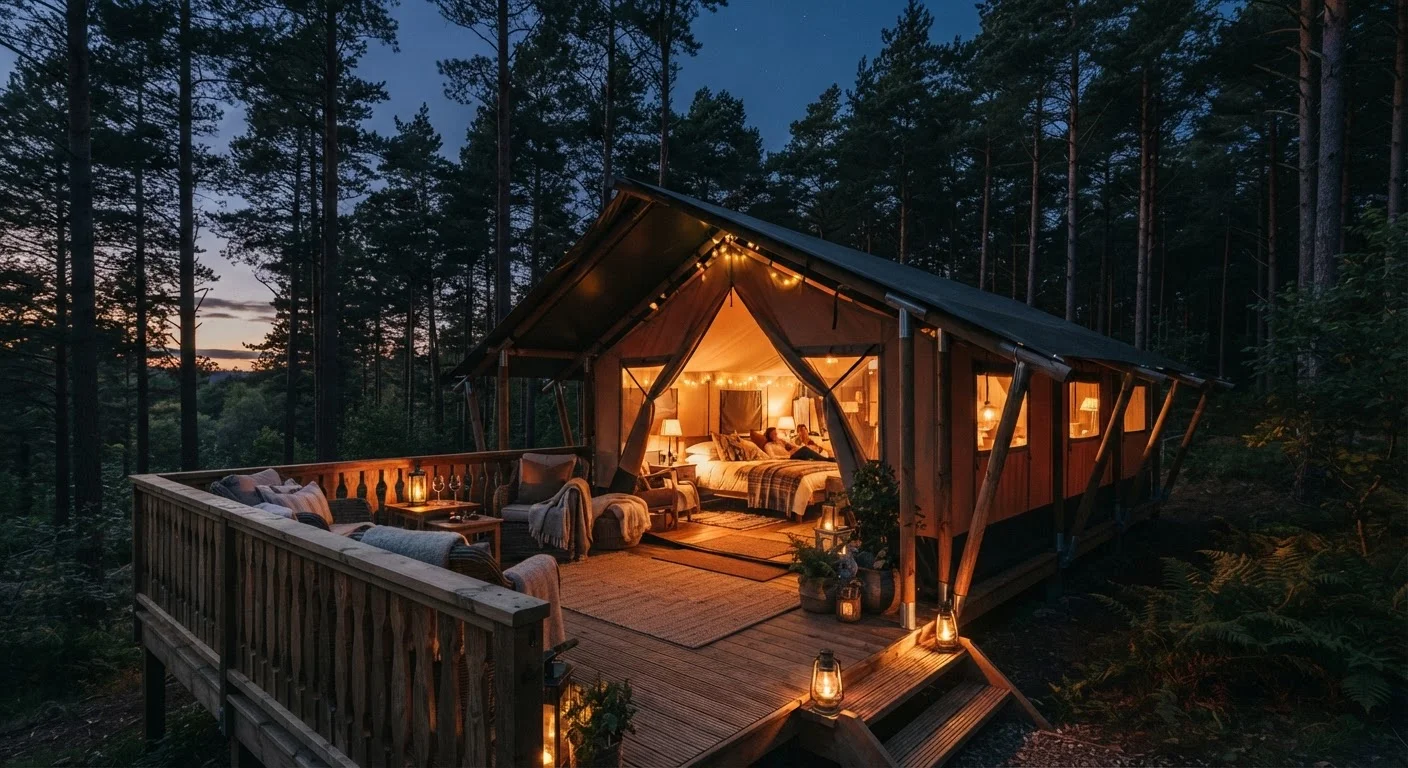
Photo credit: ExploreRoute.net | Travel Made Simple
In this article
Glamping promises comfort in nature, but how different is it from traditional camping? We break down the real distinctions.
Key Takeaways
- Glamping is defined by pre-installed, permanent or semi-permanent structures with hospitality-grade amenities included.
- Traditional camping puts logistical responsibility on the traveler — gear, shelter, food preparation, and navigation.
- The experience gap between the two has widened significantly as glamping operators expand into remote and dramatic landscapes.
- Neither is inherently more 'authentic'; both offer legitimate ways to engage with natural environments.
- Choosing between them depends on comfort threshold, trip purpose, and how much planning you want to do.
The Core Distinction: Infrastructure vs. Self-Sufficiency
The fundamental split between glamping and traditional camping isn't about comfort preferences — it's about who provides the infrastructure. In traditional camping, you are the infrastructure. You carry your shelter, sleeping system, cooking equipment, and water supply. The campsite provides little more than a designated space and, in developed campgrounds, basic sanitation.
Glamping inverts this entirely. The operator installs the shelter — whether a canvas safari tent, a geodesic dome, a yurt, or an Airstream trailer — furnishes it, and typically provides bedding, electricity, and often private bathroom facilities. The traveler arrives and inhabits a prepared space rather than constructing one.
This distinction matters practically. A camper choosing a site in a national forest needs to consider weight load, weather contingencies, and leave-no-trace protocols. A glamper choosing between sites is making a decision closer to selecting a hotel room — comparing amenities, views, and proximity to activities. For those exploring the broader spectrum of unconventional lodging, our field guide to unconventional stays maps out where glamping sits among other distinctive accommodation categories.
| Criterion | Glamping | Traditional Camping |
|---|---|---|
| Shelter | Operator-installed, permanent or semi-permanent | Traveler-supplied and erected |
| Bedding | Typically provided (mattress, linens) | Sleeping bag and pad carried by traveler |
| Bathroom facilities | Often private or shared flush toilets | Shared pit toilets or backcountry methods |
| Setup effort | None — arrive and inhabit | Significant — gear assembly required |
| Cost | Higher — hospitality markup applies | Lower — campsite fees plus gear cost |
| Spontaneity | Limited — advance booking usually required | High — walk-in and dispersed camping common |
| Weather exposure | Managed — insulated, often climate-controlled | Direct — skill and gear determine comfort |
Where the Overlap Gets Complicated
The boundary blurs in a growing middle category: semi-equipped camping. Rental tent setups at established campgrounds, cabin camping with electricity but no indoor plumbing, and car camping where your vehicle hauls a full kitchen — these exist in a genuinely gray zone. Industry usage of "glamping" varies; operators sometimes apply the label loosely to any camping experience that includes a mattress.
A useful working distinction: if the operator assembled your shelter and you couldn't replicate the setup independently in the same location, you're likely glamping. If you could leave, return with your own gear, and reproduce the experience — you're camping, however comfortably.
A Note on the Term 'Glamping'
The word is a portmanteau of 'glamorous' and 'camping,' coined in the United Kingdom around 2005 and in mainstream use by the early 2010s. Its definition has never been formally standardized, which is why operators apply it inconsistently. When evaluating a listing, focus on specific amenities — bed type, bathroom access, power supply — rather than the label alone.
Landscape shapes this choice as much as philosophy. A high-desert glamping camp and a traditional campsite in the same region offer radically different access models. Matching landscape to lodging style explores how terrain should inform your accommodation decision across dramatically different environments.
What Each Experience Actually Delivers
Traditional camping delivers something glamping cannot manufacture: the low-grade problem-solving that comes with genuine exposure. Pitching a tent in wind, rationing water, and cooking over a camp stove builds a different relationship with a landscape than watching it from a furnished deck. For travelers whose definition of adventure involves friction, this matters. What adventure travel actually means examines why that friction — managed risk, skill application, uncertainty — is central to how many travelers define a worthwhile experience.
Glamping, meanwhile, delivers sustained presence in natural settings that would otherwise be physically or logistically inaccessible. A traveler unwilling or unable to backpack into a remote canyon can still wake up inside one. The experience may be curated, but the landscape is real. Rainforest accommodation options illustrates this tradeoff clearly — eco-lodges and riverside camps each represent different points on the same comfort-access continuum.
Neither mode is a simulation of the other. Glamping is not camping with amenities bolted on; it's a distinct hospitality category that happens to use natural settings as its primary asset. Recognizing that distinction helps travelers choose with clarity rather than expectation.
~$3.8B
Estimated US glamping market size
Research firm Grand View Research estimated the North American glamping market at several billion dollars and projected continued growth through the late 2020s, reflecting rising demand for hybrid nature-comfort experiences.
40M+
Annual US camping participants
The Outdoor Foundation's annual participation reports have consistently recorded over 40 million Americans camping each year, with tent camping remaining the most common form.

Author
Where to Stay Editorial Team
Where to Stay Editorial Team is the collective byline for our editorial team and contributor network. Articles published under this byline or an editorial pen name are researched, written, and reviewed according to our editorial standards for clarity, consistency, and independence before publication.
View all articles →