
Heritage Vessels as Hotels: Life Aboard Moored Ships and Converted Barges
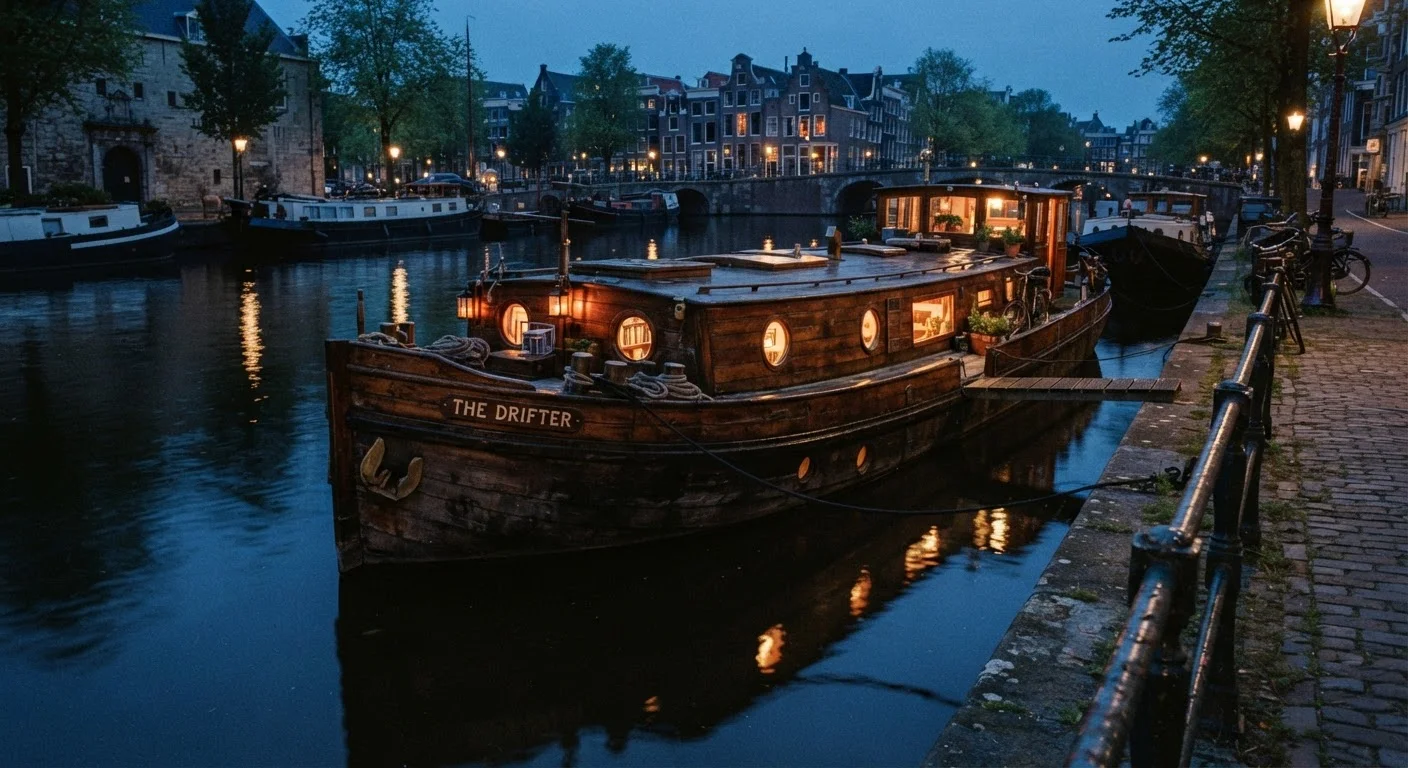
Photo credit: ExploreRoute.net | Travel Made Simple
In this article
Moored tall ships, narrowboats, and retired ferries offer a distinct kind of maritime stay — here's what the experience actually entails.
Key Takeaways
- Heritage vessel hotels are permanently moored — guests experience life on water without the vessel actually sailing.
- Cabins and berths are typically compact by design, shaped by the original vessel's architecture rather than hospitality standards.
- Motion sensitivity matters less here than on cruise ships, but tidal movement, wakes, and wind can still create noticeable rocking.
- Many converted barges and ships sit within walking distance of city centers, ports, or waterfront heritage districts.
- Sound travels differently on vessels — hull resonance, lapping water, and neighboring boat activity are part of the experience.
- Heritage vessel stays suit travelers drawn to maritime history, architectural authenticity, and distinctive, non-generic environments.
What Makes a Vessel Hotel Different From Any Other Unusual Stay
Converted vessels occupy a distinct category in the landscape of unconventional accommodation. Unlike a converted train carriage, which sits inert on land, a heritage vessel hotel places guests in an environment that breathes — hull timbers flex with temperature, water laps against the hull through the night, and the whole structure responds imperceptibly to the world around it. That aliveness is central to the appeal.
The vessel's original function shapes everything guests encounter. A retired lightship will have a radically different interior geometry than a converted Dutch barge or a repurposed harbor ferry. Exposed rivets, navigation gauges left in situ, original engine-room bulkheads turned into lounge walls — these are not decorative choices so much as structural realities that conversion designers have learned to work with rather than against.
This also means the experience is highly location-dependent. A narrowboat moored in a quiet English canal village offers a fundamentally different stay than a tall ship berthed in a working urban harbor. Both are vessel hotels in the strictest sense, but the soundscape, access, and surrounding context are miles apart.
Vessel Hotels vs. Liveaboard Rentals
Not every boat you can sleep on is a vessel hotel in the heritage sense. Private liveaboard rentals — self-catering houseboats listed on short-term rental platforms — are typically purpose-built for habitation and lack the documented working history that defines heritage vessel stays. The distinction matters if historic character is the primary draw. Always check whether a listing describes a converted working vessel or a purpose-built floating home before booking.
The Realities of Space, Sound, and Sleeping on Water
Travelers accustomed to standard hotel rooms should recalibrate their spatial expectations before boarding. Vessels were engineered for function, crew efficiency, and structural integrity — not guest comfort in the modern hospitality sense. Cabins on converted barges and ships tend to be narrow, with curved or angled walls following hull lines, low overhead clearances in berthing areas, and storage solutions that prioritize ingenuity over abundance.
Sound is the other major adjustment. Water is an excellent conductor, and hull construction amplifies noises that would be absorbed in a land-based structure. Neighboring boats casting off early, rain on a steel deck, the resonant hum of a nearby marina — all of it travels. For many guests this is part of the immersive quality. For light sleepers, it warrants honest consideration.
~7 ft
Typical interior width of a heritage narrowboat
Traditional English canal narrowboats were built to fit locks measuring approximately 7 feet wide, a dimension that directly constrains every aspect of interior layout in converted vessel hotels.
150+
Years of working life for some converted vessels
Several operational vessel hotels occupy hulls built in the late 19th or early 20th century, making them among the oldest forms of accommodation available to modern travelers.
2–4 cabins
Average guest capacity of converted barge hotels
Most converted barge and narrowboat hotels accommodate between two and four guest parties, creating an inherently intimate stay with far fewer guests than even small boutique land hotels.
Motion is real but typically subtle in sheltered berths. Canal-moored vessels may barely move at all during calm weather, while tidal harbor berths can introduce rhythmic rocking with the rise and fall of the tide. This is categorically different from open-water sailing, but guests who are sensitive to any ambient movement should choose canal or river locations over exposed coastal berths.
For a broader look at how water-based accommodation types compare on comfort and practicality, the editorial guide on overwater bungalows and floating hotels offers useful context alongside vessel-style stays.
Heritage, History, and Why Location Amplifies the Experience
The most compelling vessel stays are often those where the ship's own history intersects with the history of its mooring location. A converted lightship moored near a working harbor entrance carries layered meaning — the vessel's original purpose (guiding ships safely past hazards) connects directly to the maritime geography surrounding it. That kind of contextual resonance is difficult to manufacture and adds genuine depth to a stay.
Many vessel hotels are moored in waterfront districts that are themselves heritage zones — working ports, canal conservation areas, or historic docklands undergoing regeneration. This makes them logical base camps for travelers interested in maritime heritage, industrial history, or the social geography of cities built around water. The broader category of historic accommodation shares this quality: the structure itself becomes part of the destination's story.
Ask About the Berth Before You Book
The specific mooring location of a vessel hotel matters as much as the vessel itself. Request details on whether the berth is tidal or fixed, exposed or sheltered, and how far it sits from the nearest road or footpath access point. A sheltered canal berth and an open tidal harbor berth are very different overnight experiences, even aboard similar vessels.
Accessibility deserves a frank note. Heritage vessels were not designed with modern accessibility standards in mind, and most conversion projects are constrained by the original architecture. Steep companionway ladders, narrow passageways, and high gangplank thresholds are common. Guests with limited mobility should contact the property directly and ask specific questions before committing to a booking.
Seasonality also shapes the experience significantly. Winter mooring on an exposed waterway can mean cold decks, condensation on hull surfaces, and reduced daylight for any outdoor deck space. Many vessel hotels operate year-round but are genuinely at their best during mild weather, when porthole windows can be opened and the surrounding waterway is active and visually engaging.
Who This Kind of Stay Actually Suits
Heritage vessel hotels are not a universal upgrade from a standard hotel — they are a specific kind of experience that fits a specific kind of traveler. At their best, they suit people who find value in sleeping inside something with a documented past, who are comfortable with compact spaces, and who actively enjoy the sensory texture of being on water.
They work particularly well as a single-night or two-night interlude within a longer trip — a deliberate contrast to the rest of an itinerary rather than a week-long base. A traveler spending several days exploring a port city might spend one night aboard a converted vessel berthed at the historic waterfront, then return to a land-based hotel for the remainder of the stay. That framing lets the vessel experience be what it actually is: an immersion, not just an accommodation choice.
Travelers who enjoy the broader culture of maritime destinations — port towns, shore excursions, waterfront heritage — tend to find vessel stays particularly resonant. The ports and shore life editorial hub offers further context on exploring these kinds of waterfront environments. Similarly, anyone drawn to distinctive hotel categories beyond mainstream lodging will likely find vessel hotels a natural fit within a more adventurous accommodation portfolio.
What vessel hotels rarely suit: travelers who prioritize noise control, modern room proportions, easy wheelchair or stroller access, or the kind of seamless anonymity that large hotels provide. That is not a criticism of either preference — it is an honest description of what the experience delivers and what it does not.
Frequently Asked Questions

Author
Where to Stay Editorial Team
Where to Stay Editorial Team is the collective byline for our editorial team and contributor network. Articles published under this byline or an editorial pen name are researched, written, and reviewed according to our editorial standards for clarity, consistency, and independence before publication.
View all articles →