
Historic Hotels: Staying in Buildings That Predate the Tourism Industry
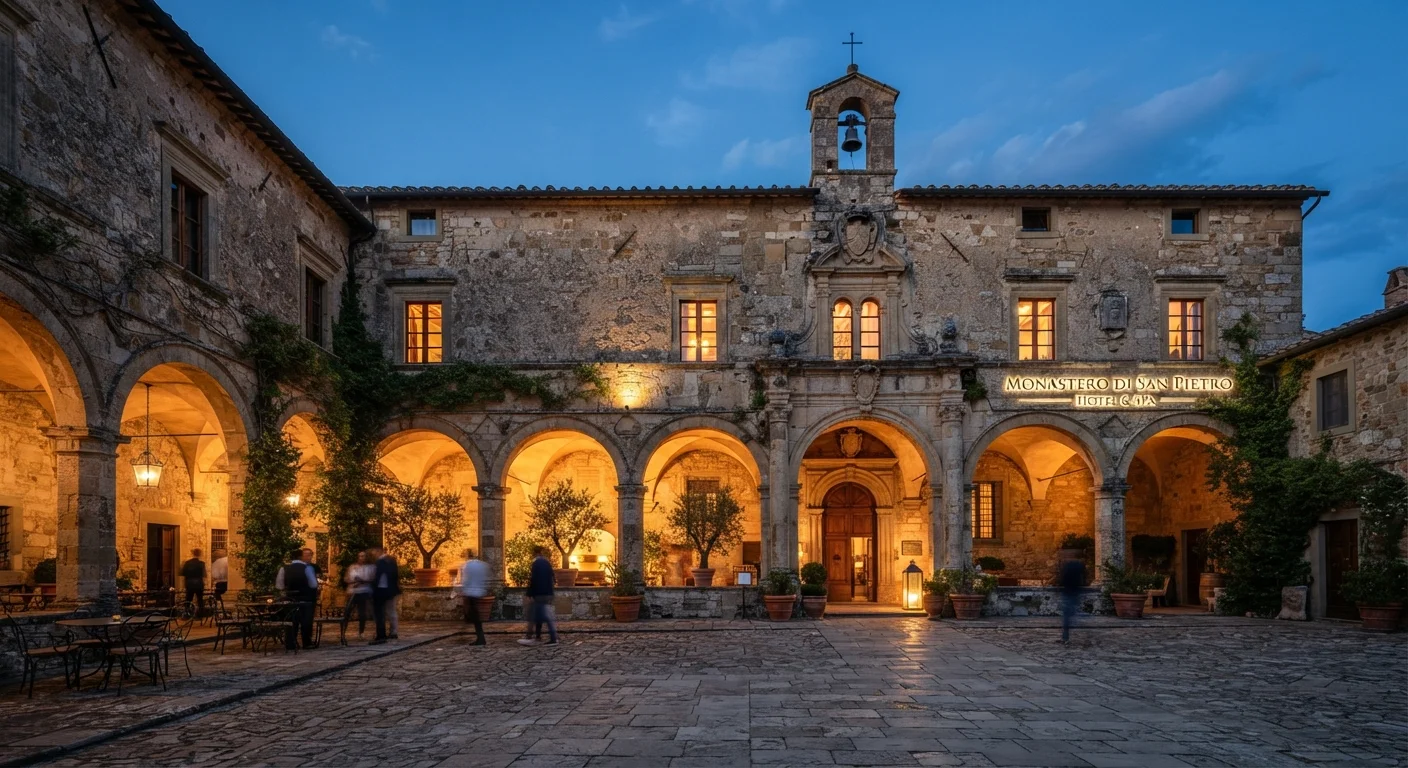
Photo credit: ExploreRoute.net | Travel Made Simple
In this article
From converted monasteries to century-old railway hotels, historic properties offer context no modern build can replicate.
Key Takeaways
- Historic hotels are defined by the significance of their buildings, not just their age.
- Staying in a heritage property provides spatial and cultural context that modern builds cannot offer.
- Structural preservation requirements often mean these hotels retain genuine architectural character.
- Practical trade-offs — limited room sizes, fewer amenities — are common and worth anticipating.
- The right historic hotel matches both your travel purpose and your tolerance for quirks.
- Heritage designation varies by country, so what qualifies as 'historic' differs across destinations.
Why the Building Itself Is the Experience
Modern hotels are engineered to be frictionless. Historic hotels are the opposite — they ask something of you. The ceiling height in a converted chapter house, the worn groove in a stone threshold, the faint smell of woodsmoke in a medieval inn: none of these details were designed for a guest's comfort. They accrued over centuries of use by people who had no idea tourism would one day exist. That incidental authenticity is precisely what draws a particular kind of traveler.
When a building predates the hospitality industry entirely, the accommodation exists in service of the structure, not the other way around. Operators preserving a 16th-century monastery guest wing or a Victorian-era railway hotel are working within constraints — architectural, regulatory, and sometimes spiritual — that shape every design decision. The result is an environment with genuine texture: irregular room proportions, original stonework, staircases that were never meant for rolling luggage.
This is not a flaw. It's the point. Adaptive reuse of forgotten buildings into hotels involves a constant negotiation between preservation and livability — and where that negotiation is handled well, guests inhabit something that no new build can manufacture.
Heritage Designation Varies by Country
What constitutes an officially 'historic' building differs significantly across destinations. The US National Register, the UK's Listed Building system, France's Monuments Historiques classification, and equivalent bodies elsewhere each apply different criteria for age, integrity, and significance. A property described as 'historic' in marketing materials may or may not carry formal designation — it's worth checking which framework, if any, applies to a property you're considering.
What Types of Historic Buildings Become Hotels
The category is broader than most travelers assume. Monasteries and convents — particularly across Spain, Portugal, and Italy — are among the most commonly converted properties, their cloister layouts lending themselves naturally to room configurations. Grand railway hotels, built in the late 19th century as civic statements at the end of newly laid rail lines, remain a distinct hotel typology in the UK, Canada, and India. Colonial-era plantation houses and merchant mansions populate the American South and parts of Southeast Asia.
Fortified structures — towers, keeps, and bastide towns — appear across France, Ireland, and the Levant, offering a very different kind of stay: thick walls that predate gunpowder, rooms that once housed soldiers rather than guests. For travelers interested in the intersection of place and structure, heritage vessels converted into floating hotels extend this logic onto water, where retired ships and barges carry their own layered histories.
Each building type shapes the atmosphere and practical realities of a stay in distinct ways. Understanding what you're walking into — architecturally and historically — makes the difference between finding a stay memorable and finding it merely inconvenient.
Over 97,000
Properties on the US National Register of Historic Places
According to the National Park Service, the National Register lists more than 97,000 properties across the United States, including many that have been adapted for hospitality use.
~500 years
Average age of Spanish parador buildings
Spain's state-run parador network, which operates historic properties including castles, monasteries, and convents, includes buildings with origins spanning the medieval and Renaissance periods.
Late 1800s
Era of the grand railway hotel typology
The railroad hotel as a distinct building type emerged primarily between 1870 and 1910 in North America, the UK, and British India, tied directly to the expansion of passenger rail networks.
Matching Traveler Type to Historic Property
Not every heritage hotel suits every traveler. The question worth asking before booking isn't just 'is this historic?' but 'is this the kind of history that interests me, and does this building's character match what I want from this trip?'
Travelers who engage deeply with place — who want to read architecture the way archaeologists do — will find that sleeping inside a significant building dramatically extends the experience of a destination. Waking in a room that was once a monk's cell, a railroad baron's suite, or a trading post storeroom changes how you move through the day.
Solo and slow travelers tend to extract the most from historic stays, largely because the buildings reward unhurried attention. Families traveling with young children may find the practical constraints — no elevators, narrow doorways, limited storage — more friction than atmosphere. Couples on anniversary trips or milestone travel frequently cite historic properties as among their most memorable stays, even when the rooms were smaller than expected.
Ask About the Building's Pre-Hotel History
Before booking a historic property, look for operators who actively document and share their building's history — not just as marketing but as genuine interpretation. Properties that can tell you what the building was, who used it, and how it was adapted are almost always better curated stays. This information is often available on the property's own website or through national heritage trust listings.
For travelers drawn to heritage destinations more broadly, the Forgotten Historic Sites hub covers landscapes and ruins that complement this kind of accommodation-focused history travel.
Practical Realities and What to Anticipate
Heritage preservation requirements often prohibit the structural changes that modern hospitality standards take for granted. Fire suppression systems, accessibility infrastructure, and HVAC installation all require creative engineering solutions in protected buildings. Some properties handle this brilliantly; others struggle. The gap between a beautifully restored historic hotel and a merely old one is largely a function of how thoughtfully the operators have managed this tension.
Noise insulation is rarely comparable to modern builds. Plumbing, in very old structures, can be audible. Room configurations may be asymmetrical, with windows placed for historical rather than guest-facing logic. These are not reasons to avoid historic hotels — they are reasons to research specific properties carefully and read guest accounts from people who share your priorities.
Seasonality matters more than in modern properties. Many historic buildings, particularly those with stone construction, are significantly cooler in summer and harder to heat adequately in winter without compromising the fabric of the structure. Understanding this before you travel avoids disappointment. Accessibility for guests with mobility needs should always be verified directly with the property, as heritage protections can limit modifications that would otherwise be standard.
For travelers considering proximity to heritage sites as part of a broader itinerary, our editorial on staying near historic sites addresses how location decisions interact with crowd dynamics and access realities — considerations that apply whether your accommodation is itself historic or simply adjacent to somewhere that is.
Frequently Asked Questions

Author
Where to Stay Editorial Team
Where to Stay Editorial Team is the collective byline for our editorial team and contributor network. Articles published under this byline or an editorial pen name are researched, written, and reviewed according to our editorial standards for clarity, consistency, and independence before publication.
View all articles →