
What to Check Before Booking a Cave Hotel
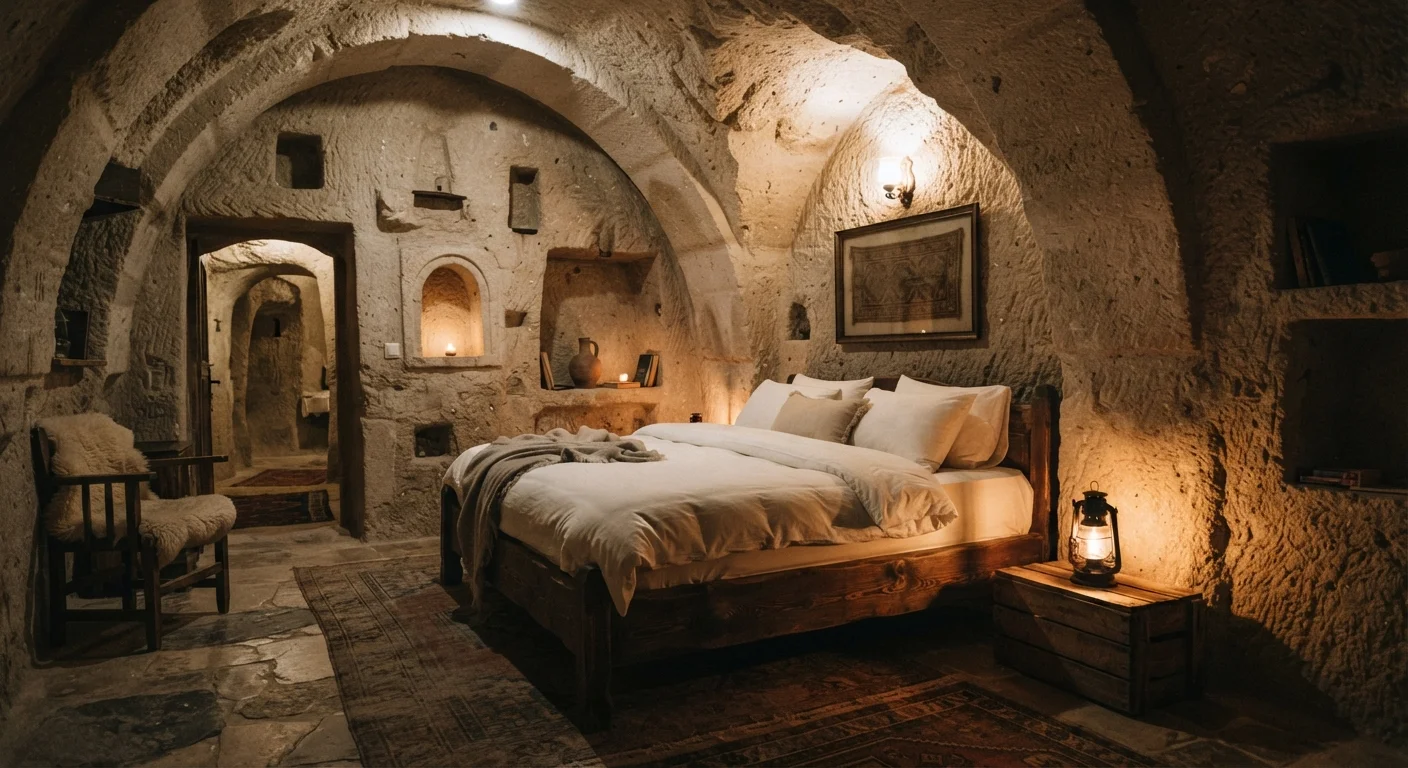
Photo credit: ExploreRoute.net | Travel Made Simple
In this article
Cave stays can be extraordinary — or unexpectedly claustrophobic. Here's what to verify before you commit to underground accommodation.
Key Takeaways
- Cave hotels vary dramatically in comfort, air quality, and accessibility — verify specifics before booking.
- Humidity, temperature, and ventilation are non-negotiable factors that listings often understate.
- Claustrophobia and mobility considerations require honest self-assessment and direct questions to the host.
- Wi-Fi, cell signal, and emergency access are frequently limited or absent in underground accommodations.
- Cancellation policies at unique stays can be stricter than standard hotels — read them carefully.
Why Cave Hotels Demand More Due Diligence
Cave hotels occupy a category of accommodation where the gap between marketing imagery and lived experience can be wider than almost anywhere else. The same geological features that make them visually arresting — carved rock, low ceilings, thick walls, deep interiors — are precisely the features that affect ventilation, humidity, light, and mobility in ways a standard hotel room never does.
This checklist is for travelers who want the cave experience to be extraordinary rather than unexpectedly miserable. Unlike a rural inn or boutique hotel, a cave stay involves variables that require direct investigation. Most listings won't volunteer the information you need. You have to ask. The Complete Guide to Unique Stays covers the broader framework for approaching unconventional accommodation; this checklist drills into the cave-specific questions that matter most.
Use the tools below as your starting kit, then work through each checklist group before committing.
Messaging Platform (Direct Host Contact)
Use the accommodation platform's direct messaging to ask specific questions about dimensions, humidity, and safety features before committing.
Google Earth or Topographic Maps
Assess the property's physical location, terrain, and road access — especially useful for cliff-carved or hillside cave hotels.
Recent Guest Reviews (Filtered by Season)
Filter guest reviews by the season you intend to visit to surface humidity, temperature, and comfort issues that vary by time of year.
Translation App
Many cave hotels operate in regions where English-language listings are translated and key details may be lost — verify specifics in the local language if possible.
The Checklist: 18 Points to Verify Before You Book
Work through each group in sequence. The physical environment questions should come first — they are non-negotiable filters. If a host is evasive or dismissive when answering them, treat that as meaningful information about the booking.
Physical Environment
Comfort and Amenities
Connectivity and Accessibility
Safety, Policies, and Wellbeing
Wide-Angle Photography Can Mislead
Cave room photos are almost always shot with ultra-wide lenses that make spaces appear dramatically larger than they are. A room that photographs as spacious may feel confining at shoulder width. Always request actual measurements and ask whether a person can stand upright throughout the entire room, not just at its highest point.
Humidity Can Damage Electronics and Health
Persistent cave humidity — often 70–90% in natural rock formations — can affect respiratory comfort, harm electronics, and cause musty odors that disrupt sleep. Guests with asthma, dust mite allergies, or mold sensitivities should ask direct questions about moisture management systems before booking. Consult a physician if you have relevant respiratory conditions.
For travelers curious about the underlying geology of cave environments — and how dramatically different karst terrain can feel above versus below ground — see Cave Systems vs. Open Karst Landscapes for useful context. Understanding what type of rock formation your cave hotel is carved from can also inform how humidity and temperature behave inside the room.
When to Walk Away — And What to Do Instead
Not every cave hotel is right for every traveler, and recognizing a mismatch early prevents a genuinely uncomfortable stay. If a host cannot confirm ceiling height, ventilation type, or fire safety provisions, the property may not be operating at a standard appropriate to overnight guests.
Emergency Access Is Not Guaranteed
Cave hotels carved into cliffs or hillsides can be genuinely difficult to reach by emergency services, particularly in rural or mountainous regions. Before booking, ask the host specifically how emergency access works, and verify what the nearest medical facility is. This is not a deterrent — it is a practical reality that warrants preparation, not panic.
It is also worth being honest about your own thresholds. Travelers who find underground parking structures stressful, or who feel uneasy in basements, may find that the romance of a cave hotel collides with physical discomfort by night two. That is not a failure of imagination — it is useful self-knowledge. Where Unique Stays Fall Short offers an honest accounting of when offbeat accommodation delivers and when it doesn't, which is worth reading before finalizing any unconventional booking.
If you conclude that a cave stay isn't right for this trip, consider the rural village stay checklist as a starting point for finding unusual but more accessible accommodation in off-the-beaten-path destinations.

Author
Where to Stay Editorial Team
Where to Stay Editorial Team is the collective byline for our editorial team and contributor network. Articles published under this byline or an editorial pen name are researched, written, and reviewed according to our editorial standards for clarity, consistency, and independence before publication.
View all articles →