
The Arctic and Antarctic: What Expedition Cruise Routes Actually Cover
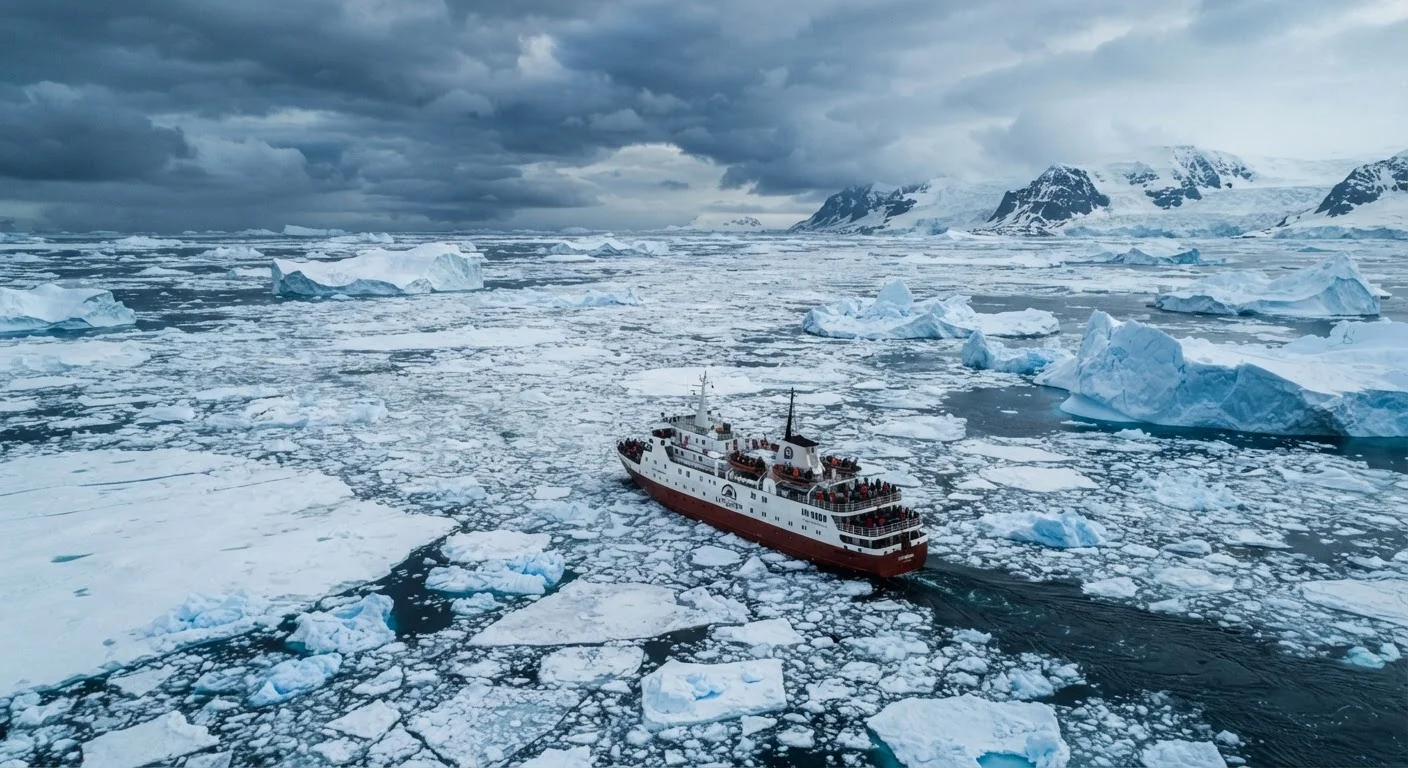
Photo credit: ExploreRoute.net | Travel Made Simple
In this article
Polar expedition cruises follow narrow seasonal windows and unpredictable ice conditions. Understand what these itineraries realistically include.
Key Takeaways
- Arctic and Antarctic expedition routes operate within strict seasonal windows — typically November to March in the South, June to September in the North.
- No two polar voyages follow exactly the same path; ice conditions dictate daily routing decisions.
- Antarctic itineraries are almost entirely ship-based, with zodiac landings as the primary way to reach shore.
- Arctic routes span a much wider geographic range, from Svalbard to Greenland to the Canadian High Arctic.
- Expedition staff — naturalists, glaciologists, ornithologists — are a core part of the itinerary, not optional extras.
- Travelers should budget for mandatory gear, potential flight disruptions, and the possibility that specific landings may be cancelled.
Two Poles, Two Entirely Different Itinerary Structures
Despite sharing extreme latitudes and dramatic ice landscapes, the Arctic and Antarctic offer fundamentally different expedition cruise experiences — shaped by geography, governance, and access.
Antarctica is a continent surrounded by ocean. Nearly all expedition cruises depart from Ushuaia, Argentina, crossing the Drake Passage over roughly two days. The Antarctic Peninsula is the primary destination: a narrow arm of land reaching toward South America, lined with penguin rookeries, glaciers, and research stations. Itineraries typically run 10 to 21 days, with shore time delivered entirely by zodiac inflatable craft. There are no ports, no towns, and no infrastructure for tourists — the ship is your hotel, your dining room, and your lecture hall throughout.
The Arctic is an ocean surrounded by land, and this opens radically more variety. Svalbard (Norway) serves as the most accessible entry point, reachable by commercial flight from Oslo. Greenland expeditions operate from Iceland or Kangerlussuaq. The Russian High Arctic and the Canadian Northwest Passage represent more ambitious — and more logistically complex — routes. Arctic voyages can range from 8-day Svalbard circuits to 21-day Northwest Passage transits, with genuine port towns, fjord anchorages, and indigenous community visits woven into some itineraries.
Understanding what expedition-style travel genuinely demands is essential before committing to either pole — the remoteness and contingency planning involved exceed most adventure travel by a considerable margin.
How Ice Conditions Shape What You Actually Visit
Every polar expedition itinerary comes with an implicit asterisk: the route published in the brochure is a framework, not a contract. Expedition leaders make real-time routing decisions based on sea ice extent, weather systems, and wildlife concentration — and those decisions can significantly alter what a voyage covers.
~100
Max passengers ashore at once in Antarctica
Antarctic Treaty System guidelines limit simultaneous shore landings to 100 passengers, directly shaping vessel size and scheduling across all expedition operators.
800 miles
Typical Drake Passage crossing distance
The open-ocean crossing between Ushuaia and the South Shetland Islands takes roughly 48 hours each way and is among the roughest stretches of water on any commercial route.
4–6 weeks
Peak Antarctic season window
The most stable weather and wildlife activity clusters between mid-December and late January, creating a highly compressed peak demand period across all Antarctic expedition operators.
In Antarctica, the Drake Passage crossing itself is a variable. A "Drake Lake" crossing can mean glassy water and two comfortable transit days; a "Drake Shake" can mean 30-foot swells and a challenging introduction to polar sailing. Once on the Peninsula, ice can block access to planned landing sites — particularly in early and late season — but it can also create unexpected opportunities: an ice-choked channel might push a ship into a remote bay rarely visited by any expedition.
In the Arctic, summer sea ice retreat determines which channels and archipelagos are navigable. The Northwest Passage, for instance, has historically been transitable only in late summer (August–September), and even then is not guaranteed. Svalbard routes are generally more predictable but still adjust around polar bear sightings and fjord ice conditions.
Travelers who need certainty about specific landing locations are not well-suited to polar expedition travel. Those who embrace contingency as part of the experience typically find the improvised moments — a spontaneous whale encounter, a last-minute fog-lift revealing a glacier — become their most vivid memories.
What the Onboard Experience Actually Looks Like
Expedition ships are not luxury liners, though some modern vessels offer genuinely comfortable cabins, heated observation decks, and well-equipped mudrooms for gear staging. The defining feature of the onboard experience is the expedition team: a group of scientists, naturalists, and regional specialists who deliver lectures, lead shore excursions, and interpret everything passengers encounter.
Make the Evening Lectures a Priority
Many first-time expedition travelers underestimate the value of the nightly recap and lecture sessions. These briefings — led by glaciologists, ornithologists, and historians — provide the interpretive framework that transforms what you saw during the day into something you'll remember for years. Treat them as core programming, not optional enrichment.
A typical Antarctic day follows a rhythm: early zodiac briefing before breakfast, two shore excursions (morning and afternoon) separated by lunch aboard, followed by a recap lecture in the evening. Lectures cover glaciology, ornithology, marine biology, and regional history — these sessions are not optional filler. They are how travelers make sense of what they're seeing, and they're a primary part of what distinguishes expedition cruising from sightseeing tourism.
Gear discipline matters more than on any other form of travel. Most operators enforce strict biosecurity protocols — brushing jackets and boot washing before and after every landing — to prevent invasive species transfer between sites. This applies equally in the Arctic and Antarctic.
For travelers considering what life at the poles looks like beyond the ship, our coverage of cold-climate accommodations in Arctic and subarctic regions provides useful grounding in the environmental conditions that define high-latitude travel. And if polar adventure has opened an appetite for other immersive environments, ice hotels and snow lodges represent another extreme worth understanding before booking.
Expedition cruising sits apart from themed and specialty cruise itineraries in one important respect: the destination is not a backdrop to an onboard program — it is the program. Every lecture, landing, and meal exists in service of helping passengers understand where they are.
Practical Realities Before You Book
Polar expedition cruises require preparation that goes beyond packing a warm jacket. Most operators provide a mandatory gear list — waterproof outerwear, rubber boots (often provided), and layering systems — that travelers must assemble before departure. Cold-weather layering systems and expedition discipline are not optional niceties in environments where temperatures can drop well below freezing even in midsummer.
Entry Requirements Vary by Polar Region
Antarctica operates under the Antarctic Treaty System and has no sovereign visa regime, but all visits must comply with Treaty protocols enforced through licensed operators. Arctic destinations — including Svalbard, Greenland, and Canada — each have their own national entry requirements. Always verify current entry rules with the relevant government authority and your expedition operator well in advance of departure.
Flight access to departure ports — Ushuaia for Antarctica, Longyearbyen for Svalbard — involves limited airline options and routes through cities prone to weather disruption. Operators strongly recommend arriving at the departure port at least one night early. Travel protection plans covering trip interruption are widely used by polar travelers, though policies and coverage vary — consult your insurer for specifics.
Health screening is standard: most operators require disclosure of cardiovascular, respiratory, or mobility conditions. The ship's medical facilities are limited compared to a hospital, and emergency evacuation from polar waters is slow and expensive. This is not a reason to avoid polar travel if you are otherwise healthy and prepared — it is a reason to be honest with your operator and your physician before departure.
Finally, consider what you are willing to not see. Polar travel does not guarantee specific wildlife encounters, specific landing sites, or specific atmospheric conditions. Travelers who approach it as an immersive, contingency-rich environment — rather than a checklist experience — consistently report the highest satisfaction.
Frequently Asked Questions

Author
Cruise Journeys Editorial Team
Cruise Journeys Editorial Team is the collective byline for our editorial team and contributor network. Articles published under this byline or an editorial pen name are researched, written, and reviewed according to our editorial standards for clarity, consistency, and independence before publication.
View all articles →