
Ice Hotels and Snow Lodges: What the Experience Demands of You
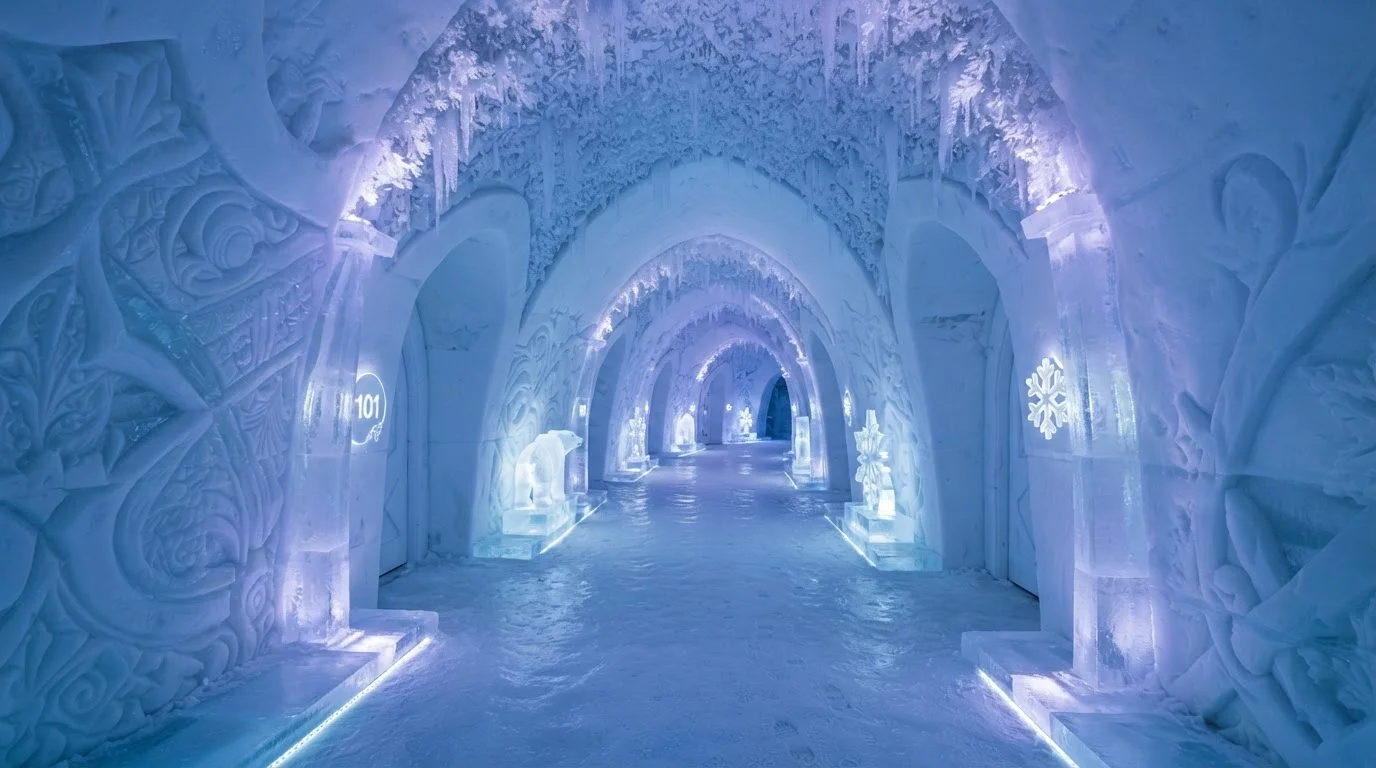
Photo credit: ExploreRoute.net | Travel Made Simple
In this article
Staying in a structure built from frozen water is genuinely memorable — and genuinely demanding. Here's what preparation looks like.
Key Takeaways
- Sleeping in an ice hotel requires specific sleeping gear preparation — the bed itself will not keep you warm.
- Most facilities provide thermal sleeping bags rated for sub-zero temperatures, but personal layering matters too.
- Ice hotels typically maintain interior temperatures between -5°C and -8°C (23°F to 18°F) year-round.
- Alcohol consumption before sleep increases heat loss and poses a genuine safety risk in cold-room environments.
- Warm-room alternatives are usually offered on the same property for those who want the experience without the full overnight exposure.
- Claustrophobia and disrupted sleep are common; understanding this in advance helps set realistic expectations.
What Ice Hotels Actually Are — and What They're Not
Ice hotels occupy a specific niche within what travel editors sometimes call experiential formats — accommodations defined entirely by their physical construction rather than their service category. They are not novelty rooms inside a conventional hotel, and they are not camping with cold aesthetics. They are structures rebuilt annually from compacted snow and harvested or manufactured ice, maintained at sub-zero temperatures year-round, and designed to be slept in by guests who understand what they are choosing.
The original purpose-built facilities in Scandinavia — particularly in northern Sweden and Finland — established the format in the early 1990s. Since then, comparable structures have appeared in Canada, Norway, Romania, and Japan, each with their own construction approach and guest experience model. What links them is the interior environment: consistently cold, dimly lit by design, acoustically unusual, and architecturally unlike anything a traveler encounters in conventional lodging.
For context on how this format sits within the broader landscape of terrain-specific stays, our guide to landscape-matched lodging offers a useful comparative frame. And if you're exploring other experiential formats before committing to this one, our overview of experiential hotel formats addresses the broader category.
Thermal base layers (top and bottom)
Regulates body temperature through the night by wicking moisture and retaining heat against the skin.
Wool or fleece mid-layer
Provides a secondary insulating layer for sleeping inside a sub-zero ice room.
Merino wool socks (2–3 pairs)
Keeps feet warm overnight; cold feet are one of the most common sources of discomfort in ice rooms.
Balaclava or thermal hat
Covers the head and neck, which are exposed above the sleeping bag and lose heat rapidly.
Waterproof outer layer
Protects against wet snow and cold air during outdoor movement between lodge areas.
Insulated water bottle
Maintains hydration without the water freezing overnight inside the ice room.
Headlamp
Navigates dark corridors and outdoor paths during Arctic winter nights with limited ambient light.
The Physical Reality of a Cold-Room Night
Understanding what the environment demands before you arrive is the most practical thing you can do. Ice room interiors typically hold between -5°C and -8°C (roughly 23°F to 18°F). Beds are ice platforms covered with insulating mats and reindeer skins; sleeping bags are provided and rated for the conditions. The ice itself is not damp — the air inside is dry, which reduces the biting quality of the cold but can cause dehydration if you're not drinking enough during the day.
There are no electrical outlets, no heating elements, and no customization of room temperature. Lighting is typically ambient — LED setups embedded in ice walls that create the photogenic blue-and-violet glow associated with these spaces. Bathrooms are always in a heated area of the facility, which means a short outdoor or interior walk in the night if needed. Guests who have stayed in cold-climate accommodations more broadly often find the ice room experience more manageable, having already adapted their expectations to Arctic lodging realities.
Cold Rooms Are Not Heated — At All
Interior ice room temperatures are maintained at a consistent sub-zero level by design. There is no in-room thermostat, heating element, or warm-up mechanism. If you feel dangerously cold during the night, leave the room immediately and find staff or the heated common area. Most properties conduct a wellness check, but do not wait to be found if you are in genuine discomfort.
Verify Entry and Health Requirements Early
Ice hotels in Scandinavia and subarctic Canada require international travel, with specific visa, health, and insurance considerations. Entry rules, health documentation requirements, and travel advisories change. Always verify current requirements through your government's official foreign travel advisory service and the destination country's immigration authority before finalizing bookings.
The experience contrasts sharply with desert extreme-environment stays — where heat management is the central challenge — but the psychological demand of adapting to an unusual sleep environment is comparable. Our guide to desert stays explores that parallel if you're considering both types of trip.
Warm Rooms as a Practical Backup
Most established ice hotel properties offer heated cabin or warm-room alternatives on the same grounds. Booking a warm room as a backup — or simply understanding it exists — removes a layer of anxiety and lets you engage more fully with the cold-room experience. There is no hierarchy of authenticity here; the goal is a memorable, safe night, not endurance for its own sake.
Follow the preparation steps below with the same seriousness you'd apply to any outdoor cold-weather undertaking.
What you will need
Research the property type before committing
Not all ice stays are equivalent. A purpose-built ice hotel in Sweden or Finland differs meaningfully from a snow igloo camp in the Canadian Rockies or a hybrid lodge with both cold rooms and heated cabins. Understand whether the structure is fully ice-walled throughout, or whether the ice rooms are one feature within a warmer facility. Properties that rebuild their ice structures each winter offer a genuinely distinct architectural experience season to season. Check whether warm-room alternatives exist on the same property — this matters if you're traveling with someone who may not want the full cold-room night.
Assess your personal cold tolerance honestly
Ice hotel stays are not inherently dangerous for healthy adults, but they are physically demanding in ways that catch some travelers off guard. People with circulatory conditions, Raynaud's disease, or respiratory sensitivities to very cold, dry air should consult a physician before booking. Children and older travelers require additional consideration. This is not a stay where you simply arrive and adapt — the environment is consistently cold throughout the night regardless of how tired or unprepared you are.
Pack layering systems deliberately
Most ice hotels supply high-rated sleeping bags, but what you wear inside that bag determines your comfort. A moisture-wicking thermal base layer, an insulating mid-layer, wool socks, and a balaclava or thermal hat form the functional minimum. Cotton holds moisture and loses insulating value when damp — avoid it entirely. Bring more layers than you think you need; you can always shed them, but you cannot manufacture warmth in a -5°C room if you've underpacked. See our guide to cold-weather layering systems for detailed guidance on building an effective system.
Understand the sleeping bag setup on arrival
When you check into your ice room, staff typically brief you on how the sleeping bag system works — usually an outer shell and a liner rated collectively to handle room temperatures. Test the zipper and closure before the room goes dark. Your sleeping surface will be a reindeer skin or insulating mat over an ice platform; this matters because the floor and platform conduct cold upward. Position yourself fully inside the bag with only your face exposed. If the provided bag feels inadequate during your orientation, raise the issue with staff immediately rather than hoping to adapt through the night.
Avoid alcohol before sleeping in an ice room
This is one of the most consistently misunderstood aspects of cold-environment stays. Alcohol creates a sensation of warmth by dilating blood vessels near the skin — but this actually accelerates heat loss from the body core. Drinking before sleep in a -5°C room increases the risk of hypothermia, disrupts sleep quality, and impairs your ability to recognize when you are genuinely cold. Most reputable properties communicate this clearly. Enjoying a warm drink — herbal tea, warm juice, or a non-alcoholic alternative — in the heated communal area before retiring is a sound alternative.
Plan for disrupted sleep and set expectations accordingly
Honest accounts from ice hotel guests frequently mention waking once or twice during the night — either from cold awareness, unfamiliar acoustics (ice structures have unusual sound qualities), or mild claustrophobia. This is normal, not a sign the experience has failed. Most properties have heated lounges accessible around the clock for guests who need to warm up. Factor this into your itinerary: an ice hotel night is rarely a fully restorative eight-hour sleep. Plan lighter activities for the following morning rather than an ambitious excursion requiring sharp focus at dawn.

Author
Where to Stay Editorial Team
Where to Stay Editorial Team is the collective byline for our editorial team and contributor network. Articles published under this byline or an editorial pen name are researched, written, and reviewed according to our editorial standards for clarity, consistency, and independence before publication.
View all articles →