
Visiting a Forgotten Ruin Responsibly
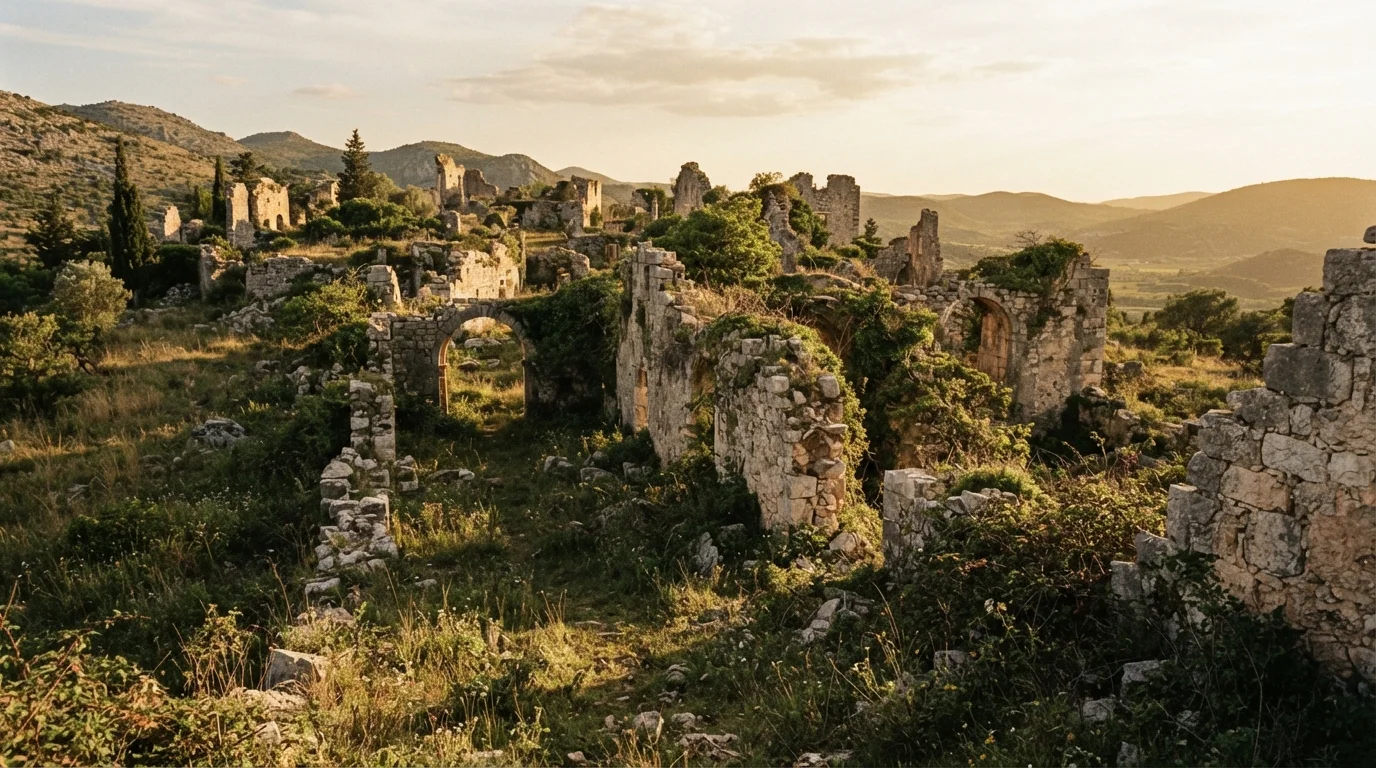
Photo credit: ExploreRoute.net | Travel Made Simple
In this article
Off-radar archaeological sites are fragile. This guide covers the ethical, practical, and safety considerations every traveller should know before going.
Key Takeaways
- Research access permissions and local regulations before visiting any off-radar archaeological site.
- Physical contact with ancient stonework accelerates irreversible deterioration — observe without touching.
- Hiring local guides supports communities and provides essential site-specific safety knowledge.
- Sharing precise GPS coordinates of fragile, unprotected ruins publicly can lead to looting and damage.
- Verify entry requirements, safety advisories, and emergency protocols with official sources before departure.
Why Forgotten Ruins Demand a Different Kind of Visitor
There is a particular silence at an unvisited ruin — no queue, no audio guide, no laminated information board explaining what you're seeing. That silence is also a signal: you are somewhere genuinely fragile, somewhere that has survived centuries without tourist infrastructure to protect it. The same qualities that make these sites magnetic — their obscurity, their rawness, their sense of discovery — are precisely what makes careless visitation so damaging.
Unlike UNESCO World Heritage sites with rangers, barriers, and restoration budgets, forgotten ruins typically have none of these. A misplaced foot on a buried mosaic, a hand steadied against a painted wall, a fire built against ancient stone — each leaves a mark that no future conservation effort may ever fully reverse. Before you plan a visit, it's worth understanding what kind of visitor a fragile, overlooked site actually needs. Our field-ready reference for independent travellers offers useful grounding in how these sites are classified and managed.
Core Practices for Responsible Ruin Visits
Responsible visitation is less a checklist than a posture — one of informed humility. The practices below form the foundation of an ethical approach to heritage travel at off-radar sites.
Obtain the correct permits before arriving at any protected or regulated site.
Many archaeological sites — even obscure ones — fall under national heritage legislation that requires advance authorization. Arriving without permits exposes you to legal consequences and puts pressure on already-stretched site custodians to manage unauthorized visitors.
Engage a locally based guide with documented knowledge of the site.
Local guides carry knowledge that no guidebook replicates — the safe paths, the culturally sensitive areas, the stories embedded in the landscape. Their income also creates a direct economic argument for community-led preservation rather than extraction or sale of artifacts.
Never touch, move, or remove any artifact, stonework, or organic material from the site.
Even lifting a potsherd to examine it disrupts the stratigraphic context archaeologists rely on to date and interpret finds. Oils from human hands accelerate decay in painted surfaces and carved stone. The injunction applies equally to 'harmless' actions like stacking stones for photographs.
Walk only on established paths or bare rock; avoid vegetation that may conceal buried structures.
The visible portion of most archaeological sites represents only a fraction of what lies below ground. Stepping off path risks collapsing buried walls or compacting soil around artifacts that have survived undisturbed for millennia.
Do not publish precise GPS coordinates or detailed access routes for unprotected sites.
Unprotected heritage sites are highly vulnerable to looting once their locations become widely known. Sharing pinned maps or turn-by-turn directions to a site without custodianship can undo decades of obscurity in a single post.
For a deeper look at what to verify before you even leave home, the pre-visit checklist for obscure historic sites covers permits, seasonal conditions, and emergency contacts in practical detail.
The Ethics of Sharing What You Find
Social media has fundamentally changed the risk profile of obscure heritage sites. A single viral post — however well-intentioned — can direct thousands of unprepared visitors to a site that was previously visited by dozens per year. The consequences are rarely abstract: trampled earthworks, looted pottery sherds, fires in ancient chambers.
Precision Location Sharing and Heritage Risk
Heritage professionals and national park managers increasingly flag the rapid spread of precise location data as one of the leading drivers of looting at unprotected sites. Even well-meaning posts that tag an obscure ruin can attract salvage seekers within weeks. If the site lacks an official presence, custodian, or formal access framework, the safest approach is to omit exact coordinates entirely and direct followers to official channels instead.
This doesn't mean staying silent. Sharing your experience in general terms — the region, the historical period, the mood of the place — contributes to public awareness of forgotten heritage without functioning as a location pin for those with less care. Consider what early-adopter heritage travel genuinely looks like, honestly examined.
Safety, Legality, and Knowing Your Limits
Romanticism about ruins has a way of obscuring real physical hazards. Crumbling vaulted ceilings, unstable cliff faces, venomous wildlife sheltering in dark corners, contaminated water nearby — forgotten sites are not managed environments. Knowing your limits as a hiker and navigator matters as much as your historical curiosity.
Legality is equally non-negotiable. Some ruins sit on private land; others fall under national heritage protection laws that prohibit entry without a permit. Entering without authorization isn't a grey area — it can result in fines, confiscation of equipment, or criminal charges in some jurisdictions. Always confirm access rights through official local or national heritage authorities before visiting. Entry requirements, border rules, and safety advisories change; verify everything with official government and heritage-body sources ahead of departure.
Understanding the difference between a preserved ghost town and a live archaeological excavation also shapes what you're permitted to do on-site — our piece on preserved ghost towns vs. active archaeological digs clarifies those distinctions. And if you want to do more than simply stand at a ruin — if you want to actually read what you're looking at — reading ancient ruins without a tour guide will sharpen your interpretive eye considerably.
Tell Someone Your Itinerary Before You Go
Remote ruins often have no cell coverage and no passing foot traffic. Before setting out, share your planned route, expected return time, and an emergency contact with someone not on the trip. If the site involves technical terrain, consider whether your travel insurance covers search-and-rescue operations in that country — this varies significantly by policy and destination.

Author
Hidden Destinations Editorial Team
Hidden Destinations Editorial Team is the collective byline for our editorial team and contributor network. Articles published under this byline or an editorial pen name are researched, written, and reviewed according to our editorial standards for clarity, consistency, and independence before publication.
View all articles →