
Preserved Ghost Towns vs. Active Archaeological Digs: Two Very Different Visits
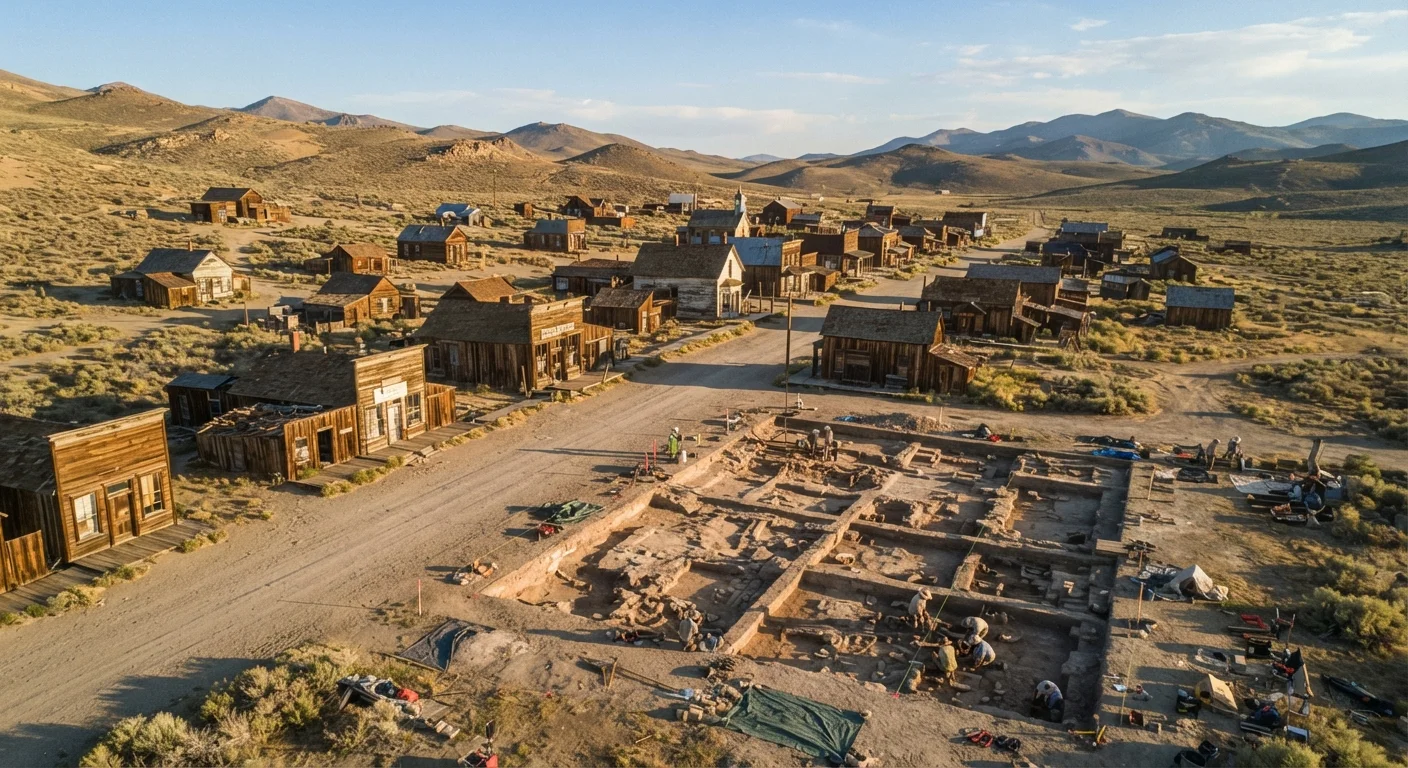
Photo credit: ExploreRoute.net | Travel Made Simple
In this article
Ghost towns offer open exploration; active dig sites impose strict limits. Understanding the difference shapes how you plan and what you experience.
Key Takeaways
- Ghost towns are generally open to self-guided exploration; active dig sites almost always require advance permission and guided access.
- Dig sites are living research projects — visitor behavior directly affects the integrity of findings.
- Ghost towns reward slow, observant wandering; archaeological sites reward patience and listening.
- Permits, site schedules, and seasonal windows differ sharply between the two visit types.
- Both experiences benefit from preparation — learning to read historic structures or site context before you arrive.
The Feel of Each Place Before You Even Step Inside
Pull up to a preserved ghost town — Bodie, California, or Bannack, Montana, say — and the silence does the talking first. Wooden false-front storefronts lean at angles that suggest time itself has softened them. A rusted iron stove sits exactly where it was abandoned. Nobody is in charge of your itinerary. You can push open a creaking door, peer into a collapsed assay office, or simply stand in the middle of Main Street and let the emptiness wash over you. That freedom is the ghost town's defining gift.
An active archaeological dig site announces itself differently. Orange safety fencing, handwritten site maps, clipboards, and boot-scrapers at the perimeter all signal that you are entering working space. Researchers are mid-sentence in a conversation with the ground beneath them, and your presence is conditional on not interrupting that conversation. The atmosphere is purposeful rather than elegiac — less museum, more laboratory.
For travelers who've already ticked off the obvious heritage sites, both experiences offer something genuinely off-radar. The case for visiting forgotten historic sites early applies to both categories, though the logistics of getting there look nothing alike.
Access, Permissions, and What You Can Actually Do
| Criterion | Preserved Ghost Towns | Active Archaeological Digs |
|---|---|---|
| Access | Generally open; entry fee may apply | Restricted; advance permission usually required |
| Booking lead time | None to minimal | Weeks to months ahead |
| On-site guidance | Optional; self-guided common | Mandatory; researchers or interpreters lead |
| Physical freedom | Wide-ranging within marked areas | Strictly confined to designated viewing zones |
| Best visit duration | Half-day to full day | 2–4 hours (open day) or multi-day (volunteer) |
| Child-friendliness | Generally suitable | Often restricted for minors |
| Photography | Typically permitted | Often restricted or prohibited at active trenches |
| Infrastructure nearby | Variable; some sites well-serviced | Often minimal; rural or remote settings common |
Ghost towns managed by state or national park systems — like Bodie State Historic Park — charge modest entry fees and impose light behavioral rules: stay on marked paths, don't remove anything, don't enter structurally compromised buildings. Many privately held ghost towns across Nevada, Arizona, and Colorado have even fewer restrictions, though you should always verify land ownership and access rights before wandering. The ethical and practical checklist for visiting forgotten ruins applies here just as much as it does to ancient sites.
Active dig sites operate on an entirely different permission logic. Academic excavations are typically licensed by the relevant land management agency — the Bureau of Land Management, a tribal authority, a foreign ministry of culture — and public access is either prohibited entirely or tightly choreographed. Some programs offer structured public open days, field school opportunities for paying participants, or volunteer slots. If a dig site interests you, the path in usually runs through the principal investigator's institution or a partnering heritage organization, not a ticket booth. Plan months, not days, ahead. The logistics of planning a first visit to an off-radar site are worth working through carefully before committing to either type.
What You Learn — and How You Learn It
A ghost town teaches through objects and space. Walk through Rhyolite, Nevada's ruins and the buckled floorboards, scattered glass medicine bottles, and sun-bleached newspaper fragments build a picture of abrupt departure — a community that didn't slowly fade but was simply switched off. The experience rewards visitors who arrive prepared to read their surroundings. Learning to interpret stonework, street grids, and structural remains before you visit transforms a stroll through ruins into a genuine act of historical reasoning.
Dig sites teach through process. When an archaeologist explains why a particular soil layer indicates a flood event, or why the orientation of a hearth suggests seasonal habitation, you're not just receiving information — you're witnessing the method by which history is constructed from physical evidence. That epistemological transparency is rare and genuinely moving. The limitation is that what's visible on any given day may look, to an untrained eye, like an unremarkable collection of numbered plastic bags and careful brushwork. Patience and curiosity are non-negotiable.
~70,000
Abandoned towns estimated across the United States
The National Trust for Historic Preservation has documented tens of thousands of abandoned settlements, ranging from minor hamlets to substantial mining communities.
~400
Active archaeological field projects per year in the US
The Society for American Archaeology estimates several hundred permitted excavations are conducted annually across federal, state, and tribal lands.
Under 5%
Dig sites with regular structured public access
Most active excavations are closed to casual visitors; public open days remain the exception rather than the rule at research-driven sites.
Practical Differences That Shape Your Trip
Seasonality affects both, but differently. Many Western ghost towns are most accessible in spring and fall, when temperatures are moderate and unpaved approach roads are passable. Some high-elevation sites, like Animas Forks in Colorado, are only reachable in summer. Dig seasons are determined by research calendars and funding cycles rather than tourism logic — an excavation in the American Southwest might run June through August; one in the Pacific Northwest might operate in September. Neither type of site guarantees the same conditions year to year.
Accommodations near ghost towns vary from primitive camping to small historic-district inns. The more remote the town, the more self-sufficient you'll need to be. Dig sites in rural areas may have even thinner infrastructure around them. The tradeoff between remote access and easy infrastructure is worth weighing honestly against your comfort threshold. If you're drawn to unconventional lodging as part of the adventure, unique stays near heritage corridors can anchor the trip without pulling you fully back into tourist-trail territory.
Always verify current access conditions, land management rules, and any required permits directly with the managing authority before visiting. Site conditions, permissions, and seasonal access can change without notice.

Author
Hidden Destinations Editorial Team
Hidden Destinations Editorial Team is the collective byline for our editorial team and contributor network. Articles published under this byline or an editorial pen name are researched, written, and reviewed according to our editorial standards for clarity, consistency, and independence before publication.
View all articles →