
Remote Access vs. Easy Infrastructure: Choosing Between Two Forgotten Sites
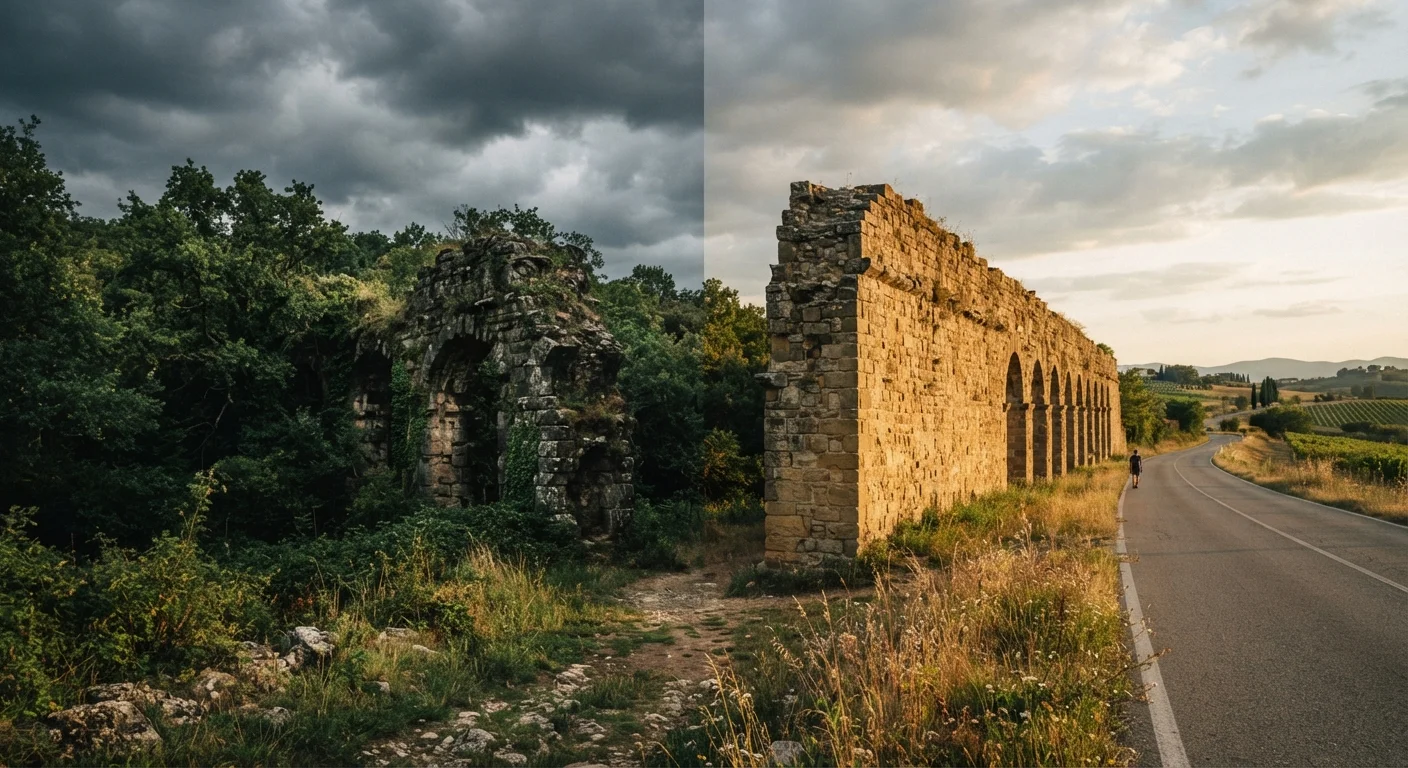
Photo credit: ExploreRoute.net | Travel Made Simple
In this article
Some overlooked ruins require days of travel; others sit beside paved roads. Weighing accessibility against solitude changes the trip entirely.
Key Takeaways
- Remote sites offer genuine solitude but demand multi-day logistics, physical preparation, and higher uncertainty.
- Easily accessible ruins along paved roads can still feel uncrowded and reward spontaneous visits.
- Neither approach is inherently superior — the right choice depends on your timeline, fitness, and risk tolerance.
- Both types of sites require responsible visitor behavior to protect fragile heritage.
- Seasonality and permit requirements can dramatically alter the experience at either site type.
The Same History, Two Very Different Doors
Picture two sites: the first requires a permit, a local guide, two nights camped on a dry plateau, and a river crossing that disappears in rainy season. The second sits four miles off a state highway, its entrance marked by a small interpretive sign most drivers miss entirely. Both contain genuinely significant archaeological remains. Both see a fraction of the visitors that crowd their famous counterparts. The question isn't which site matters more — it's which one you can actually reach, and what the journey itself will cost you.
This tension between remote access and easy infrastructure shapes almost every decision in heritage travel off the mainstream circuit. It affects your budget, your safety margin, your ability to linger, and the quality of the silence you find when you arrive. Before planning either trip, it's worth being precise about what each type of site actually demands — and offers. For a grounding in how to think about site categories and access frameworks, the field-ready reference for independent travellers is a useful starting point.
What Remote Really Means in Practice
Remoteness is not just a measure of miles from a trailhead. A site can sit thirty miles from a paved road and still be approachable with a capable vehicle and a clear weather window. Another might be technically closer but separated from access by a bureaucratic permit process that takes weeks, a border crossing, or terrain that changes character completely between seasons. True remoteness compounds: distance plus logistics plus uncertainty.
The rewards are proportional. Sites that require genuine effort to reach tend to be physically intact in ways that accessible ruins often aren't — not because they've been protected, but because they haven't been reached in sufficient numbers to erode. You may find ceramic fragments still half-buried, walls standing at their original height, no fence lines, no interpretive boards. The site presents itself on its own terms.
Build in a Buffer Day for Remote Visits
When planning access to a genuinely remote site, add at least one unscheduled day to your itinerary on either side of the visit itself. Weather delays, permit complications, and slower-than-expected terrain are the rule rather than the exception. A buffer day is not wasted time — it's the difference between a story and an emergency.
The risks compound equally. Medical evacuation from a remote location can be extremely expensive and slow. Navigation errors in unfamiliar terrain without cell coverage carry real consequences. Conditions that seem manageable on a clear morning can shift within hours. The trade-offs of remote wilderness access apply here in full — and travelers should read official government advisories and consult experienced local guides before committing to any backcountry heritage visit.
The Underestimated Case for Accessible Sites
Easy infrastructure has a reputation problem. Travelers who pride themselves on going further assume that a site reachable by rental car must already be overrun, stripped of authenticity, or reduced to a curated experience. That assumption is frequently wrong. Dozens of historically significant sites across the American Southwest, Appalachian foothills, and Great Plains sit within a short drive of paved roads and still receive only a few hundred visitors annually — not because they lack interest, but because they lack fame.
| Remote Access Sites | Accessible Infrastructure Sites | |
|---|---|---|
| Getting there | Multi-day travel, guides often required | Paved or graded road, standard vehicle |
| Solitude | Near-guaranteed isolation | Quiet, especially off-season or weekdays |
| Physical demands | High — hiking, camping, navigation | Low to moderate — short walks typical |
| Site condition | Often highly intact, undisturbed | Variable; depends on stewardship |
| Permit/bureaucracy | Frequently required; plan weeks ahead | Sometimes required; simpler process |
| Safety margin | Lower — evacuation slow and costly | Higher — help is reachable quickly |
| Flexibility | Low — weather can cancel entire trip | High — easy to reschedule or return |
| Suitability for mixed groups | Limited — requires consistent fitness | Good — broader range of abilities |
What accessible sites offer that remote ones rarely can: the ability to return. You can visit in the afternoon light, leave before dark, and come back the following morning with different eyes. You can bring companions who aren't equipped for backcountry travel. You can spend more of your mental energy on the site itself rather than managing logistics. The assumptions that ruin a visit to a forgotten site are just as likely to catch you off-guard at an accessible ruin as a remote one — the absence of signage, facilities, or cell coverage doesn't require distance from a road.
Seasonality reshapes accessible sites dramatically. A ruin that feels oddly busy on a summer Saturday can be completely solitary in late October. That kind of tactical timing costs nothing and changes everything. See also: the case for visiting forgotten historic sites before they're discovered.
Responsible Choices at Either Site Type
The fragility question applies regardless of how you arrived. Remote sites are not more resilient simply because they're hard to reach; accessible ones are not already damaged beyond care simply because a road exists nearby. Both types of forgotten ruins depend on visitors making deliberate, low-impact choices. The guide to visiting a forgotten ruin responsibly covers the ethical and practical considerations in detail — including what to do if you encounter something that appears undocumented.
Don't Overestimate Your Field Readiness
Remote heritage sites are not the place to test new gear, unfamiliar navigation tools, or an unproven fitness level. Conditions can shift rapidly, and help may be many hours away. Verify all entry requirements, safety advisories, and permit conditions with official sources — land management agencies, national park services, or relevant government departments — before departure, not on the road.
The practical upshot: honest self-assessment before committing to a remote site is not a compromise, it's competence. Choosing an accessible site because it fits your actual constraints produces a better visit — and less risk of an emergency that affects other travelers and local communities — than stretching beyond your realistic capabilities. Understanding what kind of site you're visiting before you arrive matters as much as how you get there.

Author
Hidden Destinations Editorial Team
Hidden Destinations Editorial Team is the collective byline for our editorial team and contributor network. Articles published under this byline or an editorial pen name are researched, written, and reviewed according to our editorial standards for clarity, consistency, and independence before publication.
View all articles →