
How Travellers Accidentally Damage the Places They Love Most
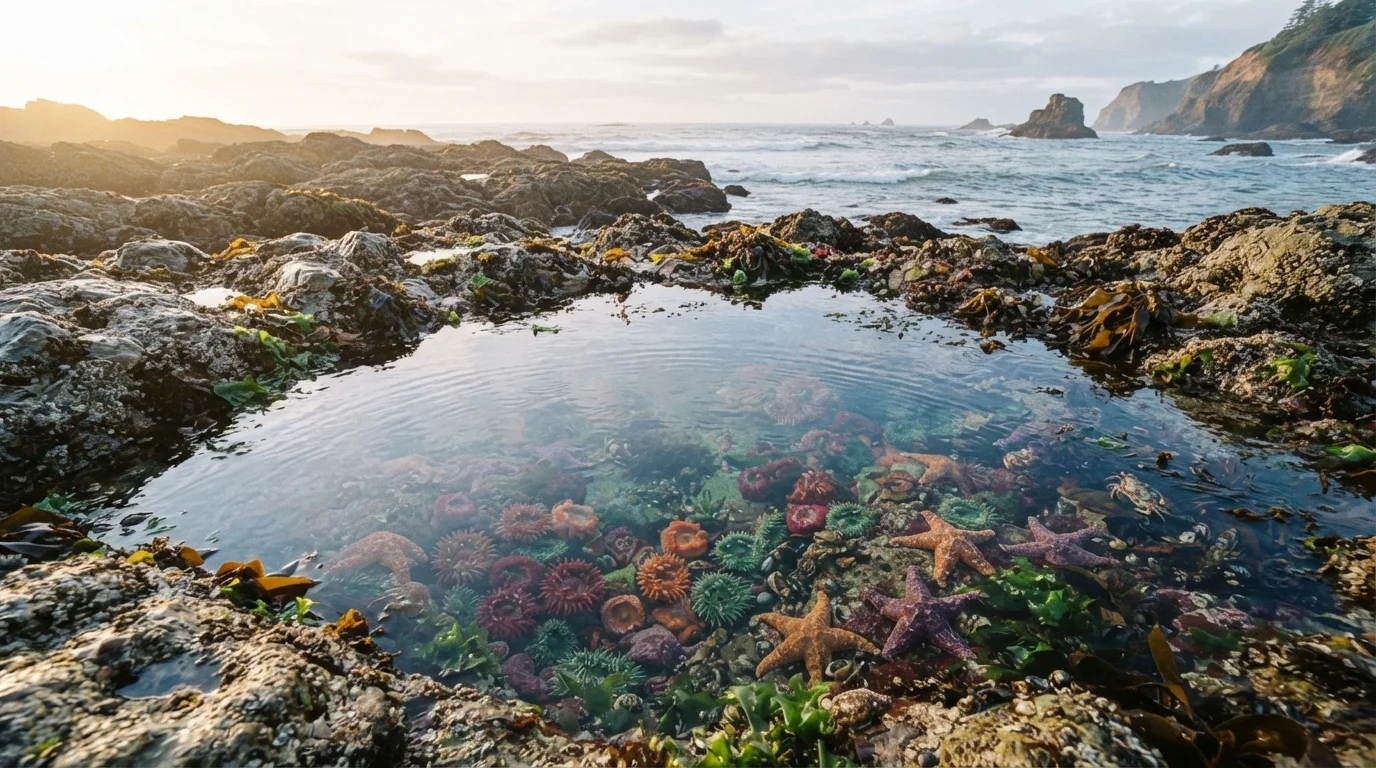
Photo credit: ExploreRoute.net | Travel Made Simple
In this article
Good intentions don't prevent impact. These common missteps erode fragile ecosystems—and most visitors never realise they're making them.
Key Takeaways
- Most environmental damage at natural sites comes from well-meaning visitors, not careless ones.
- Staying on marked trails protects soil crusts and plant root systems that take decades to recover.
- Sharing precise GPS coordinates of fragile sites online can trigger damaging visitor surges.
- Removing even small natural objects — shells, stones, or sand — disrupts local ecosystems over time.
- Researching a destination's specific code of conduct before arrival is the single most effective protective habit.
The Paradox of Loving a Place to Death
There is a particular kind of heartbreak that comes with discovering a place of rare, unspoiled beauty — and then learning, sometimes years later, that it no longer looks the way it did when you first found it. The culprit is rarely industry or neglect. More often, it is admiration itself: the compounding weight of visitors who arrived with genuine care and left behind something they never intended to.
Fragile ecosystems — high-altitude meadows, limestone cave systems, remote coastal dunes, forgotten historic sites barely marked on any map — share a common vulnerability. They were shaped by conditions that exclude most disturbance, which also means they have almost no resilience to it. Understanding where good intentions go wrong is the first step toward visiting differently.
Leaving marked trails to reach a better viewpoint or photograph.
Why it happens: Trails often frame a landscape partially, and the "perfect shot" or unobstructed view seems just a few steps away. The social proof of visible footprints ahead makes it feel acceptable.
Removing natural objects — shells, fossils, coloured stones, or sand — as souvenirs.
Why it happens: Individual removal feels inconsequential. A single shell seems meaningless; the cumulative effect of thousands of visitors each taking one is not.
Publishing precise GPS coordinates or detailed access instructions for sensitive or little-known sites.
Why it happens: Sharing discovery feels generous, and the traveller rarely witnesses the downstream effect of their post. The harm is diffuse and delayed.
Using conventional sunscreen, insect repellent, or soap in or near fragile aquatic environments.
Why it happens: Most travelers apply personal care products out of habit, without connecting them to water quality. Labelling rarely makes the ecological risk visible.
Feeding wildlife or leaving food waste where animals can access it.
Why it happens: Feeding animals feels like connection; discarded scraps seem harmless in small amounts. Both alter animal behaviour in ways that are difficult to reverse.
The Invisible Damage Travellers Leave Behind
Impact rarely announces itself. A single footstep off a marked trail onto a biological soil crust — the thin, living layer of cyanobacteria, moss, and lichen that stabilises arid landscapes — can take over a century to fully regenerate. Multiply that by a season of visitors, and entire hillsides begin to erode. The same logic applies to visiting an off-radar archaeological site: touching a carved stone surface deposits skin oils that accelerate the very chemical weathering the stone has resisted for millennia.
"Leave No Trace" Is Not Enough on Its Own
Packing out your rubbish and staying on trails are necessary baseline practices — but they don't capture the full picture of impact. Noise pollution disrupts wildlife behaviour, flash photography can harm cave-dwelling species, and even biodegradable soap introduced into backcountry water sources affects aquatic ecosystems. Site-specific guidance, not just general principles, is what protects the most sensitive environments.
Social media has introduced an accelerant that previous generations of travelers lacked. A single well-framed photograph tagged with a precise location can redirect thousands of visitors toward a site that had previously absorbed only dozens. Rangers at several U.S. wilderness areas have documented what they describe as "Instagram surges" — abrupt, dramatic spikes in foot traffic tied directly to viral posts — that have compacted soil, stripped wildflowers, and disturbed nesting birds within a matter of weeks. The assumptions travellers carry into obscure sites often compound the problem: expecting infrastructure that isn't there, they improvise — and improvisation at fragile sites tends to cause disproportionate harm.
None of this means staying home. It means arriving informed, which is a fundamentally different posture than arriving enthusiastic.
100+ years
Time for biological soil crust to fully recover from a single footstep
Research on arid-land ecosystems, including studies from the U.S. Geological Survey, documents the extreme fragility and slow regeneration rates of cryptobiotic soil crust in desert environments.
~1 billion
International tourist arrivals annually (pre-pandemic baseline)
UNWTO data illustrates the scale at which even small per-visitor impacts accumulate into measurable ecosystem-level damage at popular natural sites worldwide.
Travelling Differently — Before You Even Arrive
The most consequential decisions a traveller makes about a fragile destination happen before departure. Researching whether a site has a visitor code of conduct, seasonal closures, or permit requirements takes roughly the same effort as checking the weather forecast — and it carries far greater protective value. Some lesser-known natural areas in the American Southwest, for instance, restrict group sizes or prohibit entry during raptor nesting seasons; others ask visitors to carry out all waste, including human waste, via wag bags.
Distributing your curiosity more widely is also a form of conservation. Rather than converging on the single canyon or lake that appeared in last month's travel feature, consider the adjacent watershed or the overlooked site one valley over. The same instinct that leads travelers away from authentic food culture — defaulting to the familiar, the heavily recommended, the already-crowded — applies equally to natural landscapes. Dispersing that attention more evenly relieves pressure on the most vulnerable nodes.
For travelers who move between destinations rapidly, the compressed timeline of a port stop can make careful environmental choices feel impractical. But the same principles scale down: staying on paved or established paths, declining unsanctioned tours into protected areas, and buying locally made goods rather than items incorporating natural materials all reduce harm within even a few hours ashore.
Travel conditions, site regulations, and access rules change frequently. Always verify current guidelines with official land management agencies or local conservation authorities before visiting any natural or historic site.

Author
Hidden Destinations Editorial Team
Hidden Destinations Editorial Team is the collective byline for our editorial team and contributor network. Articles published under this byline or an editorial pen name are researched, written, and reviewed according to our editorial standards for clarity, consistency, and independence before publication.
View all articles →