
Leave No Trace in Extreme Environments: Why Standard Rules Need Adapting
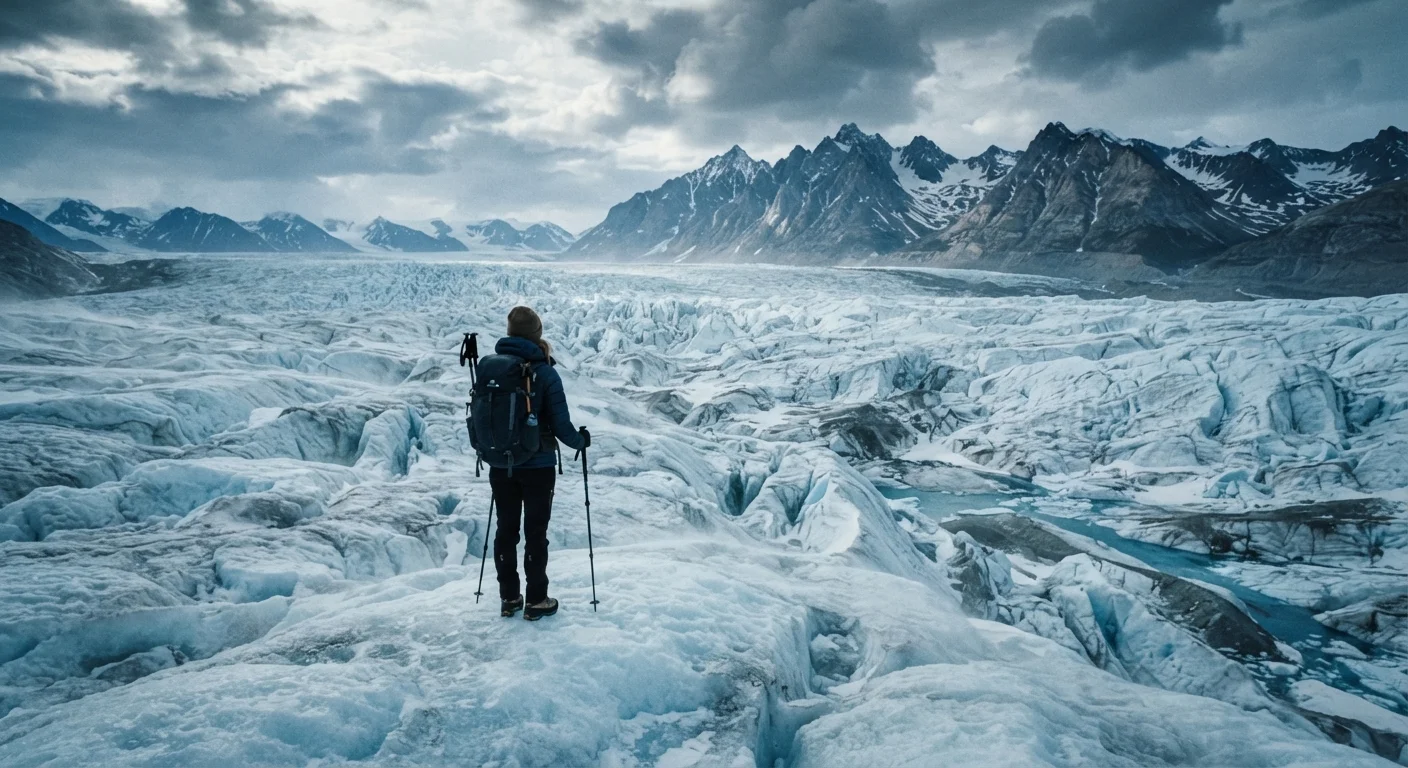
Photo credit: ExploreRoute.net | Travel Made Simple
In this article
Standard Leave No Trace principles weren't written for glaciers or desert canyons. Here's how ethical practices shift in truly remote terrain.
Key Takeaways
- Leave No Trace principles require significant adaptation in glacial, desert, and high-altitude terrain.
- Cryptobiotic soil crusts, ice ecosystems, and arid soils can take decades to recover from a single footstep.
- Human waste management protocols differ dramatically by extreme environment type.
- Campfire restrictions in extreme environments are stricter — fuel scarcity and fire risk demand alternative cooking methods.
- Wildlife buffer distances should increase in remote environments where animals have minimal human exposure.
- Consulting land managers and local experts before entering extreme terrain is an ethical obligation, not optional.
Why Standard Leave No Trace Falls Short in Extreme Terrain
The seven Leave No Trace (LNT) principles — plan ahead, travel on durable surfaces, dispose of waste properly, leave what you find, minimize campfire impacts, respect wildlife, and be considerate of others — were developed as a flexible ethical framework, not a rigid rulebook. In practice, they were field-tested most heavily in North American temperate forests and established wilderness areas. Apply them unchanged to a high-altitude glacier or a remote desert canyon and the gaps become consequential.
Extreme environments are defined not just by physical difficulty but by ecological fragility and the near-absence of natural recovery mechanisms. A scuffed trail in a temperate rainforest may regenerate within a single season. The same disturbance on arctic tundra or a cryptobiotic desert crust — a living biological layer of cyanobacteria, fungi, and lichens that stabilizes arid soil — can require 50 to 250 years to recover, according to the U.S. Bureau of Land Management. That scale of consequence demands a more precise ethical approach.
If you're heading into truly remote or off-map terrain, the preparation process itself is where adapted LNT thinking needs to begin — long before boots touch ground.
LNT Is a Framework, Not a Fixed Rulebook
The Leave No Trace Center for Outdoor Ethics explicitly acknowledges that its principles require interpretation based on specific ecosystems, conditions, and visitor density. No single set of rules applies uniformly across environments as different as a boreal forest and a polar icefield. Treat LNT as a foundation for ethical reasoning, not a checklist that automatically confers responsible travel status.
Adapted Practices for Glacial and Alpine Environments
Glaciers and high-alpine zones present unique challenges that standard LNT guidance doesn't fully address. Ice surfaces, while appearing durable, host microbial ecosystems in surface meltwater. Introducing human waste, sunscreen runoff, or food debris into these systems introduces pathogens and chemicals into watersheds that communities downstream depend on.
Pack out all human waste from glacial and snowpack environments without exception.
Cold temperatures and ice environments dramatically slow biological decomposition, meaning waste deposited on glaciers can re-emerge intact in meltwater used by downstream communities. No cat hole system is effective in frozen terrain.
Increase wildlife buffer distances to at least 200 yards in remote environments with low human exposure.
Animals in rarely visited wilderness have not habituated to human presence. Standard 100-yard buffers assume a degree of wildlife tolerance built through repeated low-level contact. In truly remote areas, approach stress causes breeding abandonment and displacement from critical habitat.
Verify waste disposal and fire regulations directly with the specific land management agency, not general LNT guidance.
Regulations in extreme environments are jurisdiction-specific and change based on seasonal conditions, ecological assessments, and overuse pressures. General principles are a starting point, not a compliance standard.
Identify and avoid cryptobiotic soil crust by recognizing its dark, lumpy texture before stepping.
Cryptobiotic crust prevents erosion, fixes nitrogen, and retains moisture in arid soil — its destruction cascades through the desert food web. A single footstep can destroy crust that took a century to establish.
Use established rock or hard snow surfaces exclusively for travel when available in alpine terrain.
In alpine zones above treeline, vegetated soil is almost always a slow-recovery ecosystem. Rock and consolidated snow surfaces absorb traffic without permanent biological damage in most high-altitude conditions.
In these environments, the LNT principle of traveling on durable surfaces applies, but "durable" must be reinterpreted. Rock is still preferred over vegetated areas, but glacial ice is not a neutral surface — crevasse fields, seracs, and snow bridges require route-finding that prioritizes safety over minimum impact, creating a real tension that travelers must consciously navigate.
For a comprehensive look at the ethical dimensions of fragile landscape travel, the Complete Guide to Responsible Travel in Fragile Natural Ecosystems covers technique alongside environmental awareness.
Desert Canyon Ethics: Rethinking Every Core Principle
Desert environments invert many standard LNT assumptions. Water is the scarcest and most protected resource, yet it's also where human contamination is most damaging. Camping near ephemeral water sources — a common convenience — can displace desert-adapted wildlife from their only hydration point for miles. The adapted rule: camp at least 400 feet from any water source, not the standard 200 feet recommended for temperate zones.
Campfires, often permitted under general LNT guidelines in appropriate settings, carry extreme risk in arid terrain. Sparse desert vegetation burns intensely and can sustain ground fires through root systems. In most desert wilderness areas, fire restrictions are either permanent or seasonally sweeping. Carry a canister stove and be prepared to cook without fire entirely.
Walking on cryptobiotic soil crust is among the most damaging things a desert traveler can do. The visual cue — dark, lumpy, roughened soil texture — is the signal to stop and find rock or established trail instead. The realities of desert terrain for travelers extend well beyond navigation; understanding soil biology is now part of responsible desert travel literacy.
Human Waste, Gear Traces, and the Long Reach of Disturbance
Human waste disposal is where LNT adaptation is most technically specific. Standard LNT recommends cat holes — small holes dug 6–8 inches deep — in temperate soil. In glacial terrain, waste must be packed out entirely; many permit systems now mandate wag bags or similar sealed systems. Above treeline and in high-UV alpine zones, some land managers allow surface deposition on south-facing rock, as UV exposure accelerates decomposition, but this varies by jurisdiction and must be confirmed with the relevant authority before travel.
In desert environments, cat holes are inappropriate in cryptobiotic crust zones. Some desert wilderness areas require pack-out systems identical to glacial environments. Others permit surface deposition in specific conditions. There is no single universal answer — consult the specific land manager.
Gear also leaves traces. Chalk used in climbing damages rock surfaces and alters the texture that future climbers and native species depend on. Dye-treated fabrics shed microfibers into pristine water systems. Sunscreen and insect repellent chemicals accumulate in isolated water sources. Choosing gear and personal care products deliberately is part of an adapted LNT ethic. The pre-trip checklist for unmarked natural areas is a practical starting point for this gear review process.
50–250 years
Recovery time for disturbed cryptobiotic soil crust
According to the U.S. Bureau of Land Management, a single footstep on desert biological soil crust can require decades to centuries of recovery depending on climate conditions.
400 ft
Recommended desert campsite distance from water sources
Desert wilderness ethics guidelines recommend doubling the standard 200-foot LNT buffer near water, given the scarcity and wildlife dependency on isolated desert water sources.
Travel and land management conditions in extreme environments change frequently. Always verify current regulations, entry requirements, and safety conditions with the relevant official land management agency before travel. This article provides general guidance only and does not constitute authoritative land management or safety advice.

Author
Specialty Travel Editorial Team
Specialty Travel Editorial Team is the collective byline for our editorial team and contributor network. Articles published under this byline or an editorial pen name are researched, written, and reviewed according to our editorial standards for clarity, consistency, and independence before publication.
View all articles →