
The Art of the Slow Drive: Rethinking How Fast You Move Through a Landscape
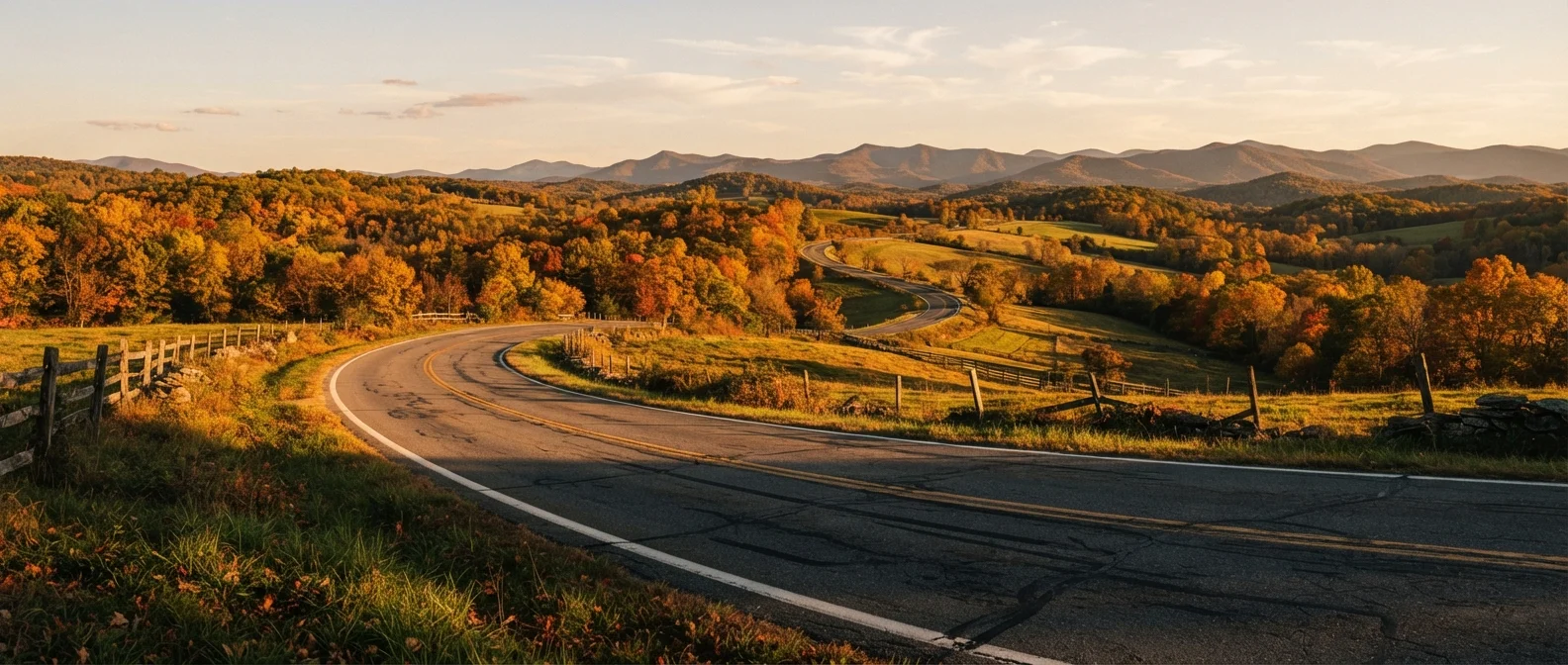
Photo credit: ExploreRoute.net | Travel Made Simple
In this article
Speed and scenery rarely mix well. Explore the philosophy — and practical habits — behind traveling a road slowly and deliberately.
Key Takeaways
- Deliberately reducing speed on a scenic drive reveals details that faster travel completely erases.
- Planning fewer daily miles opens space for unplanned stops that often become the trip's best memories.
- Turning off GPS optimization and using paper maps or scenic-route apps unlocks roads navigation apps ignore.
- Meaningful slow travel is as much a mindset shift as a logistical one.
- Building buffer time into each driving day reduces pressure and transforms the drive into the destination.
Why Speed Is the Enemy of Scenery
There's a particular kind of loss that happens at highway speed — the loss of texture. A ridge of exposed sandstone blurs into a rust-colored smear. A hand-painted roadside mural becomes a flicker. A weathered grain elevator with a story behind every plank disappears in the rearview before you've even registered it was there.
American road travel is often organized around the destination: how fast can we get there, how many miles can we cover, how efficiently can we move. But efficiency and discovery are fundamentally at odds. The landscape rewards patience in a way it simply cannot reward speed.
This isn't about driving slowly for its own sake. It's about recalibrating what the drive is for. When the road itself becomes the point — not a corridor to the destination — everything changes about how you plan, how you move, and what you come home with.
“The traveler sees what he sees. The tourist sees what he has come to see.”
— G.K. Chesterton, British author and cultural critic
Core Practices for Traveling a Road Deliberately
Slowing down isn't passive. Done well, it's one of the most intentional choices a traveler can make. These practices will help you build a driving style that actually sees the country it's passing through.
Set a daily mileage ceiling and treat it as a firm commitment, not a suggestion.
Without a hard cap, the pull of the next destination gradually accelerates every day. A ceiling — say, 150–200 miles on a scenic day — forces you to engage with the space between points A and B rather than treating it as a problem to solve.
Pull over proactively, not reactively — stop before you're certain it's worth it.
By the time you've confirmed something is interesting, you've already passed it. Reactive stopping means you spend more time doing U-turns than actually seeing things. Proactive stopping — acting on mild curiosity — catches most of the good stuff.
Drive with the windows down when weather and conditions allow.
Smell, sound, and air temperature are powerful orientation signals that climate-controlled cabins filter out entirely. The salt air before a coastal approach, the pine resin of a mountain forest, the sudden warmth of a valley floor — these are the details that anchor memories.
Use physical maps alongside digital navigation — or instead of it — on scenic routes.
Paper maps encourage a spatial awareness of the landscape that turn-by-turn directions suppress entirely. When you can see where you are in relation to the terrain around you, you make better decisions about detours and notice roads worth exploring.
Build at least one unscheduled hour into every driving day.
Buffer time removes the pressure that kills spontaneity. When you have margin, you can follow curiosity without anxiety. Without it, every interesting thing you see is mentally tagged as a risk to the timeline.
The Planning Shift That Changes Everything
Slow travel starts before you leave. The biggest structural change is reducing your target daily mileage — often dramatically. Most road trippers overestimate how many miles they can cover while still feeling present. When you cap your driving day and leave genuine white space in your itinerary, you create the conditions for discovery.
Planning a route that rewards the journey, not just the destination, means building in time cushions that allow you to follow a sign for a canyon overlook, linger over coffee in a small-town diner, or simply pull over because the light on a wheat field looks extraordinary. These aren't detours — they're the trip.
It also means rethinking your navigation tools. Your GPS is likely steering you away from the best drives by optimizing for time, not terrain. State highway maps, byway guides, and America's Scenic Byways program are better companions when scenery is the point.
Training Your Eye Along the Way
Slowing your speed gives your eye time to work — but knowing what to look for multiplies the payoff. Geology, land use, architecture, and vegetation all shift as you move through a landscape, and each shift tells a story about the people and forces that shaped that ground.
Reading a landscape from the driver's seat is a learnable skill. Once you know that a sudden change in soil color often signals a shift in underlying rock, or that a particular tree line typically marks a creek, the road becomes a continuous narrative rather than a backdrop. The slow driver receives all of it. The fast one receives almost none.
150,000+
Miles of federally designated scenic byways in the U.S.
America's Byways program, administered by the Federal Highway Administration, designates roads for their archaeological, cultural, historic, natural, recreational, and scenic qualities.
63%
Road trippers who say unexpected stops were trip highlights
According to a widely cited AAA travel survey, the majority of road trip travelers report that unplanned detours and stops rank among their most memorable experiences.
And if you're wondering how to slow down without sacrificing the visual record of your trip, consider that documenting the drive doesn't require stopping every five minutes — technique and timing matter more than frequency.
The 'Five-Minute Rule' for Scenic Stops
When you see something interesting, give yourself a five-minute permission window to stop — no evaluation, no debate. If you pull over and the view or subject doesn't hold your attention after five minutes, you've lost very little. If it does, you've found something real. Most of the best slow-travel moments begin with a pull-over that felt barely worth the effort.

Author
Road Trip Culture Editorial Team
Road Trip Culture Editorial Team is the collective byline for our editorial team and contributor network. Articles published under this byline or an editorial pen name are researched, written, and reviewed according to our editorial standards for clarity, consistency, and independence before publication.
View all articles →