
Why Your GPS Is Steering You Away from the Best Drives
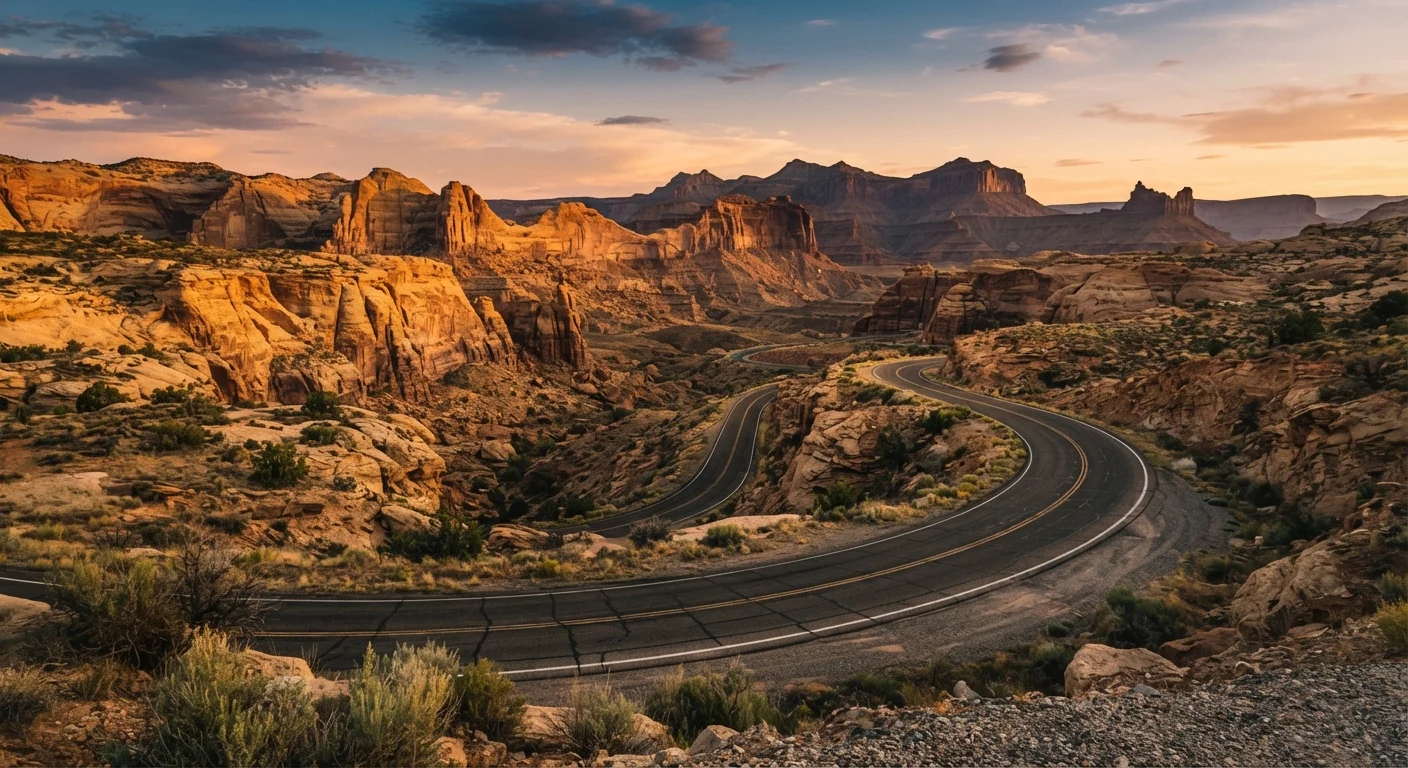
Photo credit: ExploreRoute.net | Travel Made Simple
In this article
Navigation apps optimize for speed, not scenery. Here's why trusting them blindly costs you the most memorable stretches of road.
Key Takeaways
- GPS apps route for speed and traffic, not scenic or cultural value.
- Defaulting to fastest-route settings eliminates entire categories of memorable road.
- Paper maps, state highway guides, and local knowledge reveal what algorithms miss.
- Small course corrections — a state highway instead of an interstate — can transform a drive.
- Flexibility and loose itineraries are the prerequisite for real road discovery.
The Algorithm Has Never Seen a Sunrise Over the Badlands
Navigation apps are genuinely impressive tools. They reroute around accidents in real time, estimate fuel stops, and tell you exactly when you'll arrive. What they cannot do is notice that the two-lane county road running parallel to your current route crests a ridge with a view that stops people cold. That judgment requires something no routing engine offers: a sense of what travel is actually for.
The problem isn't that GPS is wrong. It's that it's optimizing for the wrong thing. Speed and efficiency are useful defaults for commuters. For road trippers, those same defaults quietly drain the journey of everything worth remembering. This article names the specific habits that let the algorithm win — and how to stop them.
For a deeper rethink of what road travel can feel like when you stop rushing, see The Art of the Slow Drive.
Accepting the default 'fastest route' without question.
Why it happens: Apps open on fastest-route mode, and most drivers tap 'Start' without exploring alternatives. The efficiency of the default feels like a reasonable starting point.
Treating estimated arrival time as a hard commitment.
Why it happens: Road trips often involve coordinating with lodging check-ins or travel partners, which turns ETA into a deadline that discourages any deviation from the suggested route.
Avoiding unfamiliar roads out of range anxiety or confidence.
Why it happens: Unmarked or lightly signed roads feel riskier than well-signed interstates, especially in unfamiliar regions. Drivers default to what feels legible.
Over-programming the itinerary with too many GPS waypoints.
Why it happens: Pre-trip planning feels productive, and locking in every stop gives a sense of control. The result is a route so dense with commitments that any genuine detour becomes a disruption.
Ignoring designated scenic byways because apps don't prioritize them.
Why it happens: Navigation apps don't flag National Scenic Byways or State Scenic Routes as preferred paths. Drivers simply don't see them unless they already know to look.
Reclaiming the Road From Your Routing App
Breaking GPS dependency doesn't mean throwing your phone out the window. It means using navigation tools deliberately rather than passively. Before any road trip, spend time with a physical state highway map or a trusted atlas — the kind that shows scenic byway designations, elevation changes, and points of interest that never show up in an app's turn-by-turn view. State tourism offices often publish free driving guides organized around exactly the kind of roads worth seeking out.
156
Designated National Scenic Byways in the US
The Federal Highway Administration's America's Byways program recognizes 156 roads across 46 states — routes chosen for scenic, historic, cultural, or recreational value that standard navigation apps treat as ordinary roads.
~3%
Share of US road miles that are interstates
The Interstate Highway System makes up roughly 3% of total US road miles, yet navigation apps route the vast majority of long-distance trips through that narrow slice of the network.
Local knowledge is irreplaceable. A gas station attendant in rural Nevada or a ranger at a trailhead will point you down a road that transformed their own relationship with the landscape — and they'll do it in thirty seconds. Paper maps and GPS each have a role, but the map gives you the spatial overview that makes those conversations meaningful.
When you're ready to build a full route around what you find, planning a route that rewards the journey walks through how to balance driving time with stops that actually matter. And if your detours take you into remote backcountry, traditional navigation skills become more than a curiosity — they become essential.
The roads that define a trip are rarely the ones the app suggested. They're the ones you chose.

Author
Road Trip Culture Editorial Team
Road Trip Culture Editorial Team is the collective byline for our editorial team and contributor network. Articles published under this byline or an editorial pen name are researched, written, and reviewed according to our editorial standards for clarity, consistency, and independence before publication.
View all articles →