
What Makes a Road Trip Route 'Iconic'?
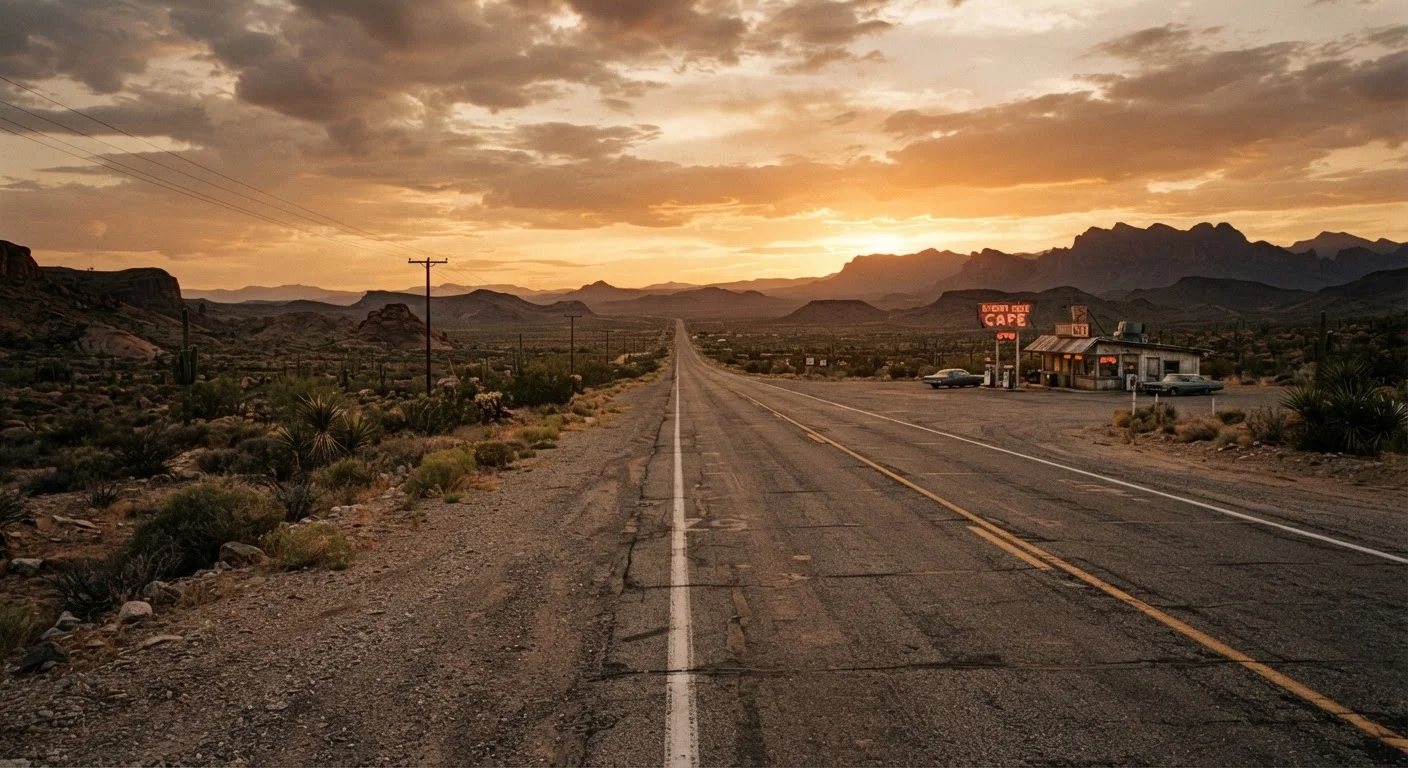
Photo credit: ExploreRoute.net | Travel Made Simple
In this article
Not every scenic drive earns legendary status. Here's what separates a memorable corridor from a truly cultural landmark.
Key Takeaways
- Iconic routes carry documented historical significance — they were shaped by real migrations, eras, or national events.
- Distinctive roadside culture, including diners, motels, and signage, is as important as scenery.
- A route becomes iconic through collective storytelling — literature, film, music, and generations of road tripper accounts.
- Scenic beauty alone is not enough; a route needs layered meaning to earn legendary status.
- Many iconic routes are living archives of American social history, not just pretty drives.
History Has to Live in the Asphalt
The single most reliable marker of an iconic route is documented historical weight. These roads weren't just built — they were used at pivotal moments. Route 66 carried Dust Bowl families from Oklahoma to California during one of America's most wrenching decades. The Blue Ridge Parkway was constructed during the New Deal as both an infrastructure project and an act of national morale. The Pacific Coast Highway traces sea cliffs that defined California's identity in the popular imagination for a century.
History doesn't have to be uniformly triumphant. Some iconic corridors carry complicated legacies — of displacement, labor, or social division. That complexity actually deepens a route's significance. When a road has witnessed the full range of American experience, it becomes something more than infrastructure.
Reading the roadside carefully means understanding that the architecture, signage, and small businesses along these corridors are living evidence of the eras that shaped them.
Roadside Character: The Culture Between the Destinations
Scenery matters, but roadside character is often what tips a route from merely scenic into genuinely iconic. This is the sum of the diners, motor courts, painted Burma-Shave signs, ghost town storefronts, roadside attractions, and local businesses that accumulate along a corridor over decades. They make the journey itself the point.
150+
Designated America's Byways routes nationwide
The Federal Highway Administration's America's Byways program recognizes routes meeting criteria across scenic, historic, cultural, natural, recreational, and archaeological qualities.
2,278 mi
Original length of Route 66
Route 66 stretched from Chicago, Illinois, to Santa Monica, California, passing through eight states before being officially decommissioned from the U.S. highway system in 1985.
469 mi
Length of the Blue Ridge Parkway
The Blue Ridge Parkway is the longest linear park in the United States, managed by the National Park Service and drawing millions of visitors annually.
A route where every stop feels interchangeable — every exit a copy of the last — lacks the texture that makes travelers want to slow down. Iconic routes reward lingering. They tend to have towns with actual histories, food traditions tied to the region, and communities that developed a distinct identity because of — not despite — the road running through them.
This is the fundamental difference explored when comparing a scenic route versus a culturally resonant one. A waterfall view is memorable; a 1950s neon-lit motor court with its original sign is irreplaceable.
The Role of Collective Storytelling
No route becomes iconic in isolation. It requires generations of travelers documenting and sharing their experiences — through novels, photographs, films, songs, and eventually social media. John Steinbeck's The Grapes of Wrath cemented Route 66's place in American consciousness more durably than any highway marker. Jack Kerouac's On the Road transformed the act of driving itself into a philosophical statement.
“The road is life. It's not just the getting somewhere — it's everything that happens in between, and everything the road itself remembers.”
— William Least Heat-Moon, Author of 'Blue Highways,' a landmark work of American road travel writing
This collective storytelling is self-reinforcing. As a route accumulates cultural references, more travelers seek it out specifically because of those references — and then add their own stories to the pile. Routes that lack this narrative accumulation, no matter how beautiful, tend to stay regional rather than national in their appeal.
If you're deciding between two legendary corridors, understanding their distinct mythologies helps — which is exactly what comparing the Pacific Coast Highway and Route 66 reveals about how different a route's story can feel behind the wheel.
What Iconic Isn't — And What to Do About It
A long drive is not automatically iconic. A high-speed interstate that moves efficiently between cities but offers no reason to stop, no distinctive architecture, no embedded history, is just a road. Scenery alone can be beautiful without being iconic — plenty of hidden scenic drives deliver stunning views without the cultural mythology that creates a legend.
Look for the Layers, Not Just the Views
When evaluating a route, ask whether it has surviving roadside architecture, a documented history tied to a specific era or event, and communities that developed a distinct identity around the road. A quick search for National Scenic Byway or National Historic Trail designations can be a useful starting point. The Federal Highway Administration and the National Park Service both maintain resources on historically and culturally significant corridors.
Recognizing this distinction matters when planning a trip. If your goal is efficiency, a fast corridor serves well. If you want to drive something with genuine depth, look for routes with a stack of qualities: historical documentation, surviving roadside culture, natural or architectural distinctiveness, and some body of storytelling that preceded you.
Before you commit to any major route, a solid preparation checklist is worth running through — seasonal closures, road conditions, and access vary significantly even on legendary corridors. And if the journey itself is the real goal, planning a route that rewards every mile rather than just the endpoint is the right frame from the start.
Frequently Asked Questions

Author
Road Trip Culture Editorial Team
Road Trip Culture Editorial Team is the collective byline for our editorial team and contributor network. Articles published under this byline or an editorial pen name are researched, written, and reviewed according to our editorial standards for clarity, consistency, and independence before publication.
View all articles →